Learn
Why Am I So Tired Before My Period: The Midlife Connection
Why Am I So Tired Before My Period. Discover why fatigue hits before your period, how perimenopause changes everything, and evidence-based ways
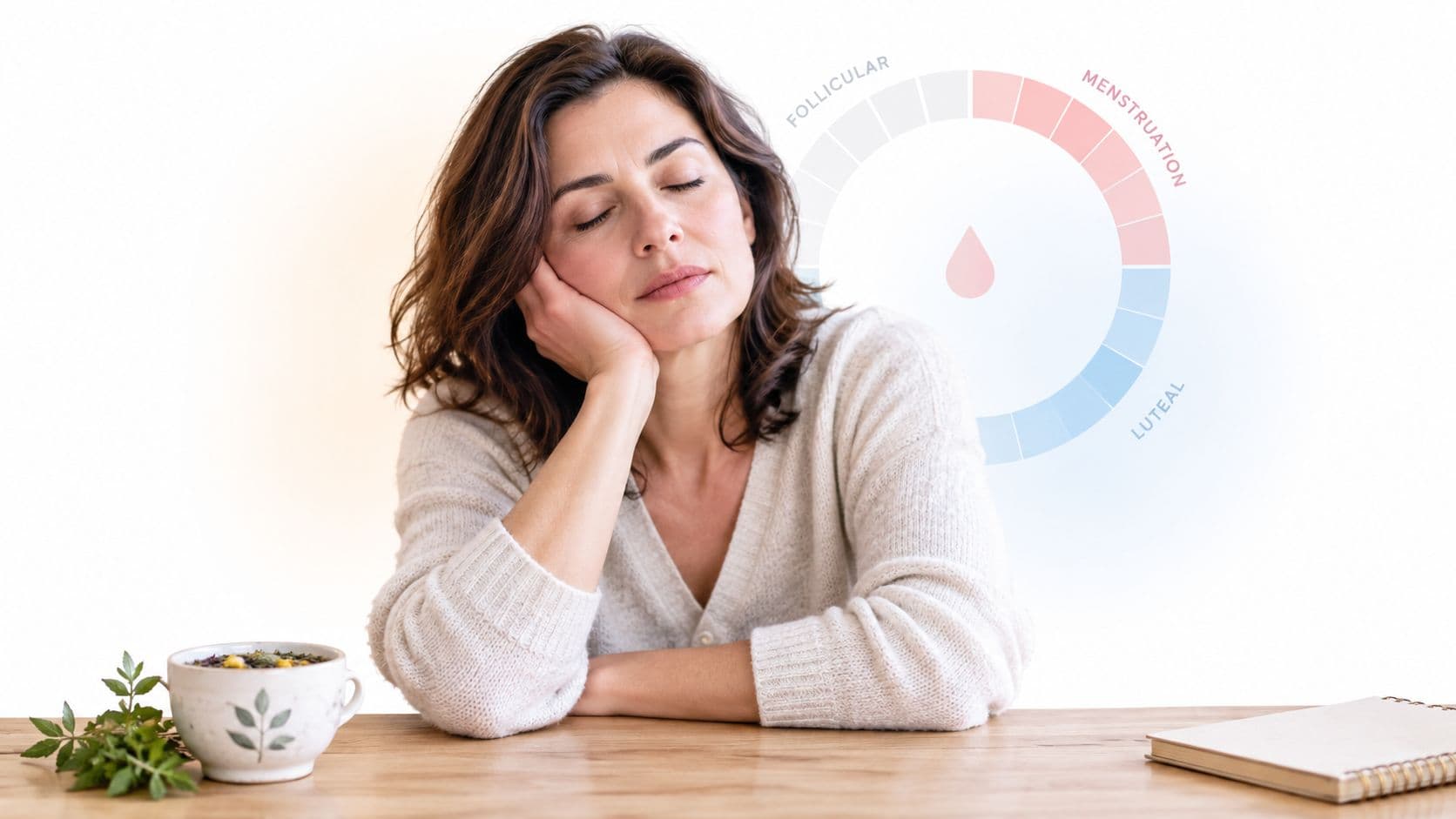
Roughly 43% of women meet clinical thresholds for premenstrual syndrome, and about 8% meet criteria for premenstrual dysphoric disorder, with fatigue often among the most impairing symptoms. The mechanism is usually cyclical hormonal withdrawal that disrupts sleep and recovery, not a simple lack of willpower or energy.
You go to bed at a sensible time, eat reasonably well, and expect to manage the week as usual. Then, several days before bleeding, your body feels weighted down. You wake unrefreshed, lose concentration halfway through a meeting, and need more effort for tasks that normally feel routine. In midlife, the pattern can become less predictable, which makes the question, “Why am I so tired before my period?” harder to answer.
The useful starting point is timing. Fatigue that reliably appears after ovulation and improves during or shortly after menstruation points toward a cycle-linked pattern. Tiredness that continues throughout the month, worsens progressively, or arrives with heavy bleeding, breathlessness, severe mood changes, or disrupted sleep needs a broader evaluation.
Table of Contents
- When Fatigue Maps to the Cycle
- Why Hormones Drive Luteal-Phase Tiredness
- How Perimenopause Changes the Pattern
- Other Contributors That Mimic Premenstrual Fatigue
- How to Track and Interpret Your Pattern
- Evidence-Informed Management Strategies
- When to Seek Clinical Guidance
When Fatigue Maps to the Cycle
A patient in her 40s once described her premenstrual fatigue as “a monthly power cut.” She wasn't sleeping dramatically less, and she hadn't changed her workload. Yet during the days before bleeding, she stopped exercising, postponed demanding decisions, and relied on caffeine to get through the afternoon. Once menstruation began, the fog lifted enough for her usual routine to feel possible again.
That experience is common, but it isn't trivial. International evidence indicates that approximately 80% of women report at least one physical or mood symptom before menstruation, while pooled estimates place clinically recognized PMS at about 43% and PMDD at roughly 8%. Fatigue often appears with irritability, low mood, headaches, breast tenderness, bloating, and difficulty concentrating during the late luteal phase, as described in this clinical review of premenstrual symptoms and PMDD.
The timing tells you more than the label
The late luteal phase is the interval after ovulation and before bleeding. A recurring energy drop in that window suggests your nervous system and sleep are responding to reproductive-hormone changes. It doesn't prove that you have PMS or PMDD. Diagnosis depends on the timing, severity, and functional impact of symptoms across multiple cycles.
A practical distinction helps:
- Cycle-linked fatigue: Energy falls in a familiar premenstrual window and improves during or shortly after menstruation.
- All-month fatigue: Tiredness remains present across the cycle, which raises the possibility of anemia, thyroid disease, depression, a sleep disorder, medication effects, or another condition.
- Mixed fatigue: A premenstrual dip sits on top of baseline exhaustion, making the luteal phase feel disproportionately difficult.
Practical rule: A predictable pattern is useful information, not a reason to dismiss the symptom.
The phrase “low energy” can also obscure what's happening. Some people feel sleepy, while others feel physically heavy, mentally slow, emotionally flat, or unable to recover from ordinary demands. Fatigue may reflect poorer sleep quality, pain, mood symptoms, inflammatory signaling, or several of these at once.
A cycle diary can reveal whether the crash begins after ovulation, immediately before bleeding, or at a different point entirely. That distinction matters even more in midlife, when cycle timing can shift and a once-reliable premenstrual pattern may become intermittent.
Why Hormones Drive Luteal-Phase Tiredness
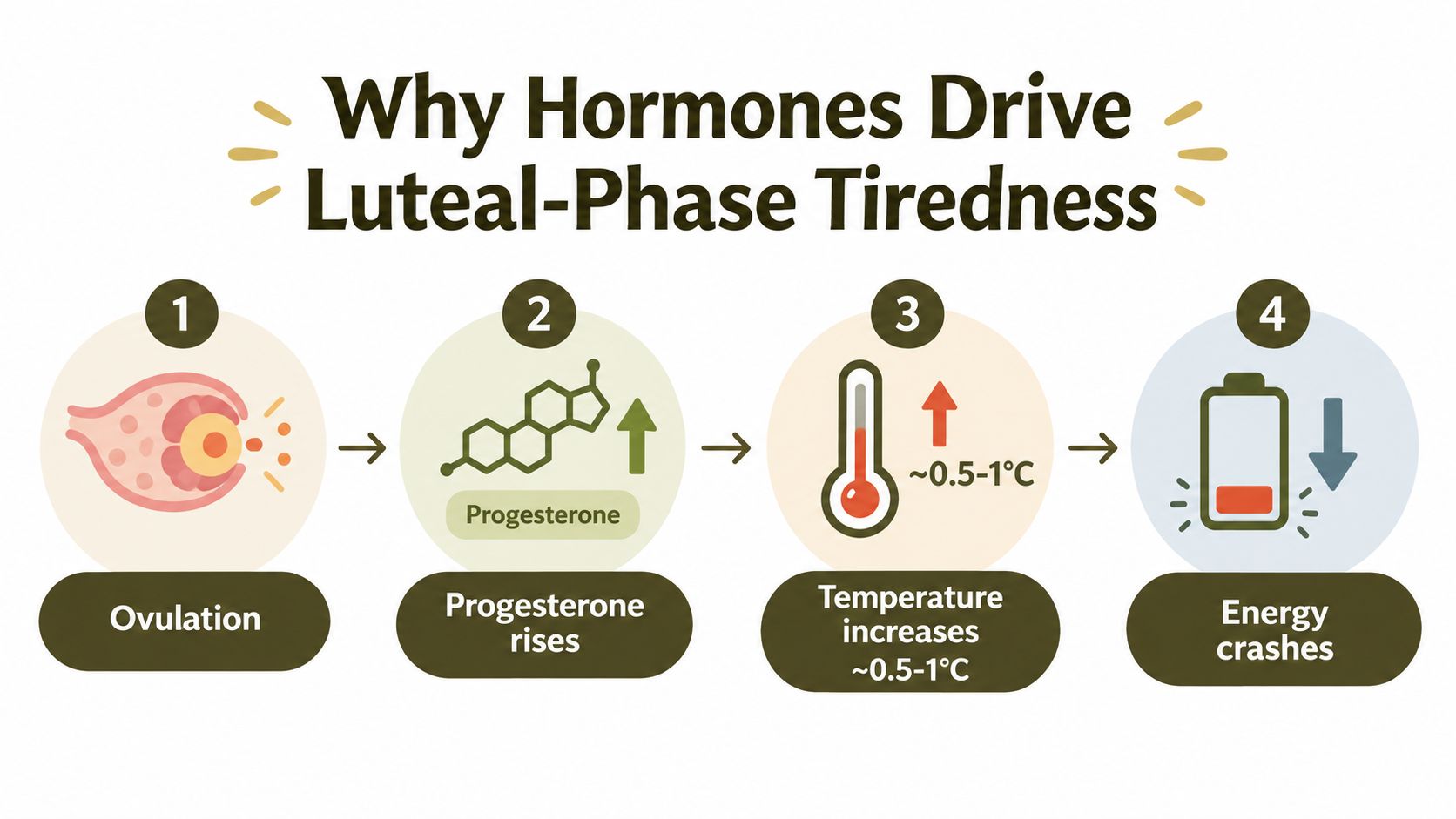
After ovulation, progesterone rises during the luteal phase. If pregnancy doesn't occur, progesterone falls sharply before bleeding. Progesterone's neuroactive metabolite, allopregnanolone, modulates GABA-A receptors, which are involved in inhibitory signaling and sleep regulation. The late-luteal withdrawal can therefore affect how restorative sleep feels, even when the number of hours in bed looks adequate.
This isn't the same as saying progesterone “sedates” everyone. Individual responses differ. Some people feel sleepy, while others feel tired but wired, wake more often, or experience a combination of daytime fatigue and nighttime restlessness.
Sleep efficiency matters more than time in bed
A large sleep review found that actigraphy data from 163 later-reproductive-age women showed sleep efficiency declining across the menstrual cycle, with the most pronounced decline during the final week before menstruation. In a separate study summarized by the same sleep review, 35% of 40 healthy ovulating women reported reduced sleep quality during the three premenstrual days and the first four days of menstruation.
Sleep efficiency describes how much of your time in bed is spent asleep. If awakenings increase or sleep becomes lighter, you may spend what looks like a full night in bed but receive less effective recovery. The result can be daytime sleepiness, slower concentration, reduced motivation, and a lower tolerance for stress.
The biological pathway isn't limited to the brain. Progesterone-related changes can raise body temperature after ovulation, and temperature discomfort may make it harder to remain asleep. Pain, breast tenderness, bloating, anxiety, and mood symptoms can add further interruptions.
The evidence doesn't support one universal mechanism
Objective sleep research isn't perfectly uniform. Some studies find more late-luteal wakefulness, while others find that many measures of sleep continuity remain stable across the cycle. That variation argues against a single explanation such as “everyone has a hormone crash.”
A more accurate clinical model is that hormonal withdrawal changes the conditions for recovery. Your response depends on sensitivity to reproductive hormones, sleep vulnerability, pain, mood, stress, temperature, caffeine, alcohol, and any underlying health issue. In people with PMS or PMDD, the same luteal changes may produce a much larger functional burden.
Fatigue before menstruation is often a recovery problem before it becomes an energy problem.
That distinction changes the intervention. Demanding more productivity or adding stimulants may mask the symptom while worsening the next night's sleep. A better first step is to record sleep duration, awakenings, perceived restoration, pain, mood, and caffeine alongside cycle day. The pattern will show whether your fatigue is mainly a sleep-continuity issue, a mood-linked problem, a pain response, or a broader condition that happens to intensify before bleeding.
How Perimenopause Changes the Pattern
In earlier reproductive years, premenstrual fatigue often follows a recognizable sequence. Ovulation occurs, the luteal phase follows, symptoms emerge, and bleeding provides a clear reference point. During perimenopause, that sequence can become unstable because ovulation may occur less consistently and cycle timing can change.
That doesn't mean every symptom is caused by declining ovarian reserve. It means the calendar becomes a less reliable diagnostic tool. A person may experience fatigue before some periods but not others, or feel exhausted during a month when ovulation timing is unclear. Sleep disruption, night sweats or temperature discomfort, anxiety, pain, and changing bleeding patterns can overlap with the premenstrual window.
Why midlife fatigue is easy to mislabel
A 2025 analysis found that individual menstrual complaints and symptom frequency were more consistently associated with sleep and recovery outcomes than cycle phase alone. The same research included a wearable analysis of 5,409 people not using hormonal contraception, where sleep duration reached its lowest point two days before menstruation and then increased during menstruation and the early follicular phase. These findings are reported in the menstrual-cycle sleep and recovery study.
The important lesson isn't that every midlife reader should expect the same two-day dip. It's that individual symptoms may predict recovery better than an assumed cycle template. Your fatigue may arrive earlier, later, or without a consistent relationship to bleeding.
Perimenopause can also blur the boundary between premenstrual and menopausal symptoms. A person may attribute poor sleep to PMS when the pattern includes temperature changes throughout the month. Another may blame hormonal fluctuations for fatigue that is driven by heavy bleeding, iron depletion, untreated sleep apnea, thyroid disease, or depression.
For a broader discussion of persistent midlife tiredness, this guide to fatigue in your 40s offers useful context. The practical point is to keep the cycle in view without making it the only explanation.
Use a diagnostic mindset, not a fixed script
Ask three questions:
- Does fatigue appear in relation to bleeding, or does it occur unpredictably?
- Does it improve after menstruation, or does it continue through the month?
- Are sleep disruption, temperature changes, pain, mood symptoms, or heavy bleeding more prominent than the fatigue itself?
A short or inconsistent luteal phase can make “premenstrual week” difficult to identify. In some cycles, there may be no clear ovulatory signal at all. That uncertainty is normal during transition, but severe or progressive fatigue still deserves assessment.
Midlife care works best when you track symptoms rather than chase a label. A period app can estimate dates, but it can't determine whether you ovulated, whether your sleep is fragmented, or whether low iron is contributing. Your own daily observations, combined with appropriate clinical evaluation, are more useful than forcing every symptom into PMS or perimenopause.
Other Contributors That Mimic Premenstrual Fatigue
A cycle-linked energy drop can be real and still have more than one cause. Heavy bleeding may lower iron stores. A thyroid disorder can produce persistent tiredness that feels worse before menstruation because the premenstrual phase adds another demand. Insomnia, sleep apnea, depression, chronic stress, medication effects, pain, and inflammatory signaling can all overlap with PMS.
Hormonal withdrawal may amplify inflammatory and pain-related signaling during the late luteal phase. A systematic review of inflammation and PMS found limited but suggestive evidence of higher inflammatory markers, including interleukin-1 beta in multiple studies and tumor necrosis factor-alpha in one study. The findings were heterogeneous, so inflammation may contribute to fatigue without explaining every case.
A practical comparison matrix
| Contributor | Typical pattern | Distinguishing features | Initial evaluation |
|---|---|---|---|
| Iron deficiency or heavy bleeding | Fatigue may intensify around menstruation but can persist beyond it | Heavy flow, clots, breathlessness, dizziness, restless legs, reduced exercise tolerance | Discuss bleeding history and consider a complete blood count and ferritin, interpreted in context |
| Thyroid dysfunction | Often present throughout the month, with variable premenstrual worsening | Temperature sensitivity, bowel changes, palpitations, weight change, skin or hair changes | Clinical review and appropriately selected thyroid testing |
| Perimenopausal shift | Timing becomes less predictable as cycles and ovulation change | Sleep fragmentation, temperature symptoms, mood variability, changing bleeding pattern | Review cycle history, symptoms, medications, and relevant medical causes |
| Primary sleep disruption | Fatigue follows poor restoration rather than a clean cycle window | Snoring, witnessed breathing pauses, restless legs, insomnia, repeated awakenings, morning headaches | Sleep history and targeted assessment for insomnia or sleep-disordered breathing |
When the cycle is not the whole story
Recurrent heavy bleeding can reduce iron stores, and iron deficiency can cause tiredness before anemia becomes obvious. That's why a clinician may consider a complete blood count and ferritin together with the bleeding history, rather than assuming fatigue is PMS.
Self-prescribing high-dose iron isn't a harmless shortcut. Excess iron can be harmful, and ferritin can be influenced by inflammation. The appropriate test and interpretation depend on your symptoms, medical history, diet, bleeding, and other results.
A useful rule is simple: the more fatigue escapes the premenstrual window, the more seriously you should investigate non-cyclical causes. New, severe, progressively worsening, or disabling fatigue shouldn't be managed with caffeine and supplements alone.
How to Track and Interpret Your Pattern
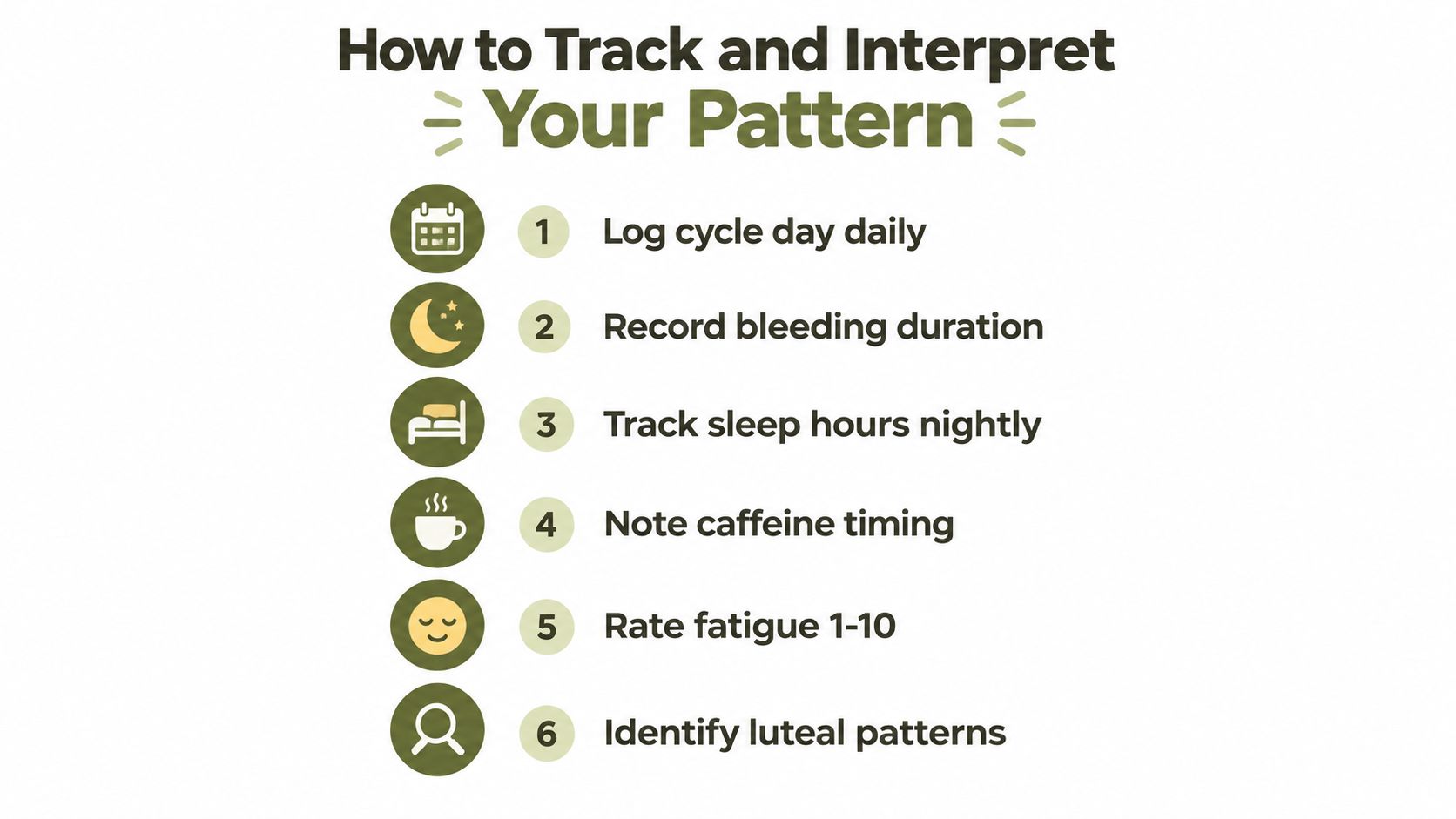
Tracking works when it captures the variables that change recovery, not just the date bleeding starts. Use a notes app, calendar, spreadsheet, or wearable, but keep the method simple enough to maintain.
Record the following daily:
- Cycle day: Mark the first day of bleeding and the days that follow.
- Bleeding: Note duration, unusually heavy flow, clots, and whether the pattern differs from usual.
- Sleep: Record time in bed, estimated sleep duration, awakenings, and how restored you feel on waking.
- Fatigue: Rate daytime tiredness consistently, using a scale such as 1 to 10.
- Symptoms: Add pain, bloating, headaches, irritability, low mood, concentration difficulty, and temperature discomfort.
- Inputs: Note caffeine timing, alcohol, exercise, major stress, illness, and medication changes.
Look for repeatable relationships
Track for at least two cycles, and preferably two to three cycles when your periods are irregular. You're looking for relationships, not perfect data. Does fatigue rise after several nights of poor sleep? Does it follow pain? Does it appear before bleeding even when sleep and stress are stable? Does it remain high after menstruation?
A cycle-linked pattern usually shows a recognizable rise and fall. It may not be identical every month, especially in perimenopause, but the symptoms tend to cluster around a recurring physiological window. A non-cyclical pattern remains high across cycle phases or follows work stress, illness, medication changes, or sleep disruption more closely.
Track the symptom and its context. “Tired” alone is much less informative than “tired after repeated awakenings with heavy bleeding.”
Tracking isn't a substitute for care when symptoms are severe. Seek clinical guidance if fatigue impairs work, driving, relationships, or basic daily activities; if bleeding is unusually heavy; if you experience breathlessness, fainting, chest pain, or severe weakness; or if mood symptoms become intense or unsafe.
For readers who want a structured approach to lab and wellness information, Longwelle's functional health testing guide explains how objective data can complement symptom tracking. Testing should answer a clinical question, not become a random search for abnormalities.
Evidence-Informed Management Strategies
The most useful strategy is usually the least dramatic one: protect recovery during the window when your body is more vulnerable. That means making sleep continuity, regular nourishment, manageable movement, and symptom observation easier before the fatigue peaks.
Protect sleep before the difficult days
Keep your wake time consistent, reduce alcohol and late-evening caffeine, and make the bedroom cooler and darker during the final 7 to 10 days before menstruation. These steps don't eliminate hormonal variation, but they reduce avoidable interference with sleep. If you wake repeatedly, snore, experience restless legs, or feel unrefreshed despite adequate time in bed, sleep assessment is more useful than extending bedtime.
Avoid turning caffeine into a rescue plan. A morning coffee may improve alertness, but late caffeine can compound nighttime wakefulness. Similarly, an intense workout may feel productive but can be poorly timed when pain, insomnia, or under-recovery are already present.
Match activity to recovery
Gentle movement can support routine and mood without adding a large recovery burden. Walking, mobility work, easy cycling, or a reduced training session may be more appropriate than forcing maximal intensity through a severe fatigue day. The correct choice depends on your symptoms, fitness, sleep, and medical history.
Nutrition should also be practical. Eat regular meals with protein, fiber-rich carbohydrates, and iron-containing foods rather than relying on sugar and stimulants to compensate for poor recovery. If heavy bleeding is part of the picture, food choices alone may not correct iron deficiency, so testing matters.
A recent systematic review of self-management approaches found limited and inconsistent evidence for exercise, nutrition, sleep interventions, stress management, and over-the-counter treatments, partly because of methodological limitations and possible publication bias. That doesn't make these habits pointless. It means you shouldn't promise yourself that one protocol, supplement, or workout plan will solve a complex symptom.
Be cautious with supplements
Magnesium, iron, and other supplements are often presented as universal answers. In practice, the trade-off is straightforward. A targeted supplement may be reasonable when a clinician identifies a relevant deficiency or symptom pattern, but high-dose or multi-supplement routines can create side effects, interactions, expense, and false reassurance.
Biomarker-guided decisions are especially important when fatigue could reflect iron deficiency, thyroid disease, inflammation, pregnancy, medication effects, or a sleep disorder. An optional consultation with a licensed nurse practitioner can help interpret symptoms and testing, but persistent or acute symptoms still require appropriate medical care.
For practical sleep guidance oriented toward healthy aging, Longwelle's sleep and longevity resource is one educational option. The broader principle is to choose interventions you can evaluate, rather than adding several changes at once and losing track of what helped.
When to Seek Clinical Guidance
Self-monitoring is reasonable when fatigue is mild, familiar, clearly cycle-linked, and not disrupting daily life. Clinical guidance becomes more valuable when the symptom is new, worsening, disabling, or no longer follows the pattern you recognize.
A consultation should move beyond the question, “Is this PMS?” It should examine bleeding, sleep quality, mood, medications, thyroid symptoms, diet, pregnancy possibility, pain, and the timing of fatigue across the cycle. If severe mood symptoms recur predictably during the luteal phase and interfere with functioning, PMDD deserves consideration. If fatigue persists all month, another cause may be contributing even when premenstrual symptoms are also present.
Use this decision framework
- Monitor first: Symptoms are mild, predictable, improve after menstruation, and don't interfere substantially with daily life.
- Book a routine assessment: Fatigue is recurrent and disruptive, bleeding is heavy, sleep is persistently unrefreshing, or the pattern has changed during midlife.
- Seek prompt medical care: Fatigue comes with fainting, chest pain, shortness of breath, severe weakness, unusually heavy bleeding, or rapidly worsening symptoms.
Don't wait for tracking to become perfect before asking for help. A clear record of cycle day, bleeding, sleep, awakenings, mood, pain, caffeine, and fatigue can make the appointment more productive, but a severe symptom warrants attention immediately.
Longwelle offers a brief assessment, biomarker tracking, educational guidance, and optional access to licensed nurse practitioners for interpretation and next-step planning. It isn't a substitute for acute medical care, but it can provide a structured way to organize midlife fatigue concerns and decide what deserves further evaluation.
If premenstrual fatigue is disrupting your work, sleep, or recovery, start by recording the pattern and bring those observations into a structured assessment. Explore Longwelle for personalized longevity guidance, biomarker monitoring, and optional nurse practitioner support focused on clearer next steps.