Learn
Why Do Energy Drinks Make Me Tired and How to Fix It
Wondering why do energy drinks make me tired instead of energized? Learn the biology behind crashes and science-informed ways to avoid them after 40.
You finish a can around 2 p.m., feel sharper for a while, then catch yourself fighting your eyelids an hour later. The part that feels most confusing is this, you didn't drink an “energy” product to get sleepy, yet your body acts like you borrowed alertness on credit and now wants repayment. That pattern is common, and it usually says more about sleep debt, adenosine rebound, timing, and midlife recovery limits than about willpower.
Table of Contents
- Why That Energy Boost Fades So Fast
- How Caffeine and Adenosine Shape Your Energy
- Sugar Caffeine and Timing Interactions That Trigger Crashes
- Midlife Factors That Make Crashes More Likely
- Common Crash Patterns and What They Reveal
- Science Informed Ways to Avoid the Energy Drink Crash
- When to Track Biomarkers and Get Guidance
Why That Energy Boost Fades So Fast
A lot of adults over 40 know this sequence well. You drink an energy drink, feel sharper for a while, then the later slump lands harder than the tiredness you started with. That is not a personal flaw. It usually means the drink gave you a short burst of alertness without addressing the reason your energy was already low.
The first part of that experience is real. Energy drinks can create a short-lived boost, because caffeine can strongly affect the central nervous system before the effect fades (PMC review on energy drink caffeine and sleep disruption). The crash is also real, especially when poor sleep, late timing, dehydration, or other midlife stressors are already in play.
The “wired then tired” pattern isn't random
The pattern works like borrowing energy from tomorrow. The drink may help you get through the next hour, but if it delays sleep or makes sleep lighter, the repayment shows up the next day as fog, irritability, or plain exhaustion. Sleep loss and caffeine can stack on each other, so the crash can feel more intense than the original fatigue.
A related point from a 2024 Norwegian study is that higher energy drink intake was tied to worse sleep across several measures, and daily use was linked with shorter sleep duration in the BMJ Open blog summary of the findings (BMJ Open blog summary of the 2024 study). That matters because many people assume the problem is only sugar, but the sleep hit can be part of the same loop.
Even smaller use can matter if your system is already stressed. If one can leaves you oddly flat the next day, your body may be reacting to sleep disruption, not just the drink's ingredients.
Practical rule: if the drink helps briefly but you feel worse later, treat that as a clue about sleep quality, timing, hydration, or medication load, not as a sign you need more stimulant.
For a related close look at mental fatigue, see brain fog and energy regulation. The better question is simple: what made your sleep, hydration, or recovery fragile enough for the crash to show up today?
How Caffeine and Adenosine Shape Your Energy
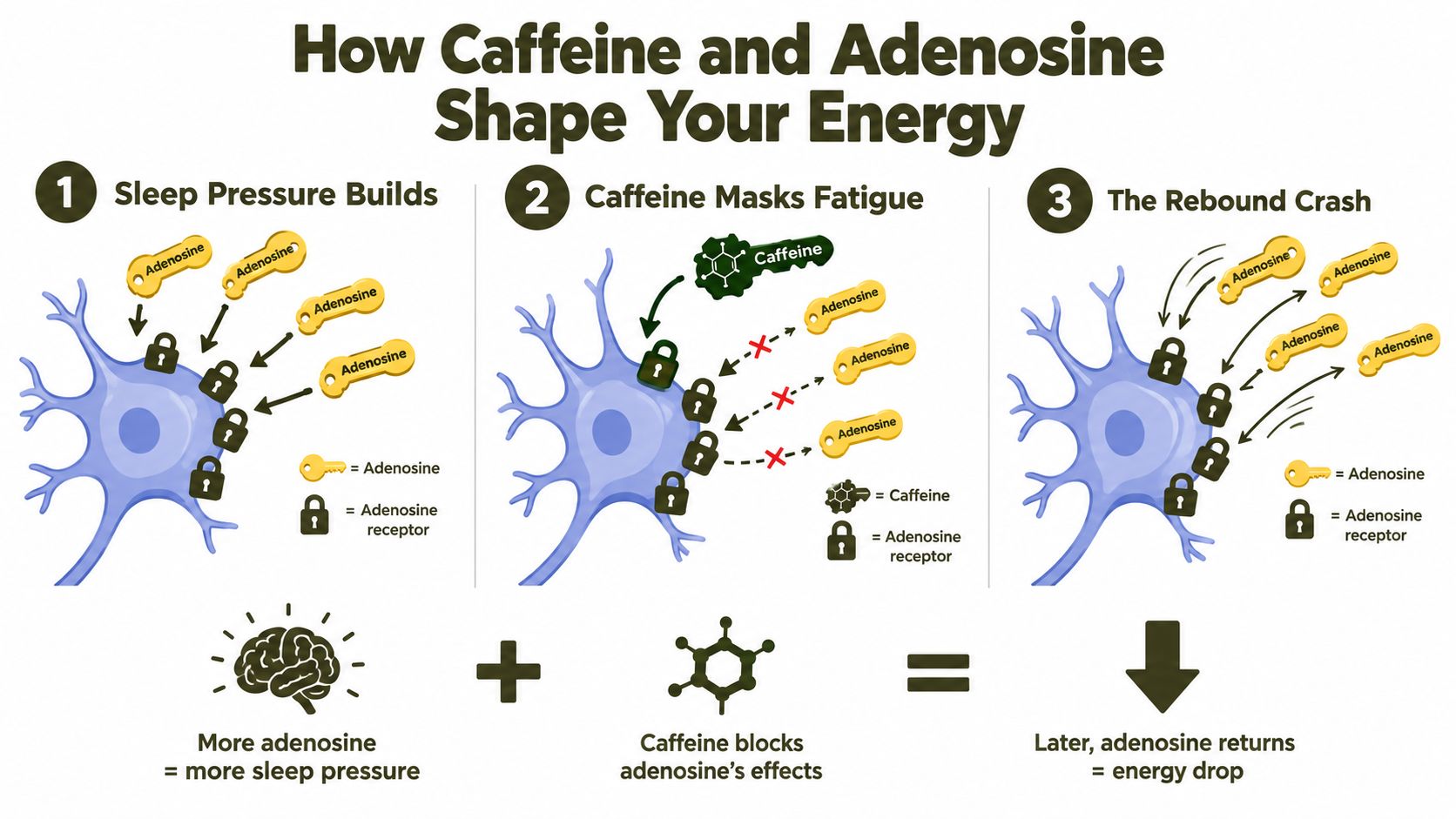
You can feel awake while your body is still asking for rest. That is the basic tension behind many energy drink crashes. Adenosine is the brain's slow-down messenger. It builds as you stay awake and pushes the body toward sleep. Caffeine does not remove that pressure. It sits on adenosine receptors and blocks the message from getting through.
The lock-and-key version
A simpler way to see it is this. Adenosine is the key that fits the sleep lock. Caffeine slips into that lock instead, so the tired signal is delayed for a while. The feeling is real, but it is a cover, not a reset.
That is why the first effect can feel so clean. Focus comes back, heaviness fades, and fatigue seems to step aside. The sleep pressure is still there in the background, though, and it keeps building while you are awake.
When caffeine wears off, the blocked receptors are open again. The stored sleep pressure shows up all at once, which is why the drop can feel sharper than the original tiredness. That rebound is often described as adenosine rebound, caffeine masks the signal first, then the underlying fatigue becomes obvious when the block fades.
Dose and sleep debt change the outcome
Adults over 40 often notice a larger swing because the margin for error is smaller. Many energy drinks contain enough caffeine to affect sleep onset, and experimental sleep research has shown that caffeine taken hours before bed can still disturb sleep. The exact response depends on the dose, the time of day, and how sensitive you are to caffeine.
Sleep debt changes the whole equation. If you are already under-recovered, caffeine is trying to cover a bigger gap, so the same drink can feel weaker, wear off sooner, and leave a more obvious crash. In practical terms, the drink is borrowing alertness against fatigue that was already there.
Why the same can feels different from person to person
The same can can land very differently depending on tolerance, sleep debt, hydration, and medication load. One person feels sharper for hours. Another gets jittery first, then flat, then oddly sleepy once the stimulant effect fades. That spread usually reflects how much sleep pressure was already in the system and how hard the body has to work to process the caffeine.
If brain fog is part of the picture, a closer look at brain fog and energy regulation can help connect the dots. The bigger question is not whether the drink gave you a lift. It is whether your body was already carrying enough sleep debt, adenosine buildup, dehydration, or medication-related load for the crash to show up later.
Takeaway: energy drinks do not create true energy, they temporarily mask fatigue, then often reveal it with interest.
Sugar Caffeine and Timing Interactions That Trigger Crashes
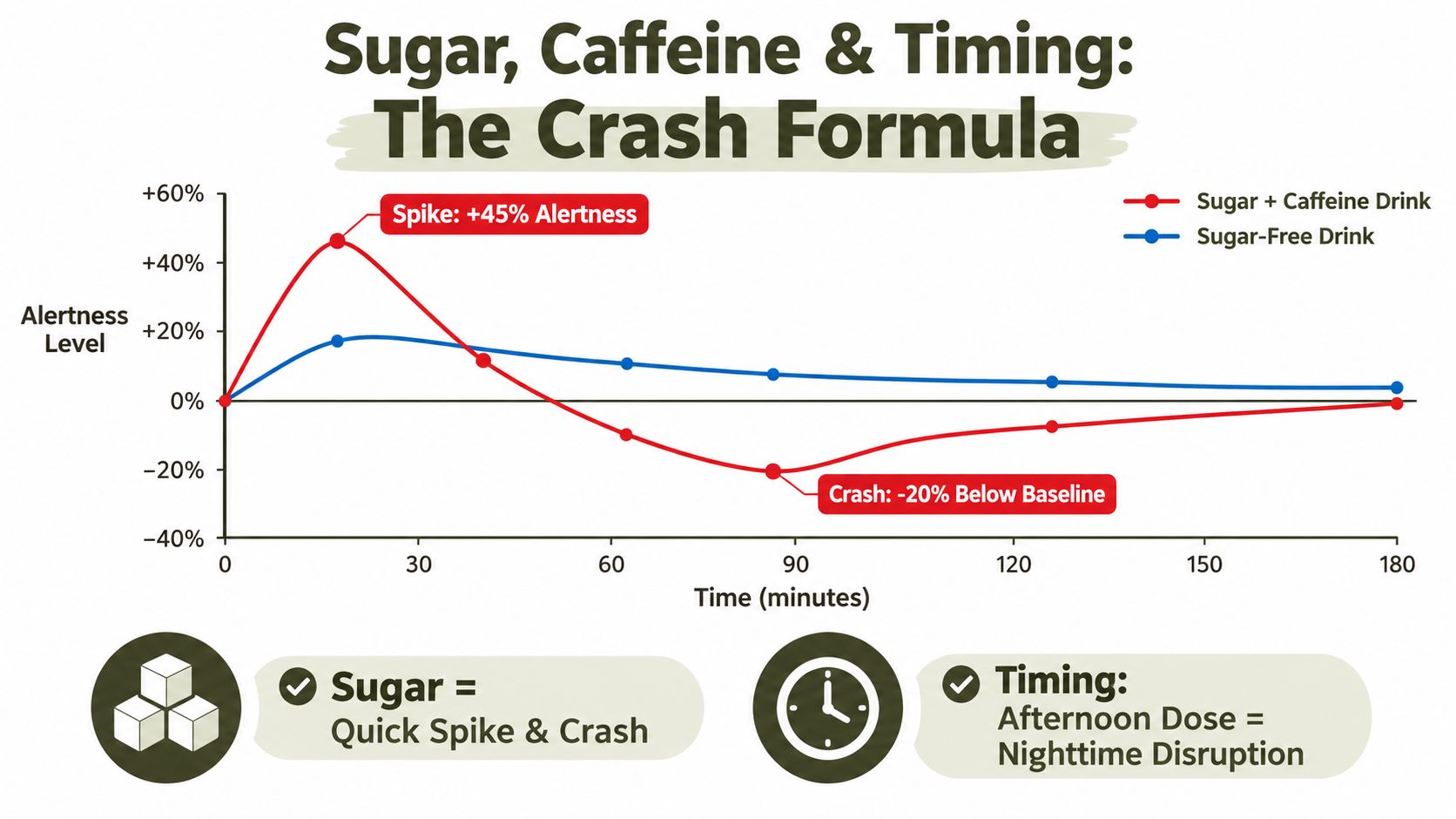
A lot of people blame sugar first, and sometimes that is part of it. A sugary energy drink can make the first lift feel bigger, then the drop feel more obvious. Sugar-free drinks avoid that glucose swing, but they can still leave you tired because the caffeine is wearing off, your sleep is already short, or both.
Why sugar can make the first boost feel bigger
Sugar can act like a quick spark. The drink feels stronger at the start, then the correction feels sharper once that spark fades. If the can also contains a lot of caffeine, the effects stack, first a fast rise in alertness, then a slump when the stimulant effect eases and the body is still carrying fatigue.
Sugar-free products remove one part of that pattern. They do not remove the whole pattern. As noted in a practical review of sugar-free crash timing, these drinks may still leave users vulnerable to a later drop after the caffeine effect fades (Takeroon on sugar-free crash timing).
Timing is often the hidden problem
Late-day timing makes the next morning worse. Energy drink effects can linger for up to 8 hours and may be followed by sleepiness afterward, so an afternoon can turn into a shorter night and a rougher start the next day (PMC review). For a busy adult, that often feels less like a single crash and more like a sleep-debt bill coming due.
Read the label with one question in mind, how much caffeine is in the whole container, not just per serving. Some bottles contain more than one serving, so the total dose matters more than the front-of-pack impression. If you notice the slump at a similar point each time, pay attention to that pattern. It is useful data.
What to watch on the label
- Total caffeine per bottle: a larger container can deliver more caffeine than the front label suggests.
- Sugar and sweetness: sugar can make the rise-and-fall feeling more noticeable, while sugar-free drinks can still leave you tired later.
- Time of day: if the drink lands late, the sleep disruption can outlast the buzz.
- Your own response: if the crash shows up at about the same point each time, that pattern helps you spot your trigger.
Midlife Factors That Make Crashes More Likely
Energy drinks often meet a body that is already carrying more load than it used to. In your 40s and 50s, sleep is often lighter, recovery takes longer, and daily stress can make the same dose feel rougher than it did years ago. The drink may be the trigger, but the deeper issue is often a sleep-debt problem with a rebound in adenosine, the chemical that builds pressure for sleep.
Sleep debt and fragmented sleep raise the stakes
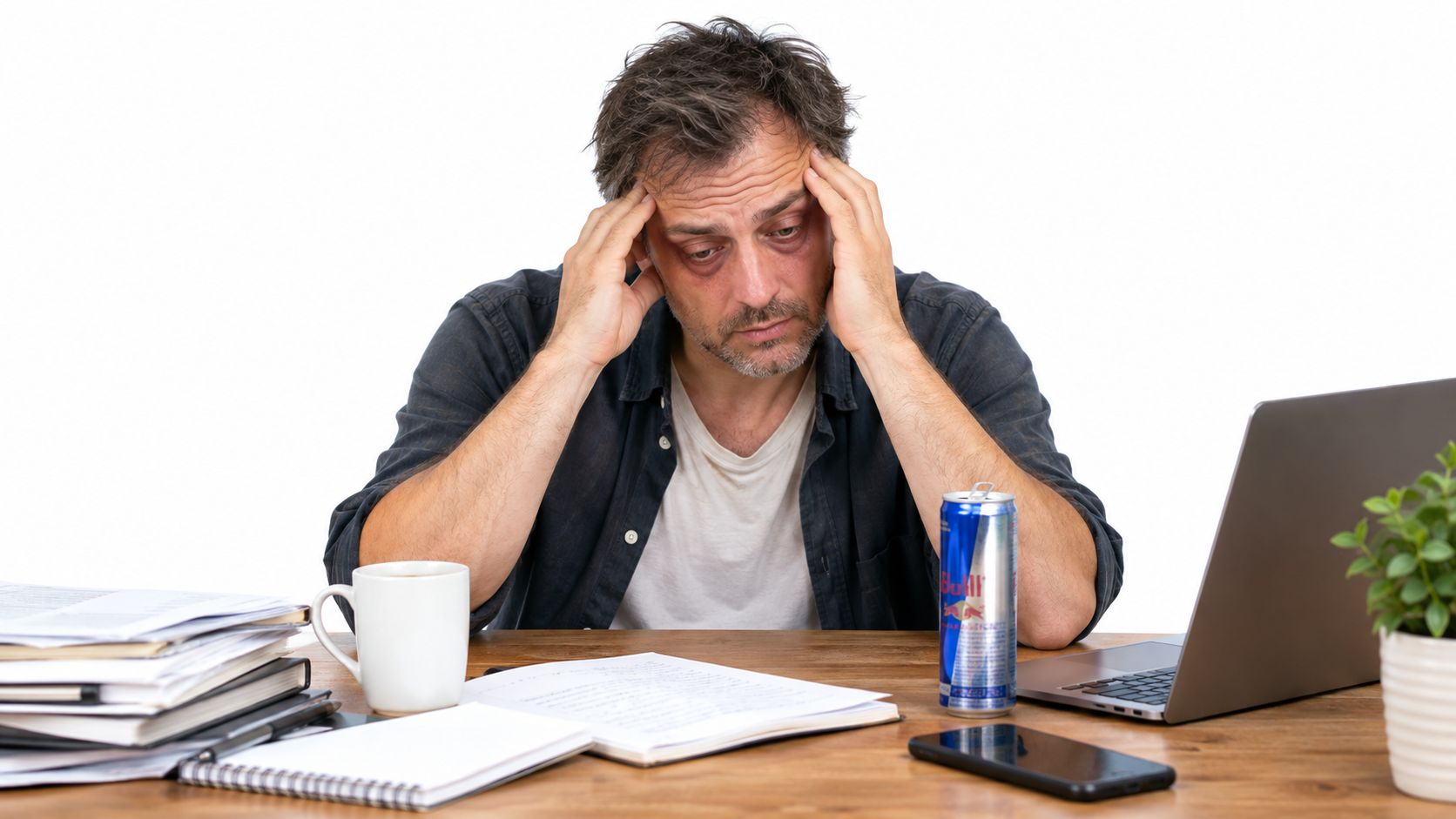
Midlife sleep is often easier to disrupt and harder to repair. If you already wake during the night or never feel fully restored, caffeine can borrow alertness from tomorrow. The short-term lift feels useful, then the bill shows up when the stimulant wears off and your underlying tiredness is still there.
That is why two people can react so differently to the same can. One may have enough sleep reserve to absorb it. Another may already be running on a thin margin, so the same drink pushes them from “getting by” to exhausted, foggy, or irritable.
Dehydration, stress, and medications can stack the odds
Energy drinks are often used in place of water, food, or a real break. Mild dehydration can make fatigue feel heavier, and caffeine does nothing to fix that. Stress can do the same thing, because a stressed nervous system can feel wired and drained at once.
Medications can shift the picture too, especially if they affect sleep, heart rate, or fluid balance. If an energy drink seems to hit harder than it used to, or leaves you flatter afterward, that is worth discussing with a clinician instead of trying to override it with another can. A biomarker-informed approach can help here, because the pattern may reflect poor sleep, dehydration, or medication effects rather than caffeine alone.
A simple midlife checklist
- Waking unrefreshed: you start the day already behind, then add caffeine on top.
- Dry mouth or skipped meals: the drink may be replacing fluids or food, not just adding energy.
- Frequent night waking: small sleep losses matter more when recovery is already incomplete.
- Morning drag after a late boost: the sleep disruption may be showing up after the buzz is gone.
Common Crash Patterns and What They Reveal
The pattern often tells you more than the product name. Two people can drink the same brand and have opposite experiences, because one used it after poor sleep and the other used it after lunch with enough water. Matching the timing to the feeling is how you figure out what's driving the crash.
| Pattern | Timing and Clues | Likely Driver |
|---|---|---|
| Afternoon sugar slump | You feel a quick lift, then fog, shakiness, or hunger later in the day | Sugar rise and fall layered on top of caffeine |
| Late-night alertness, next-day drag | You felt energized at first, but slept badly and woke unrefreshed | Sleep disruption from caffeine timing |
| Sugar-free but still tired | No sugar crash, yet you still get sleepy later | Caffeine rebound and accumulated sleep debt |
| “It works until it doesn't” | You need it more often or feel less benefit than before | Tolerance plus ongoing fatigue |
Reading your own pattern
The most useful clue is timing. If the slump arrives after a short window, look at the stimulant dose and whether you drank it with food. If the bad feeling shows up the next day, think sleep disruption first. If sugar-free drinks still leave you flat, sugar isn't the whole answer, and it's time to look at caffeine timing, dose, and your baseline fatigue.
The label tells you what was in the can. Your body tells you what it did to your sleep, appetite, and next-day energy.
What people miss is that crashes can be delayed. The drink may feel useful at 4 p.m., then you're restless at 11 p.m. and dragging by breakfast. That's not a separate problem, it's the same one showing up on a different clock.
Science Informed Ways to Avoid the Energy Drink Crash
You do not need to quit caffeine entirely to feel better. A steadier result usually comes from using less, using it earlier, and avoiding the habits that turn a short boost into a sleep problem. For adults over 40, the crash often reflects sleep debt and adenosine rebound, with dehydration, medications, and fragmented sleep making the dip feel sharper.
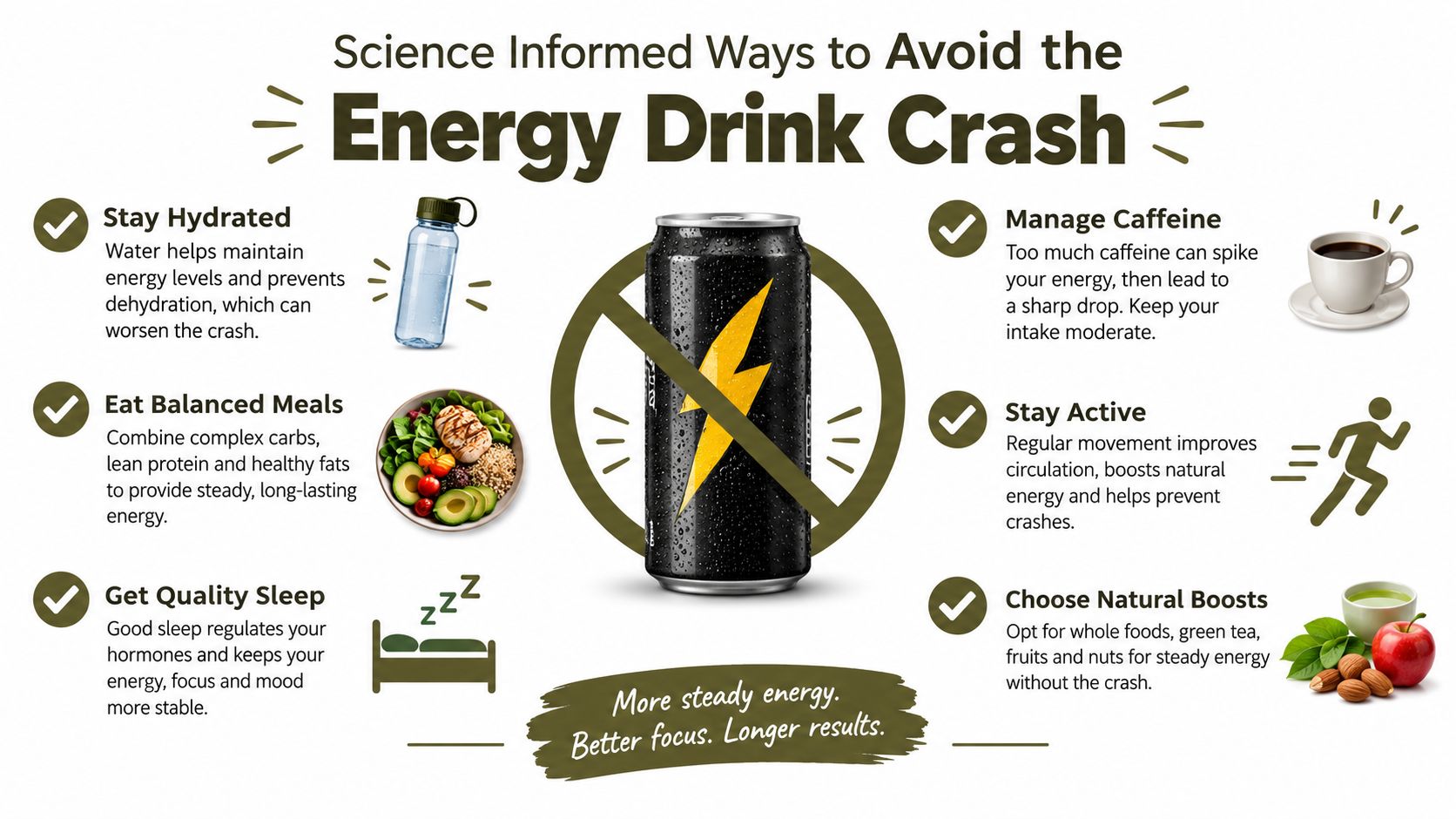
A steadier routine beats a bigger stimulant dose
Start with timing. If caffeine can keep interfering with sleep well after you drink it, the simplest fix is to move it earlier in the day. A practical rule is to leave a wider buffer before bed than you may be using now, because the late-afternoon can drink can still echo into the night.
Food and water matter too. If you tend to skip meals or run underhydrated, caffeine lands on top of an already stressed system. That is like pressing the gas pedal while the fuel tank is low. The result can feel harsher than the drink alone would suggest. A meal and a glass of water will not erase the rebound, but they can make the ride less bumpy.
Make the experiment measurable
Treat the next week like a small test. Write down when you drank it, whether you ate, how much water you had, and how you slept that night. Then note how the next morning feels.
That simple log often shows whether the issue is timing, dose, hydration, or a sleep problem that was already there.
If you want a more measured starting point, Longwelle's healthy energy drink guide is a useful place to compare options. The goal is to need rescue caffeine less often, not to keep hunting for a can that leaves no trace.
A practical routine can look like this:
- Earlier intake: keep caffeine well away from bedtime.
- Lower total dose: use the smallest amount that still helps you function.
- Water first: drink fluids before reaching for stimulation.
- Sleep protection: treat bedtime as recovery time, not a loose suggestion.
When to Track Biomarkers and Get Guidance
If the crash keeps happening, the smartest move is to stop treating it as a mystery and start treating it as data. Persistent fatigue can reflect poor sleep, hydration issues, medication effects, blood sugar instability, or something else that's worth checking rather than guessing.
That's where tracking helps. A short symptom log, sleep timing, resting energy, and whether the slump follows caffeine can show patterns quickly. If you want a more guided approach, Longwelle's “why am I so tired” resource connects fatigue patterns with measurable lifestyle signals and lab-informed follow-up.
When to ask for clinical input
If tiredness is persistent, new, or out of proportion to your usual baseline, don't keep pushing harder with stimulants. Energy drinks can hide the problem for a while, but they can also make the cycle of poor sleep and daytime exhaustion harder to see. A clinician can help you look at the broader picture, including whether medication timing, sleep quality, or lab markers need attention.
Longwelle offers a 3-minute assessment, biomarker tracking, and optional nurse practitioner consultations as educational support for adults who want a more structured way to connect habits and measurable markers. That kind of feedback is useful when you're trying to tell the difference between ordinary fatigue and a pattern that needs a closer look.
Steadier energy usually comes from sleep, timing, hydration, and feedback, not from chasing a stronger stimulant. Start by changing one variable, track what happens, and let the pattern guide the next step.
If you want a calmer, more measurable way to work on fatigue, Longwelle can help you connect sleep, habits, and biomarkers before you keep reaching for another can. Visit Longwelle to take the 3-minute assessment, review your results, and see whether a more structured energy plan fits your routine.