Learn
Why Am I So Tired Quiz: What It Reveals and How to Act
Take the why am I so tired quiz to uncover common midlife fatigue causes, learn what results actually mean, and find clear next steps
Halfway through a Tuesday, a 47-year-old professional can be doing everything “right” and still feel strangely drained. The second coffee sits cold beside a half-finished report, the inbox keeps growing, and the body feels heavy even after what should have been enough sleep. That's the kind of day that sends people searching for a why am I so tired quiz, not because they're dramatic, but because they're tired of guessing.
That urge makes sense. The CDC reported that in 2024, 30.5% of U.S. adults slept less than 7 hours on average, 15.4% had trouble falling asleep, and 18.1% had trouble staying asleep (CDC adult sleep facts). The same data showed that only 54.8% woke up feeling well-rested most days or every day, which leaves a lot of adults living with fatigue that looks ordinary on the outside and feels persistent on the inside.
For midlife adults, that usually shows up as more than sleepiness. It can mean skipped workouts, a shorter fuse with family, foggy thinking at work, or that quiet worry that something has changed. If that sounds familiar, brain fog and tiredness often travel together, and a good fatigue screen helps separate a rough week from a real pattern.
Table of Contents
- That Dragging Feeling Most Midlife Adults Recognize
- What a "Why Am I So Tired" Quiz Actually Measures
- The Five Contributor Families Most Quizzes Cover
- The Two Midlife Drivers Most Fatigue Quizzes Under-Screen
- How to Read Your Quiz Results Without Overreacting
- Generic Fatigue Checkers vs Biomarker-Driven Follow-Up
- From Quiz Result to One Small Habit You Can Actually Keep
- Your Next Step and Quick Answers to Common Questions
That Dragging Feeling Most Midlife Adults Recognize
A lot of people recognize the scene before they name the problem. They slept a full night, got to work on time, and still feel like they're moving through wet concrete by 10 a.m. The body isn't crashing in one dramatic moment, it's just not recovering the way it used to.
When tired turns into a pattern
That is why a why am I so tired quiz can be useful. It gives shape to a feeling many adults have normalized, especially in their 40s and 50s, when work demands, family obligations, and changing sleep habits all start to overlap. The point is not to label yourself as unhealthy. The point is to stop treating repeated exhaustion like a personality trait.
Practical rule: if your energy has become the background noise of the week, don't keep calling it “busy.” Start mapping it.
The difference matters because tiredness costs more than comfort. People start avoiding the gym, snapping at coworkers, forgetting details, or needing more caffeine just to stay upright. A structured quiz can help you notice which parts of life are draining you most, before another month disappears into pushing through.
Why this feels so confusing
Fatigue often doesn't announce itself with one obvious cause. One week it looks like poor sleep, the next it feels like stress, and after that it may seem like motivation has vanished. A quiz creates a simple checkpoint so you can see whether the problem looks more like sleep loss, mental load, or something that needs a closer look.
What a "Why Am I So Tired" Quiz Actually Measures
A good fatigue quiz is a self-screen, not a diagnosis. It collects clues in a consistent way so you can compare your answers instead of relying on a vague hunch about being “off.” That structure matters because people usually notice the loudest symptom and miss the quieter patterns that repeat every week.
The main things it should ask about
At minimum, a solid quiz looks at sleep duration, sleep quality, daytime energy patterns, stress, mood, movement, nutrition, hydration, and a simple medical history. It should also help separate physical tiredness, mental fatigue, and motivational drag, because those don't always point to the same root cause. A person who feels sleepy all afternoon, for example, may need a different next step from someone who feels mentally flat but not physically exhausted.
The best quizzes do one more useful thing. They make it easier to spot patterns you've started to ignore, like a late-night screen habit, a week of bad sleep after travel, or a lingering low-energy stretch that keeps coming back. That's more valuable than a generic checklist because it helps rank likely contributor families, so your next move isn't random.
Why structure beats a loose checklist
A loose symptom list can feel validating, but it rarely tells you what to do next. A structured quiz gives you a repeatable result profile, which means you can revisit it after changing one habit and see whether anything shifted. That's the difference between “I took a quiz” and “I learned something useful.”
Helpful framing: a good quiz doesn't tell you what's wrong with your body. It tells you what deserves attention first.
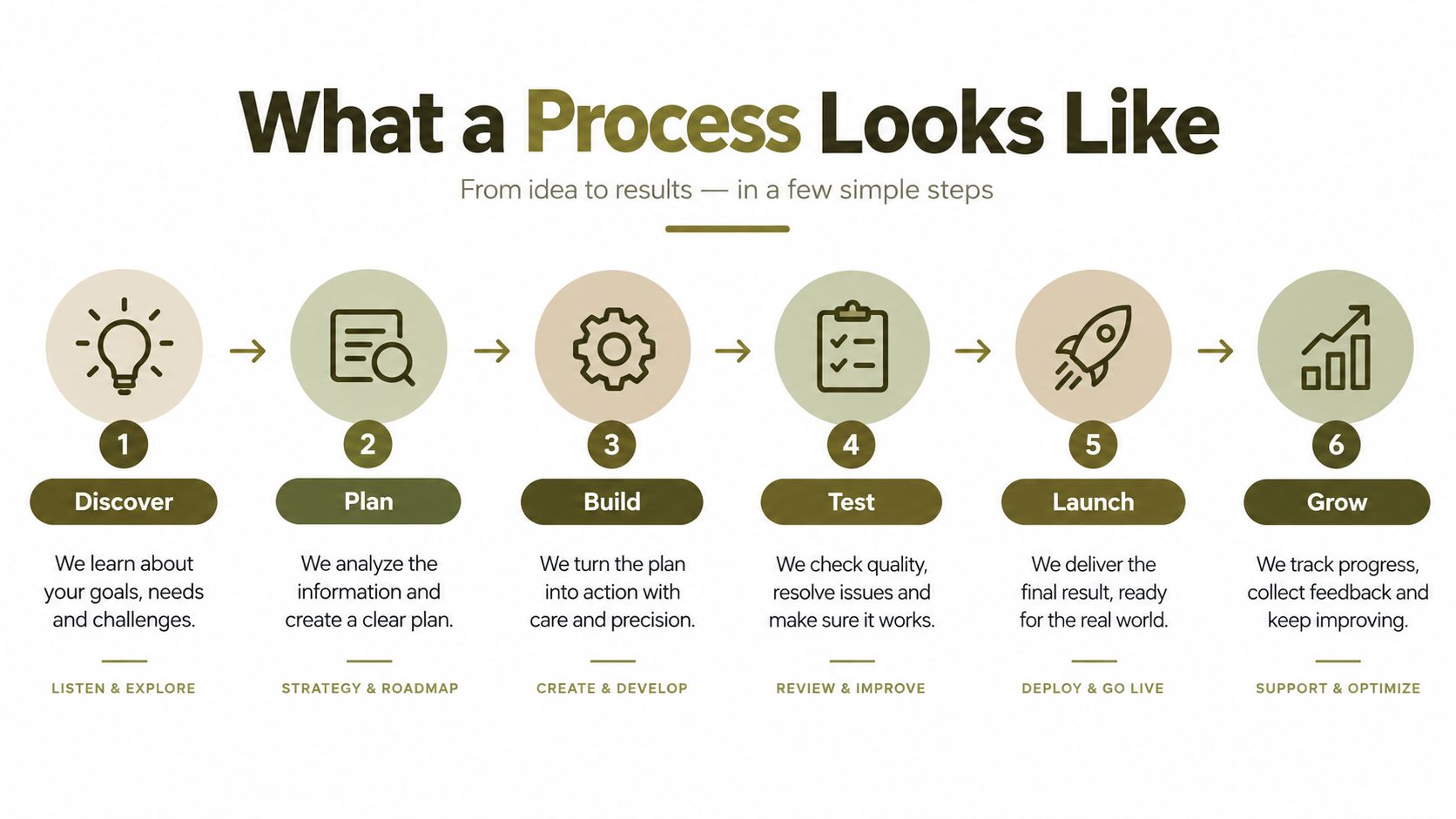
For people who want a guided version of that process, an AI health coach can sit on top of the quiz results and help organize the next step without turning the whole thing into guesswork.
The Five Contributor Families Most Quizzes Cover
Most fatigue quizzes circle the same five contributor families, and for good reason. They reflect the most common day-to-day reasons adults feel flat, especially when life is busy and sleep isn't ideal. The value comes from seeing which family fits your pattern best instead of assuming every tired day means the same thing.
Sleep, stress, movement, food, and mood
Sleep quantity and quality is usually the first category. A midlife example is the person who sleeps seven hours on paper but wakes three times, scrolls late at night, and feels unrefreshed by breakfast. The quiz theme here is often about bedtime routines, fragmented sleep, or whether you wake restored.
Stress and mental load is the next big one. That might look like a parent managing aging parents, a job, and school schedules at the same time, then wondering why the body feels tired even on low-activity days. Questions in this family tend to probe overload, worry, and the sense that your mind never fully clocks out.
Movement and recovery can cut both ways. Some people are sedentary for long stretches and feel flat because the body never gets a strong rhythm, while others are overdoing workouts or errands and never leaving room to recover. The quiz usually checks whether your activity level is consistent, strained, or nearly absent.
A tired body doesn't always need more discipline. Sometimes it needs a better rhythm.
Nutrition and hydration show up in simple, realistic ways. Think of the afternoon crash after a lunch that was mostly refined carbs, or the person who skips protein, drinks coffee instead of water, and then wonders why concentration drops. Questions often target meal timing, hydration, and the shape of energy across the day.
Mood and motivation can look like low-grade depression, emotional flattening, or losing interest in things that normally feel easy. A person might still function, but everything feels heavier than it should. Quality quizzes distinguish this from pure physical fatigue because the next step may be different.
| Contributor Family | Common Midlife Scenario | Typical Quiz Question Theme |
|---|---|---|
| Sleep quantity and quality | Waking unrefreshed after a night that seemed long enough | Sleep duration, awakenings, bedtime habits |
| Stress and mental load | Caring for family while keeping up with a demanding job | Overload, worry, emotional strain |
| Movement and recovery | Either sitting all day or pushing hard without rest | Activity level, recovery time, physical strain |
| Nutrition and hydration | Afternoon crash after a carb-heavy lunch or skipped meals | Meal timing, hydration, appetite patterns |
| Mood and motivation | Feeling flat, detached, or less interested in usual routines | Mood, loss of interest, mental energy |
The Two Midlife Drivers Most Fatigue Quizzes Under-Screen
Generic quizzes often stop where the answers get messy. They'll ask about sleep and stress, but they usually don't push hard enough on two midlife drivers that deserve more attention, sleep apnea and medication-related fatigue. That's where a surface-level checklist can miss the problem.
Sleep apnea in women often looks different
Sleep apnea is easy to miss when people expect only loud snoring and obvious pauses in breathing. In women, it may show up more as tiredness, restless sleep, morning headaches, or mood shifts, especially in midlife when sleep can change for other reasons too. Independent review material notes that women's sleep apnea prevalence rises with age, and that matters because many quizzes still don't ask the right follow-up questions.
A common vignette looks like this. A woman in her early 50s says she's tired every morning, but she doesn't think she has sleep apnea because no one complains about snoring. She's also moving through perimenopause or menopause, which can make sleep feel lighter and more fragmented. The result is a fatigue pattern that seems “normal for age” until it's worth formal screening.
Medications can quietly flatten energy
The other blind spot is medication burden. Fatigue can come from a single prescription, a new over-the-counter product, or the combined effect of several things taken together. A person may notice the change after starting an antihistamine, a beta-blocker, an antidepressant, a proton-pump inhibitor, or a sedating pain reliever, then never connect the timing because the change felt gradual.
A realistic example is the adult who says, “I was fine until my medication changed, and now I'm dragging by noon.” That timing matters. A quiz that only asks whether you sleep and exercise can miss the relationship between dose changes, cumulative medication burden, and a drop in daily energy.
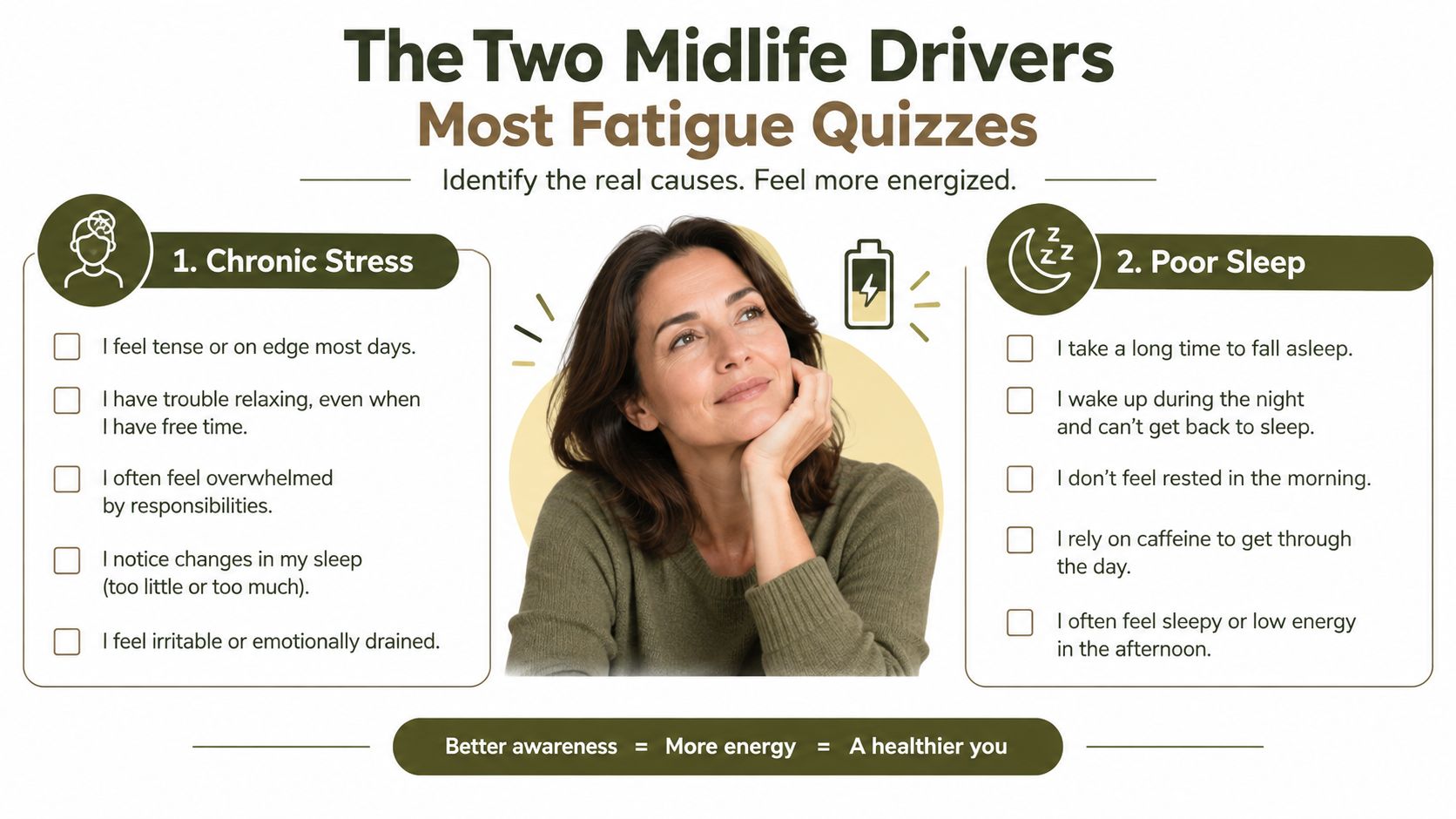
When those under-screened drivers combine with poor sleep, stress, or low movement, the story becomes clearer. The quiz doesn't have to solve everything, but it should help you notice when the answer is bigger than lifestyle habits alone.
How to Read Your Quiz Results Without Overreacting
A fatigue quiz should start a conversation, not end one. The safest way to read the result is to slow down and look at the pattern, rather than latching onto the first category that feels familiar. Most confusion comes from over-reading one score or under-reading a pattern that repeats across several categories.
A calm three-step read
First, identify which contributor families scored highest. If sleep, stress, and mood all cluster together, that tells you something different from a result that points mostly toward nutrition. The goal is to see the shape of the problem.
Second, look for overlap. One bad night doesn't mean you have a sleep disorder, and one stressful week doesn't explain months of low energy. Repeated low-energy mornings, poor recovery, and persistent non-restorative sleep deserve more weight than a single rough answer.
Third, separate what you can change from what needs a clinician. You can test a bedtime routine, a meal pattern, or your caffeine timing. You should not use a quiz to stop a prescribed medicine on your own, because the quiz is a screen, not a treatment plan.
Plain rule: if the result points to a possible medical issue, use it as a reason to ask better questions, not a reason to self-diagnose.
There's also a line between delay and neglect. Ignoring tiredness for years because “everyone is busy” can hide a real problem, but panicking over every low-energy afternoon can send you in the wrong direction. Red-flag symptoms like chest pain, fainting, or sudden weight loss need prompt medical attention rather than more self-experimentation.
Generic Fatigue Checkers vs Biomarker-Driven Follow-Up
Not every fatigue tool is built for the same job. A generic online checker can help you organize symptoms quickly, but it usually stops at broad pattern recognition. A biomarker-driven follow-up gives you more context when the reasons for fatigue still aren't clear.
Side by side
| Feature | Generic Fatigue Quiz | Longwelle Biomarker Follow-Up |
|---|---|---|
| Main value | Quick symptom mapping and broad lifestyle flags | A 3-minute Longevity Quiz plus at-home biomarker panels reviewed by nurse practitioners |
| Depth of insight | Surface-level scoring | Connects symptoms to measurable markers and tracked results |
| Clinical context | Usually none | Optional review with licensed nurse practitioners |
| Common limits | No bloodwork, no clinician interpretation | Requires follow-through and lab testing |
| Best use | Starting the conversation | Clarifying persistent fatigue when answers stay unclear |
A generic checker is useful when you want a fast first pass. It can help you notice that sleep, stress, or nutrition might be contributing, and it can do that without cost or complexity. The limitation is that it can't tell you whether a symptom pattern lines up with something measurable.
That's where Longwelle fits naturally for adults who want a more structured next step. Its 3-minute Longevity Quiz is designed to feed into at-home biomarker panels, with guidance from licensed nurse practitioners and follow-up around markers such as ferritin, vitamin D, TSH, and HbA1c. For someone whose fatigue isn't clearing with basic habit changes, that kind of follow-up can move the conversation from “I feel off” to “let's check what the body is showing.”
A simple rule helps with the decision. Use a generic checker to start, then move to biomarker-driven follow-up when the answers stay fuzzy or fatigue keeps hanging around after a few weeks of small changes.
From Quiz Result to One Small Habit You Can Actually Keep
The fastest way to waste a fatigue screen is to change everything at once. People overhaul sleep, diet, supplements, and workouts in the same week, then quit when nothing feels stable enough to judge. One small test is cleaner, easier to repeat, and much more honest about what's helping.
Pick one habit and anchor it
Choose one change that fits into a routine you already have. If your quiz points toward sleep, that might mean putting your phone down at the same time every night for two weeks. If it points toward nutrition, it might mean adding protein to breakfast instead of trying to redesign every meal.
Track the same question each day, “Do I feel more steady than I did before?” That's a better baseline than waiting for a perfect burst of energy, which rarely shows up on command. Small, testable changes give you a real answer instead of a motivational mood swing.
Good next step: make the change small enough that you can repeat it on your worst day, not just your best one.
Longwelle's routines guide fits that same logic. A quiz result can point to one habit, and biomarker tracking can show whether that habit is moving the numbers and the day-to-day feeling in the same direction. That turns fatigue work from guess-and-check into a measured process.
Your Next Step and Quick Answers to Common Questions
Take the quiz, look for the top contributor families, and choose one small habit to test for two weeks. If fatigue keeps showing up or the answers don't fit the way you feel, request a fatigue-focused lab panel and review it with a clinician. That sequence is calmer, clearer, and more useful than trying ten fixes at once.
How accurate is a fatigue quiz? It's good for organizing clues, not for diagnosing a cause.
When should fatigue prompt a medical visit? If it's persistent, getting worse, or paired with red-flag symptoms like chest pain, fainting, or sudden weight loss.
How soon should I expect more energy? Some habit changes are noticeable within days, but a stable pattern usually takes longer to judge.
How is biomarker testing different from a checklist? A checklist gathers symptoms, while biomarker testing adds measurable data that can point to what's worth following up.
If you're tired of guessing, Longwelle gives you a simple way to start with a 3-minute Longevity Quiz, then move into biomarker-driven follow-up with nurse practitioner support when the picture still isn't clear. Visit Longwelle to see how the quiz, lab tracking, and routine guidance can turn a vague fatigue pattern into a practical next step.