Learn
Why Am I So Tired in the Afternoon? a Practical Guide
Why am I so tired in the afternoon? Discover common causes of afternoon fatigue, evidence-based fixes, and when to talk to a clinician.
You've had lunch, answered a few emails, and now the screen starts feeling heavier than it did an hour ago. Your focus slips, your eyelids feel a little sticky, and the question arrives again, why am I so tired in the afternoon when the day isn't even close to over?
That tiredness is a body signal, not a character flaw. In many people, afternoon fatigue comes from a mix of circadian biology, sleep debt, meal effects, lighting, and sometimes a medical issue that hasn't been recognized yet. Midlife can make it feel more personal because work, caregiving, exercise, and health changes all collide at the same time.
A helpful way to think about it is this, the afternoon crash usually has a built-in floor and then several modifiable amplifiers. If you only treat the symptoms with coffee or willpower, the slump often returns. If you separate the biology from the habits, the pattern starts to make sense, and the right fixes become easier to choose.
The circadian part matters first, because it explains why the dip shows up even on days when lunch is light. The rest of the guide breaks down what's normal, what's modifiable, and what deserves a closer look.
Table of Contents
- The Afternoon Crash and Why It Feels So Personal
- Your Body Clock, Not Just Your Lunch
- Common Causes of Afternoon Fatigue in Midlife
- Practical Strategies to Beat the Afternoon Slump
- Lab Work and Biomarkers Worth Tracking
- Red Flags and When to Bring in a Clinician
- A Seven-Day Plan and How to Measure Progress
The Afternoon Crash and Why It Feels So Personal
The 3 p.m. version of tired often feels different from ordinary sleepiness. The mind gets sticky, task switching slows, and noise, meetings, or decisions feel harder to handle. In midlife, that can feel especially personal because daily demands are already high.
A signal, not a verdict
Fatigue is a signal that energy regulation is under strain. One PubMed analysis estimated daytime sleepiness affects about 20% of adults, and a later U.S. analysis found 27.2% of adults reported daytime sleepiness and 29.8% reported trouble sleeping. That places the complaint inside a broader sleep-health burden rather than a rare individual problem.
That same analysis also reported 30.5% of adults with at least 1 hour of sleep debt and 46.5% with at least 1 hour of social jet lag. In plain language, many people are living with sleep timing that does not fully match the day they are trying to keep up with.
A practical rule helps here. If afternoon energy keeps dropping, start by looking at sleep, timing, lighting, food, and possible sleep disorders before blaming motivation.
Why midlife makes the slump feel louder
Midlife often layers several energy drains together. Sleep can shorten a little, movement can drop, and more time on screens and under artificial light can make the crash feel stronger. The slump is rarely caused by one thing alone.
A better model is layered. Your body clock can create a trough, and sleep loss, glucose swings, stress, hormones, or medication can deepen it. Two people can eat the same lunch and still have very different afternoons.
The lunch question causes a lot of confusion. The meal often lands on top of an already lower-alertness window, so even a sensible lunch may not prevent the dip. That is why the problem can feel inconsistent from day to day.
Once you separate the built-in circadian dip from the modifiable drivers, the pattern starts to make sense. From there, sleep debt, meal response, lighting, and biomarkers become clues instead of guesswork.
Your Body Clock, Not Just Your Lunch
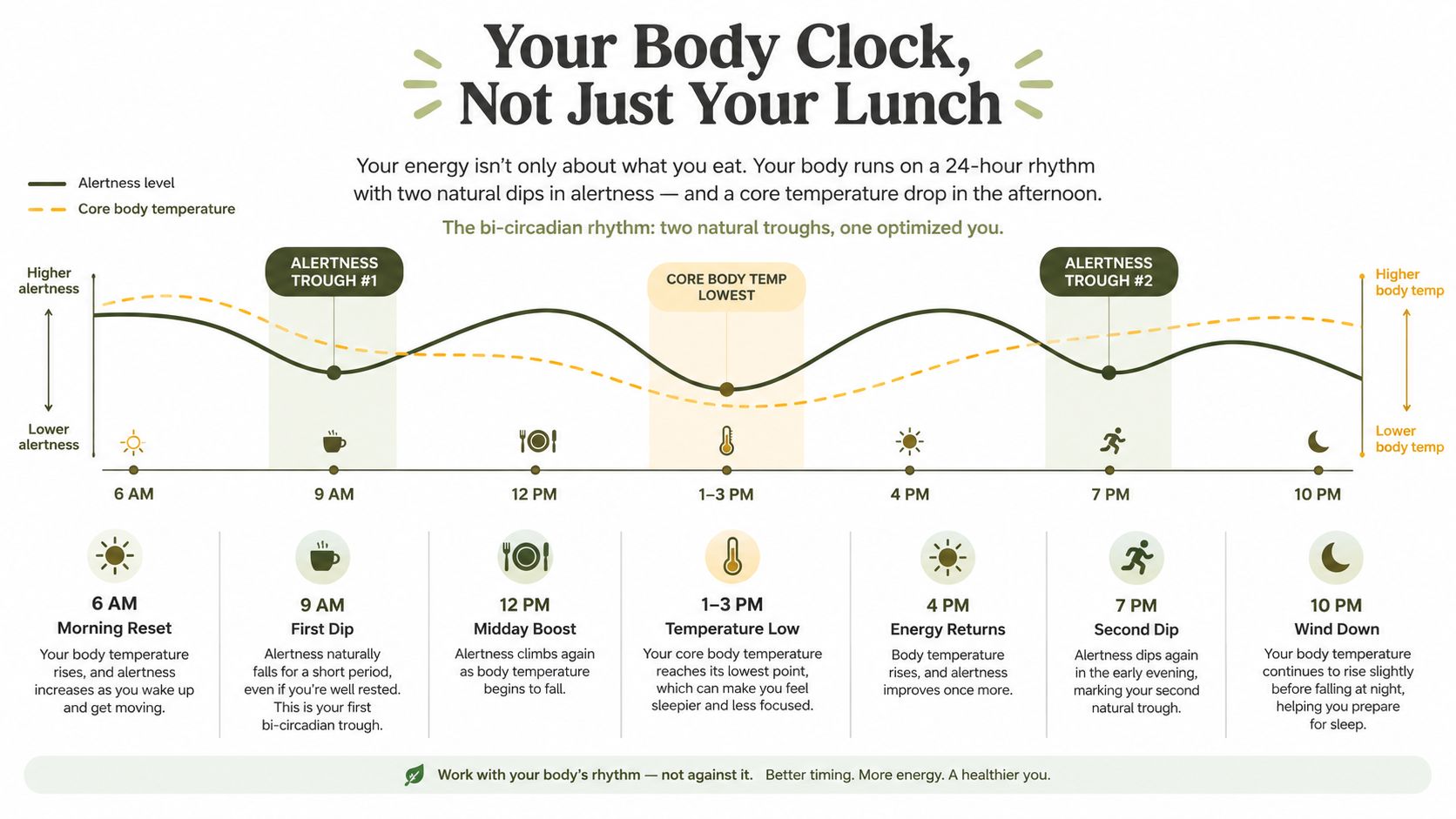
The afternoon dip is partly built into human biology. Controlled research describes the post-lunch slump as a bi-circadian phenomenon that can happen even without eating, which is why skipping lunch doesn't always restore alertness (controlled study). The body has a predictable early-afternoon trough in vigilance.
What the dip actually is
Think of your alertness like a dimmer switch rather than an on-off button. Around the midafternoon window, the brain's arousal systems ease off a bit, core body temperature dips, and reaction time can slow. That doesn't mean you're doing anything wrong, it means your body has a regular low point in the day.
Lunch can still matter, but mostly as an amplifier. A large meal, a fast meal, or a carb-heavy meal can make the dip feel deeper because digestion and glucose handling add another load. The meal didn't invent the slump, it just made an existing trough easier to notice.
Why timing changes the experience
Not everyone feels the dip with the same intensity. Sleep timing, chronotype, age, and prior sleep loss can shift when the low point appears and how heavy it feels. If you woke short on sleep, the afternoon trough is often much harsher because you're starting the day already behind.
This is why one-size-fits-all advice often disappoints. Telling everyone to “eat less at lunch” misses the fact that some people are fighting a strong circadian window and need light, movement, or better sleep timing first. Others really do need to change meal size or composition.
The body clock creates a floor. Anything that lowers energy, from poor sleep to a heavy lunch, lands harder in that window.
Bright light, a short burst of movement, and carefully timed caffeine can all help reduce the impact of that trough. But those are tools for working with the biology, not against it. The next question is what most often pushes the floor even lower in midlife.
Common Causes of Afternoon Fatigue in Midlife
The usual suspects, and how they stack
A midafternoon energy drop in adults roughly 40 to 65 usually comes from several pressures acting together. Sleep debt is a big one. If your nights are short or broken, you start the day with less reserve, like trying to run a phone on a half-charged battery.
Sleep disorders can sit underneath that pattern too, especially obstructive sleep apnea. A clinical review linked daytime sleepiness most often to sleep deprivation, obstructive sleep apnea, and sedating medications. Chronic sleep loss can also show up as brain fog, which is why fatigue and mental sluggishness often travel together, as explained in this brain fog guide.
Stress load is another common amplifier. When the nervous system stays on high alert for long stretches, daytime alertness can flatten out more quickly, so the afternoon drop feels steeper than expected. Food patterns matter as well. Large carb-heavy lunches, skipped breakfast, and long gaps between meals can all push glucose and energy in the wrong direction, which makes an existing slump harder to ignore.
Hydration is easy to miss. Even mild dehydration can leave people feeling slower, foggier, and less resilient by afternoon.
Medications and supplements can add their own weight. Some antihistamines, beta-blockers, antidepressants, and sleep aids can carry sleepy effects into the workday, especially if the timing or dose has changed.
Midlife hormones can layer in another source of fatigue. Perimenopause and menopause can disturb sleep and energy in women, and testosterone changes can affect energy in men. In menstruating women, anemia is another possibility to consider when tiredness appears with heavy periods or reduced exercise tolerance.
| Driver | Typical Signs | Quick Self-Check |
|---|---|---|
| Sleep debt | Heavy eyelids, unrefreshing sleep, afternoon brain fog | Did I sleep enough last night, and for several nights in a row? |
| Sleep apnea or another sleep disorder | Loud snoring, choking at night, waking unrefreshed | Has anyone noticed pauses in breathing during sleep? |
| Stress load | Wired but tired, tense shoulders, mental overload | Is my mind still “on” even when my body wants to rest? |
| Meal pattern | Sleepiness after lunch, cravings, shaky energy | Was lunch large, fast, or mostly refined carbs? |
| Dehydration | Dry mouth, dull headache, low energy | Have I had enough fluids by midafternoon? |
| Medications | Sleepiness that starts after a new prescription or dose change | Did the timing of fatigue change after a med change? |
| Hormonal or blood issues | Sleep disruption, hot flashes, low stamina, heavier bleeding | Are there cycle changes, heat symptoms, or signs of blood loss? |
Why fixes should be prioritized
Trying to fix everything at once usually leads nowhere. It works better to identify the two or three biggest contributors and start there. For one person, that may mean treating sleep debt. For another, it may mean adjusting lunch or asking whether a medication is part of the problem.
The best approach is to separate what is fixed by the body clock from what you can change. A circadian dip may be part of the pattern, but the size of the crash often depends on sleep quality, meal timing, light exposure, hormone shifts, and whether you are already running low on energy from another cause.
That is why a careful history and biomarker tracking can be so useful. They turn a vague “Why am I so tired in the afternoon?” into a pattern you can test with a clinician or nurse practitioner, rather than guessing at random.
Practical Strategies to Beat the Afternoon Slump
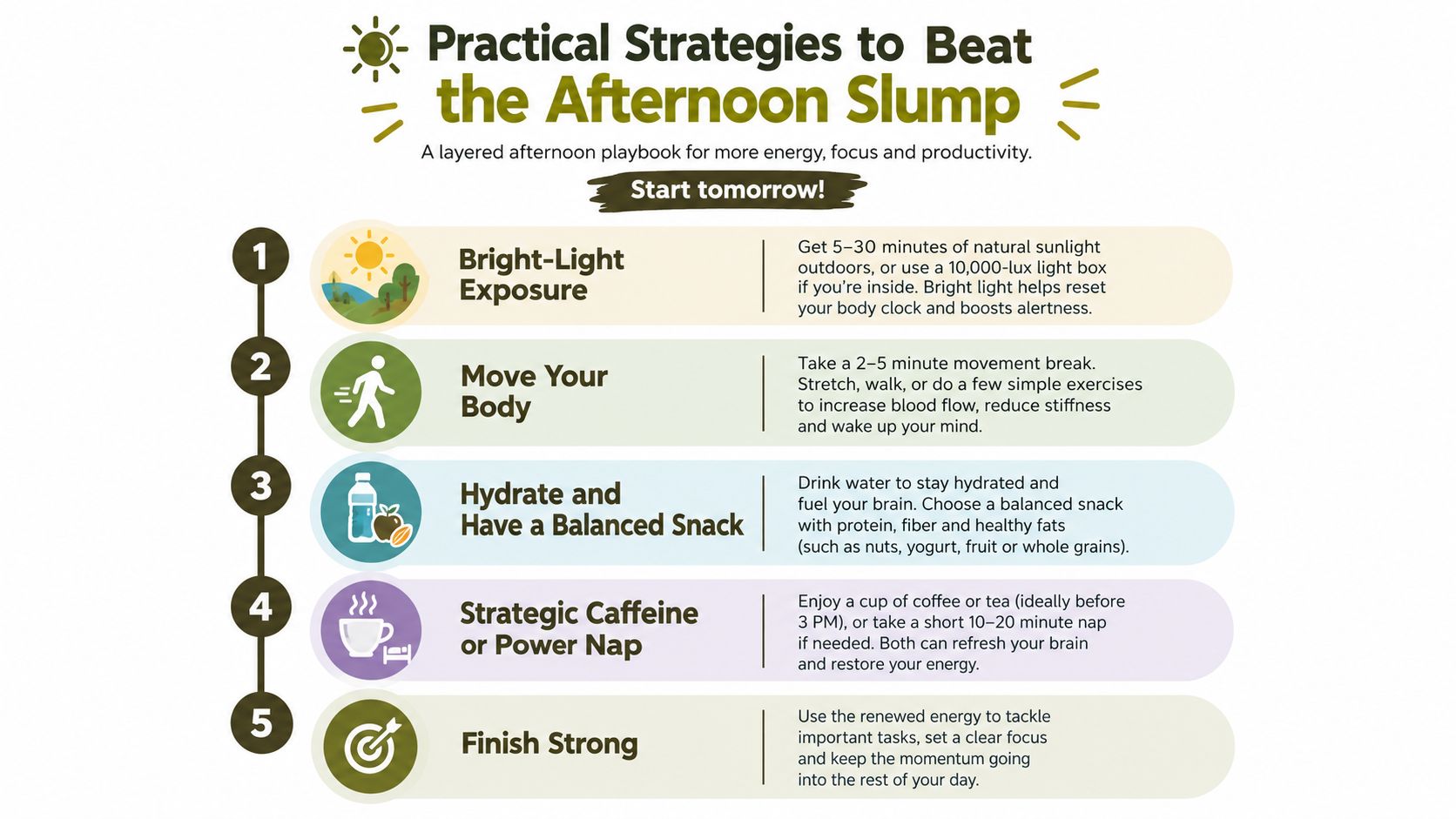
The most useful approach is to stack small cues instead of waiting for motivation. One cue may help a little, but two or three cues together often work better because they address both the circadian dip and the modifiable load sitting on top of it.
Start with light. A short period outdoors, or bright indoor light if you can't get outside, can help signal alertness when the dip usually starts. Movement helps too, especially a brief moderate-intensity break that interrupts sitting and monotony.
What to change first
Meal structure matters most before the slump arrives. A protein-forward breakfast, a balanced lunch with fiber and healthy fats, and fewer refined carbs at midday all help smooth the glucose rise and fall that can worsen fatigue. Caffeine also matters, but timing matters more than quantity for many adults, so a 1 to 2 p.m. cutoff is a reasonable guardrail if afternoon coffee keeps stealing sleep later.
A short recovery ritual can make the whole plan more realistic. That can be box breathing, a brief walk, or a 10-minute screen-free rest. The goal is not to nap through the workday, it's to interrupt the slide before it becomes a spiral.
Simple sequence: at 2:50 p.m., step outside for two minutes, splash cold water on your face, then do 90-90-90 breathing while standing. That combination gives your body a new signal without requiring a full break from work.
Here's a compact version you can test tomorrow:
- Light first: get 5 to 30 minutes of outdoor light, or use a bright light source if outside isn't possible.
- Move briefly: walk, climb stairs, or do a short mobility break for a couple of minutes.
- Eat with more balance: keep lunch smaller on refined carbs and fuller on protein, fiber, and fats.
- Time caffeine deliberately: use it earlier in the day, not as a rescue shot late afternoon.
- Reset fast: breathe, walk, or sit without a screen long enough to change state.
For routine ideas you can adapt into a day that fits, see the daily routines resource.
The key is consistency, not perfection. If you only change one thing, change the thing most likely to be stacking onto the circadian dip, then watch what happens for a week before deciding it didn't help. That is usually more informative than chasing ten fixes at once.
Lab Work and Biomarkers Worth Tracking
When afternoon fatigue keeps repeating, a few measurements can turn guesswork into a clearer pattern. The goal isn't to turn yourself into a lab report, it's to see whether the fatigue looks more inflammatory, glycemic, hormonal, or sleep-related.
Start with the basics
A sensible first pass often includes CBC, ferritin with CRP, TSH, fasting glucose, HbA1c, and 25-OH vitamin D. Those tests help look for anemia, iron issues, thyroid strain, glucose dysregulation, and broader metabolic concerns. If symptoms or history point deeper, B12, MMA, sex hormones in midlife, cortisol rhythm, hs-CRP, and homocysteine can add context.
Wearables can help, but they're best used as trend tools rather than verdict machines. Resting heart rate, HRV trends, and sleep staging may show recovery patterns, especially when you compare good weeks with bad ones. A rising resting heart rate, for example, can support the idea that recovery is under strain even before you feel it clearly.
| Marker | What It Reflects | Afternoon-Energy Implication |
|---|---|---|
| CBC | Red blood cells and blood health | Can point toward anemia-related fatigue |
| Ferritin with CRP | Iron stores plus inflammation context | Helps distinguish low iron from inflammation-blurred results |
| TSH | Thyroid signaling | Useful when fatigue comes with low drive or cold intolerance |
| Fasting glucose and HbA1c | Glucose control over time | Can suggest a glycemic pattern behind post-meal tiredness |
| 25-OH vitamin D | Vitamin D status | Low levels may coexist with low energy and poor recovery |
| B12 and MMA | B12 status and tissue response | Can help explain fatigue with brain fog or neuropathy clues |
| Sex hormones in midlife | Hormonal shifts relevant to age and symptoms | May support evaluation when sleep and energy change together |
| Cortisol rhythm | Stress and daily hormone timing | Can help when afternoon fatigue feels tied to stress and sleep disruption |
| hs-CRP | Low-grade inflammation | Can support an inflammatory pattern when other clues fit |
| HRV and resting heart rate | Recovery and autonomic balance | Helpful for tracking whether your body is bouncing back |
How to use the pattern, not just the number
One marker rarely explains everything. A more useful question is whether the results cluster into a glycemic, inflammatory, or hormonal picture. That cluster can guide the next move, whether it's sleep work, meal changes, stress reduction, or referral for deeper evaluation.
Structured assessments through nurse-practitioner-led programs can help here because they can order common labs, interpret them in context, and re-test when needed instead of leaving you alone with a stack of numbers. Longwelle is one example of a service that pairs a brief assessment with biomarker tracking and optional licensed nurse-practitioner support, which can make the follow-up plan more concrete.
The point of tracking is not to chase every minor fluctuation. It's to learn what changes when your afternoons improve, and what doesn't. That's how a vague complaint becomes a useful plan.
Red Flags and When to Bring in a Clinician
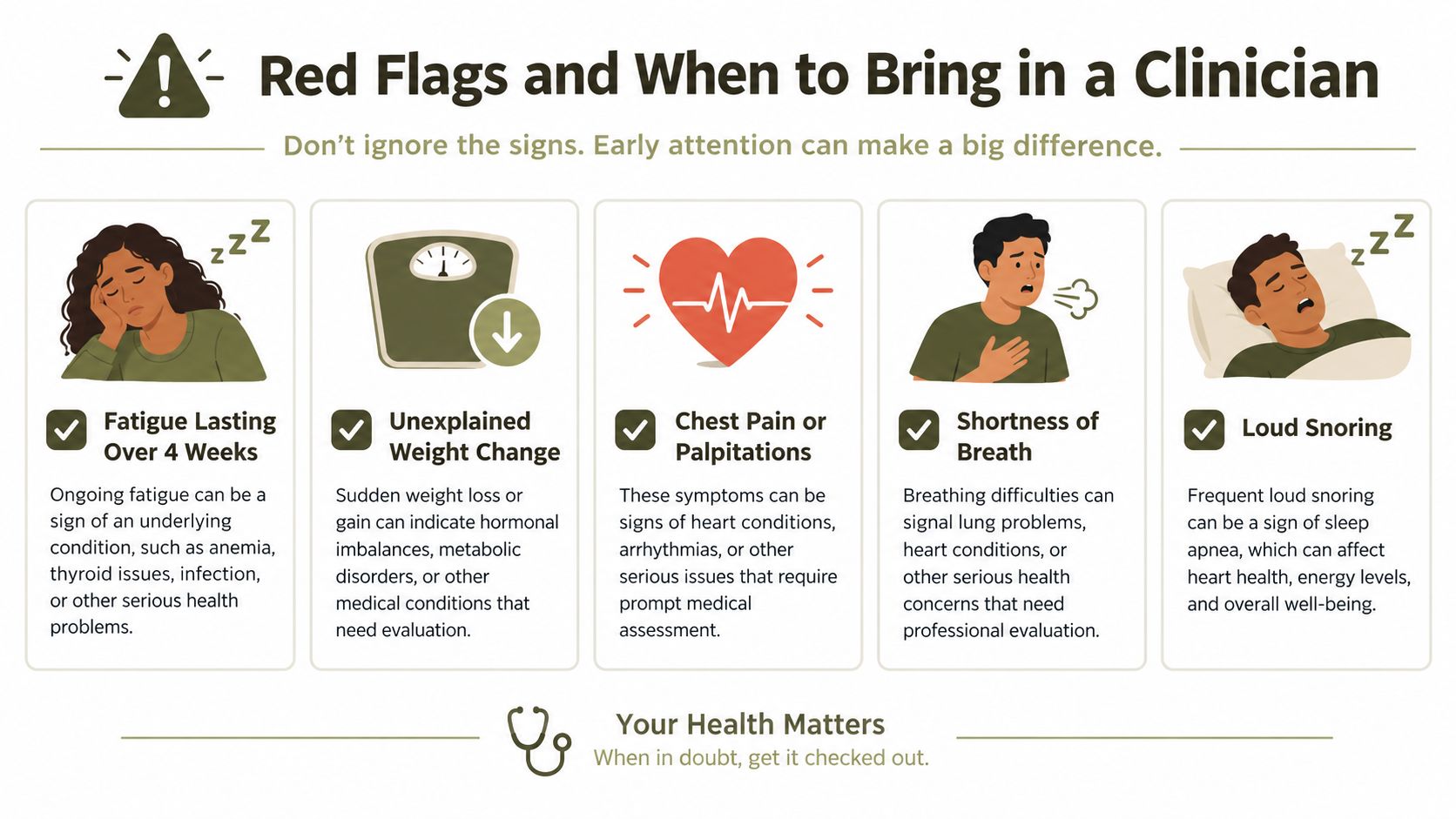
Most afternoon tiredness is not an emergency, but some patterns need medical evaluation. If fatigue is new, crushing, and lasting more than four weeks, if it comes with unexplained weight change, chest pain, palpitations, shortness of breath, night sweats, new headaches, or low mood that isn't lifting, get checked. Loud snoring with witnessed breathing pauses also deserves attention, because sleep apnea can hide behind “just being tired.”
What not to ignore
Brain fog that is affecting work, persistent exhaustion that's worsening, or fatigue paired with neurological symptoms should not be treated as routine slump management. Those patterns can point to sleep disorders, anemia, thyroid problems, mood disorders, cardiovascular issues, or other conditions that need proper evaluation. If a symptom feels bigger than the usual afternoon dip, it probably is.
Nurse-practitioner services and wellness assessments can complement primary care by tracking trends, organizing labs, and helping you follow through on lifestyle changes. They should not replace urgent evaluation for chest pain, breathing problems, acute neurological symptoms, or severe psychiatric symptoms. The right order matters.
If the tiredness is new, severe, or paired with red-flag symptoms, see a clinician first. If it's a familiar pattern without warning signs, a structured assessment is a reasonable place to start.
That decision rule keeps things simple. Red flags first, pattern-tracking second. Both paths are more useful than guessing.
A Seven-Day Plan and How to Measure Progress
Start small and keep the same check-in time each day. The goal is to see whether the slump is changing, not just whether one day felt better by chance.
A simple starter week
- Day 1: Lock your wake time and get morning light. Track total sleep hours.
- Day 2: Audit your caffeine cutoff and last night's sleep quality. Track your latest caffeine time.
- Day 3: Restructure lunch with more protein, fiber, and fats. Track your post-lunch energy rating from 1 to 10.
- Day 4: Add a 10-minute walk after lunch. Track your steps after lunch.
- Day 5: Use a 90-second recovery ritual when the dip starts. Track whether the ritual happens on time.
- Day 6: Review hydration and alcohol. Track your midafternoon hydration habit.
- Day 7: Compare the week and write down the pattern. Track resting heart rate or another wearable trend if you use one.
A weekly energy log works best if you rate the same time each day, ideally around the window when fatigue usually hits. Use a simple 1 to 10 score, where 1 is wiped out and 10 is fully sharp. Meaningful progress usually looks like a steadier score, fewer crashes, or a shorter recovery time after lunch, not a perfect day every day.
If the log shows no change after you've improved sleep, meals, and light for a week or two, that's useful information too. It means a deeper issue may be part of the picture, and that's when lab work or clinical support becomes more relevant.
If you want a guided way to turn that tracking into action, the AI health coach can help organize habits and biomarkers into a single routine.
Longwelle helps adults in their 40s, 50s, and beyond turn fatigue patterns into a clearer plan with a brief assessment, biomarker tracking, and optional nurse-practitioner guidance. If your afternoons keep fading for reasons that don't make sense yet, visit Longwelle to start mapping the drivers behind your energy and build a plan you can follow.