Learn
Why Am I So Tired All the Time Female: Common Causes
Why am I so tired all the time female? Explore common causes, key labs to ask about, red flags, and personalized next steps to help you feel like yourself
You wake up tired, push through the day, and still feel the slow drag of exhaustion by afternoon. The usual answers, it's stress, it's hormones, just sleep more, can be too neat for a problem that often has layers. If you've ever wondered why am I so tired all the time female, the better question is what your body is trying to signal through sleep, blood loss, hormones, and workload.
Persistent fatigue in women isn't rare, and it isn't something to shrug off. In one U.S. twin-registry study, females were two to three times more likely to report fatigue than males, and in that same group 42.8% of females reported lifetime fatigue, 26.8% had prolonged fatigue, and 18.6% were classified with chronic fatigue, while a Swiss population survey found fatigue in 23.4% of women versus 20.1% of men (study data). Those numbers don't prove one cause, but they do show that tiredness in women is often a real, measurable health burden.
Table of Contents
- The Question Behind the Question
- Four Systems That Drive Female Fatigue
- Medical Causes Worth Ruling Out First
- Beyond Hormones The Bleeding Connection
- The Stress and Workload Layer
- What to Track Tests to Ask About and Red Flags
- Your Two Week Starter Protocol and Next Step
The Question Behind the Question
A woman in her late 30s or 40s can do almost everything “right” and still feel drained. She gets through work, keeps up with family, exercises when she can, and maybe even sleeps a reasonable number of hours, yet she wakes unrefreshed and counts the hours until coffee. That's the kind of fatigue that makes people doubt themselves, because the outside life looks functional even when the inside battery is low.
The casual answers usually miss the point. “You're just stressed” treats a layered symptom like a personality flaw. “It's your age” can hide fixable issues like iron depletion, thyroid dysfunction, sleep disruption, or bleeding patterns that deserve attention. “Get more sleep” helps only if sleep is the main problem, and for many women it isn't the only one.
Fatigue is a signal, not a character test
A useful way to think about fatigue is as a diagnostically meaningful signal. It can come from the body's supply chain running short, the thermostat drifting off, the recovery system staying overdrawn, or the sleep battery never fully recharging. Sometimes all four are involved at once.
If the tiredness is persistent, specific, and new for you, it deserves a structured review, not a shrug.
That review starts before any supplement aisle or lab panel. It means looking at the pattern, when you feel worst, what your periods are doing, how you sleep, how much invisible work you carry, and whether the tiredness changes with food, exercise, or caffeine. Once the pattern is clear, the next step is usually much more obvious.
Four Systems That Drive Female Fatigue
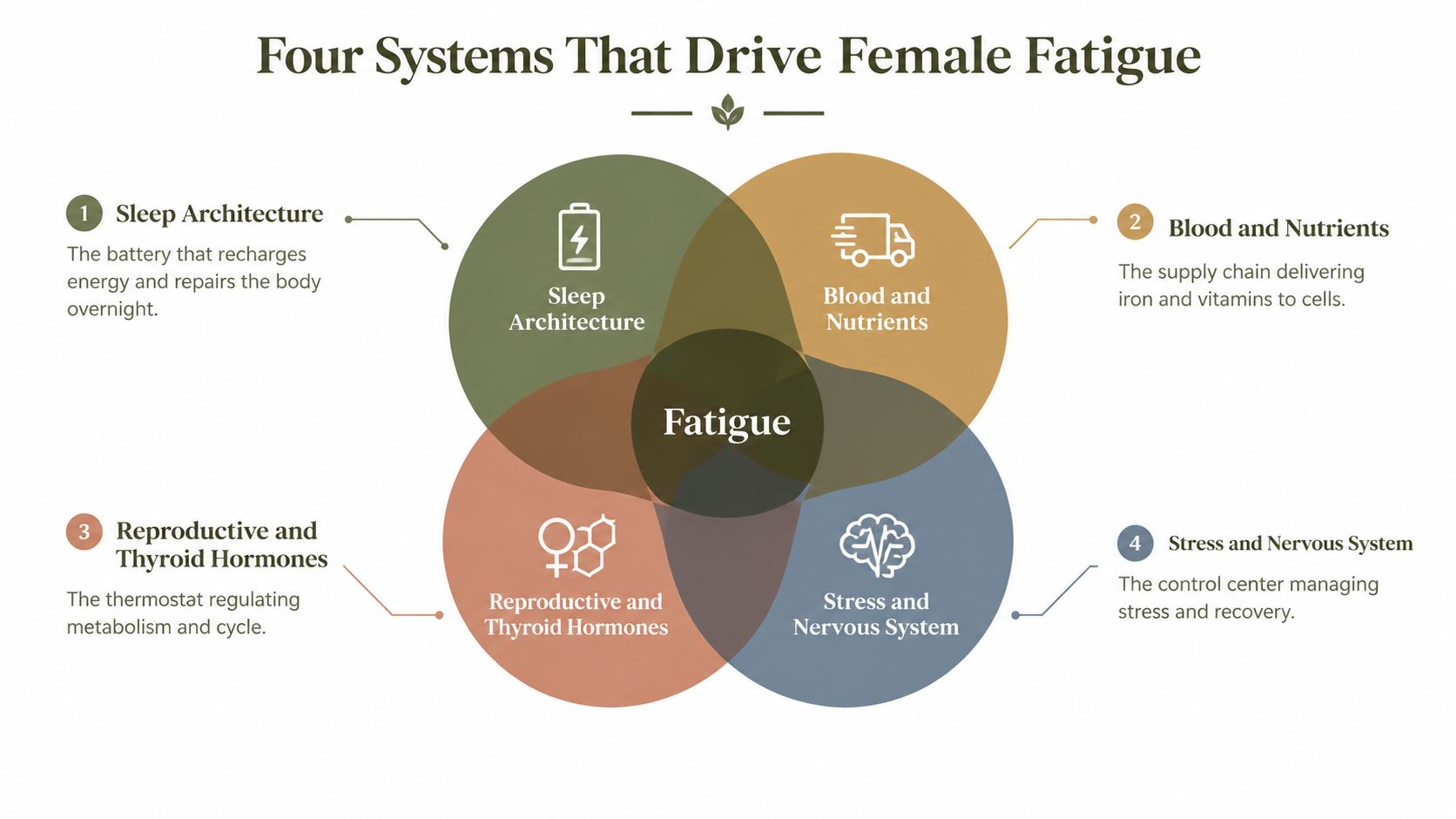
Think of female fatigue as four overlapping systems rather than one vague complaint. Each system can drain energy on its own, but the central problem is how they interact. A woman with marginal iron stores can feel far worse if she's also sleeping poorly, bleeding heavily, and carrying a relentless workload.
The battery, the supply chain, the thermostat, and the overdraw
Sleep architecture is the battery. If sleep is fragmented, shortened, or shallow, the body doesn't finish the nightly repair cycle. Insomnia is reported to be 40% more common in women than men (source), so the battery problem is not unusual.
Blood and nutrients are the supply chain. Iron is the clearest example, because iron deficiency can cause fatigue even before anemia appears, and ferritin is the key marker when hemoglobin still looks normal (clinical review). Reproductive and thyroid hormones act like a thermostat, shifting metabolism, temperature regulation, and cycle-related energy. Stress and nervous system load are the overdraw, the state where life demands outrun recovery.
The most common mistake is to fix only one system and assume the rest will follow.
That's why a woman can start treating iron and still feel wiped out if her sleep is broken, or improve sleep and still feel flat if bleeding keeps draining her stores. The brain fog guide fits naturally here, because concentration problems often travel with fatigue instead of sitting alone as a separate issue.
A quick map of common drivers
- Sleep battery problems, insomnia, night sweats, snoring, restless sleep, irregular bedtimes.
- Supply chain problems, iron depletion, anemia, low B12, low protein intake, poor absorption.
- Thermostat problems, thyroid dysfunction, perimenopausal transition, cycle changes.
- Overdraw problems, caregiving strain, emotional labor, work overload, chronic stress.
The point of this map is simple. If you only search for one cause, you can miss the one that's keeping the system stuck.
Medical Causes Worth Ruling Out First
The most useful first pass is to look for conditions that are testable, common, and treatable. Women often get told to wait and see, but fatigue with a clear pattern is usually worth checking sooner rather than later. The clues matter, because different causes leave different footprints.
Clues that point to a medical workup
Iron deficiency, with or without anemia. Heavy menstrual bleeding, recent childbirth, low iron intake, or a history of low ferritin all raise suspicion. Fatigue that comes with weakness, shortness of breath on exertion, dizziness, or restless legs should prompt a look at iron status, not just a general vitamin.
Thyroid dysfunction. Cold intolerance, constipation, dry skin, hair thinning, brain fog, and low mood often travel with low thyroid output. Thyroid disease is up to eight times more common in women than men, and about 1 in 8 women will develop a thyroid disorder in her lifetime (review). That makes thyroid testing a reasonable part of the fatigue conversation.
Sleep disorders. Snoring, gasping, morning headaches, and unrefreshing sleep can point to obstructive sleep apnea or another sleep problem. Women are often missed because their symptoms may look less classic than the textbook version.
Perimenopause and menopause transition. Irregular cycles, hot flashes, night sweats, and sleep disruption often cluster together. Fatigue that appears with changing cycles deserves attention, especially when bleeding patterns also change.
Mood disorders. Depression and anxiety can show up as exhaustion, low drive, and trouble concentrating. That doesn't mean the fatigue is “all in your head,” it means the brain and body are connected.
Medications and chronic conditions. SSRIs, beta-blockers, hormonal contraceptives, diabetes, celiac disease, and autoimmune disease can all contribute. A medication review matters when the timing of tiredness follows a new prescription or dose change.
| Medical Causes of Female Fatigue at a Glance | Hallmark Clues in Women |
|---|---|
| Iron deficiency | Heavy periods, restless legs, breathlessness, dizziness |
| Thyroid dysfunction | Cold intolerance, constipation, dry skin, brain fog |
| Sleep disorders | Snoring, gasping, morning headaches, unrefreshing sleep |
| Perimenopause | Cycle changes, night sweats, fragmented sleep |
| Depression or anxiety | Low drive, worry, irritability, concentration problems |
| Medication effects | Fatigue starts after a new medicine or dose change |
| Chronic disease | Ongoing fatigue with other body-wide symptoms |
When the pattern is messy, clinicians sometimes use a broad initial lab review and then narrow it down. The goal isn't to order everything, it's to avoid missing a fixable cause that's hiding in plain sight.
Beyond Hormones The Bleeding Connection
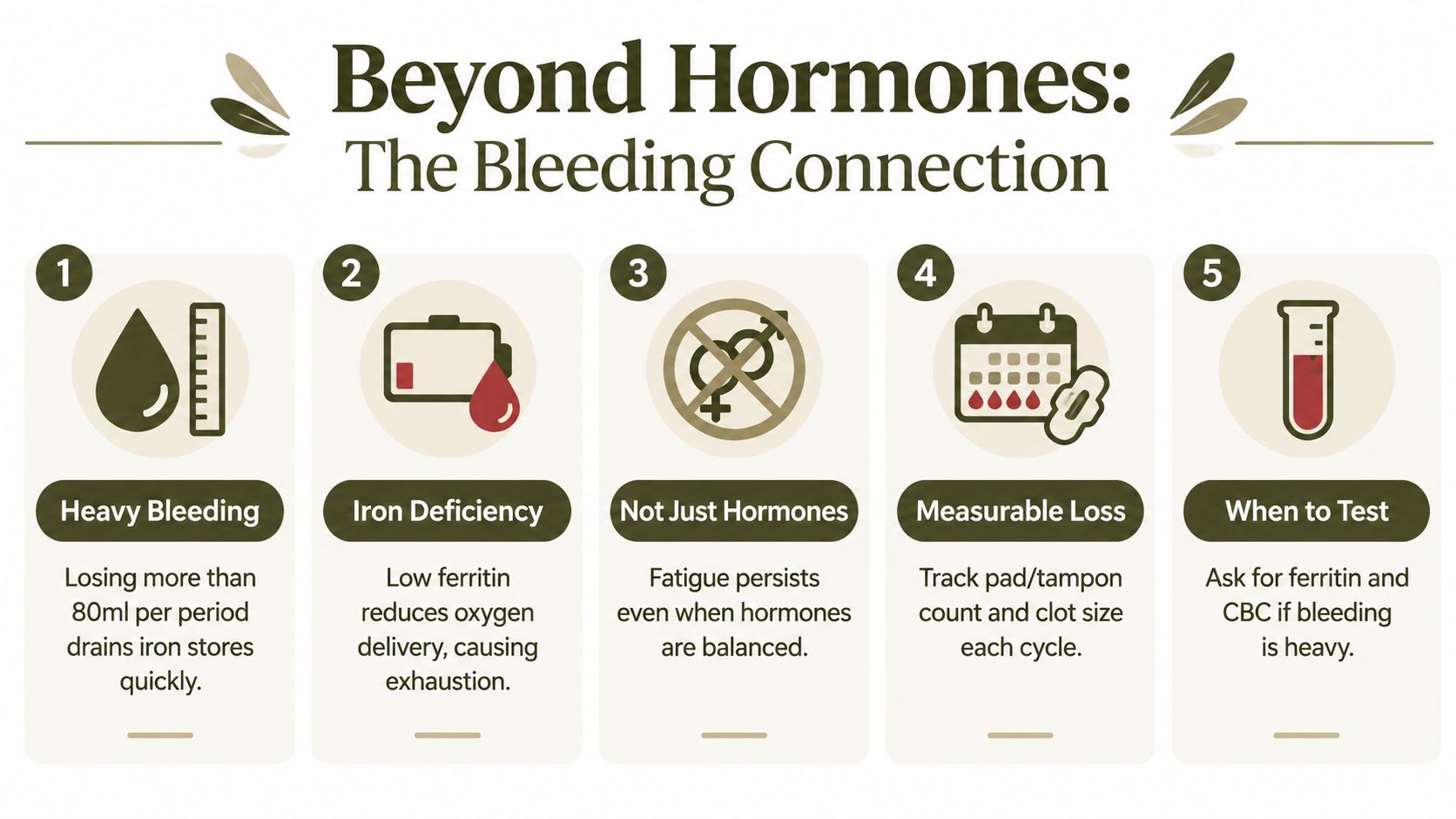
One of the fastest ways to miss the issue is to call every cycle-related symptom “just hormones.” Hormones matter, but blood loss matters too, because menstruation is a recurring event that can drain iron stores over time. A woman can still have a “normal” hemoglobin while ferritin is already falling.
Bleeding patterns that deserve a closer look
Heavy menstrual bleeding isn't just a nuisance. Soaking a pad or tampon hourly, passing clots, or having periods that run longer than usual can all point to heavier blood loss than the body easily replaces. That kind of pattern can deplete ferritin even before a standard blood count looks obviously abnormal.
The same logic applies in the menopause transition. New or worsening bleeding changes, especially when they show up alongside fatigue, shouldn't be waved away as ordinary aging. They deserve evaluation for iron deficiency, abnormal uterine bleeding, or other gynecologic causes.
A period that changes your energy is not “just your period.”
There are also non-gynecologic bleeding sources to keep in mind. Postpartum hemorrhage is one example, and gastrointestinal bleeding is another. If fatigue follows a time of bleeding, the body is telling you to ask where the iron went.
The practical move is to track what the bleeding looks like. Note how often you change products, whether clots appear, and whether the cycle length itself is changing. That record makes the lab conversation much more specific than “I feel tired.”
The Stress and Workload Layer
Stress can become the invisible layer that keeps everything else from recovering. A woman may be technically resting in the evening, but if her day includes paid work, caregiving, household logistics, planning, and emotional labor, her nervous system may never really get the downshift it needs. That total load can produce exhaustion even when the calendar says she had time off.
The research on sex differences in fatigue supports this broader view. Women are reported to experience fatigue about twice as often as men in one 2025 review, and that review argued that stress may play a more central role than sleep alone in explaining the gap (review). Older community data also tied persistent fatigue to home and outside work, poor sleep, lack of time for self, financial worries, relationship strain, and caregiving demands, which makes the social burden impossible to ignore.
Total load changes recovery
Chronic stress doesn't just feel unpleasant. It fragments sleep, lowers recovery, and makes motivation harder to access. People often describe this as being tired but wired, where the body feels depleted but the mind won't settle.
Fatigue can overlap with burnout and depression. Burnout often looks like emotional flatness, irritability, and a sense of running on fumes, while depression adds loss of interest and low mood. The overlap is real, but the distinction still matters because the next step can differ.
If the burden is mostly structural, more self-discipline won't fix it.
That's why a useful fatigue check has to include workload, not just symptoms. A woman who carries everyone else's needs may need both medical evaluation and a plan to protect recovery time, because biology and biography are interacting, not competing, explanations.
What to Track Tests to Ask About and Red Flags
The fastest way to make fatigue less vague is to record it in a way a clinician can use. A two-week log often reveals patterns that memory blurs, especially around sleep, bleeding, caffeine, and energy crashes. That record also helps separate a bad week from a persistent pattern.
What to track for 14 days
- Sleep timing and quality, bedtime, wake time, night waking, how rested you feel.
- Menstrual flow, heaviness, clots, cycle length, spotting, skipped periods.
- Energy at fixed times, morning, midafternoon, evening, rated the same way each day.
- Caffeine and alcohol, timing and amount.
- Movement and recovery, exercise, walking, rest days, and how you feel after activity.
- Stressors and mood, deadlines, caregiving strain, anxiety, low mood, irritability.
A clinician can then decide which tests fit the pattern. Common starting points include CBC, ferritin with iron studies, TSH with free T4, vitamin B12, vitamin D, and HbA1c. Reference ranges can miss early deficiency, so symptoms still matter even when a result is technically “normal.”
| Lab Test | What It Checks |
|---|---|
| CBC | Anemia, red blood cell patterns, other blood count clues |
| Ferritin with iron studies | Iron stores and iron availability |
| TSH with free T4 | Thyroid function and possible underactive thyroid |
| Vitamin B12 | B12 deficiency and related fatigue or neurologic symptoms |
| Vitamin D | Low vitamin D status that can affect overall wellbeing |
| HbA1c | Average blood sugar control over time |
Red flags that need urgent care
- Chest pain or shortness of breath at rest
- Fainting
- Black or tarry stools
- Heavy bleeding that soaks a pad hourly for several hours
- Sudden severe headache
- New neurological symptoms, such as weakness, confusion, or trouble speaking
If any of those show up, don't wait for a routine appointment. If the pattern is stable but persistent, a structured evaluation is the better next move than guessing at supplements. For people looking for guided tracking and lab-based follow-up, Longwelle's AI health coach is one example of a tool that can organize the questions before a visit.
Your Two Week Starter Protocol and Next Step
The first two weeks don't need to be perfect, they need to be consistent. The goal is to lower noise so you can tell whether fatigue is mainly a recovery problem, a fueling problem, a bleeding problem, or something that needs medical workup. Keep the changes small enough that you can repeat them.
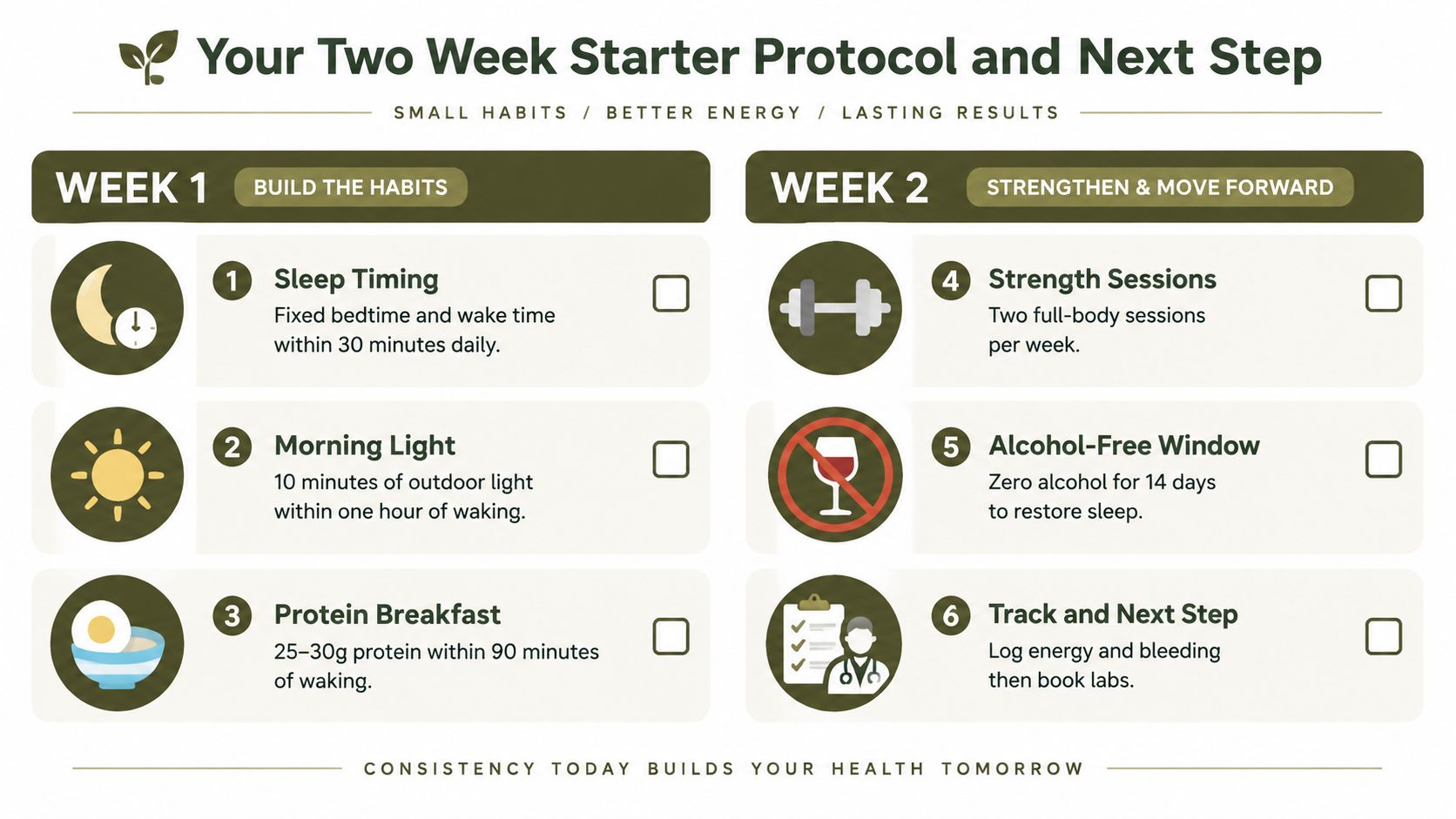
Two weeks of basics that actually tell you something
- Sleep timing. Keep bedtime and wake time within 30 minutes each day.
- Morning light. Get 10 minutes outside within an hour of waking.
- Protein breakfast. Aim for a protein-anchored breakfast within 90 minutes of waking.
- Strength sessions. Do two full-body sessions each week.
- Alcohol-free window. Skip alcohol for 14 days so sleep can stabilize.
- Track and next step. Log energy and bleeding, then decide on labs or a visit.
A daily 10-minute fatigue diary keeps this honest. Rate energy on a simple 0 to 10 scale at the same three times each day, and jot down bleeding, caffeine, stress, and any unusual symptoms. If you want help building a steadier morning pattern, this morning routine guide can give you a practical starting structure.
Day 7 is the checkpoint. If energy hasn't improved by at least one point on a 0 to 10 scale, or if any red flag appears, book a clinician visit within two weeks instead of continuing to experiment alone. That keeps self-management useful without turning it into delay.
The next step is either a better log or a real appointment, not more guessing.
If you're already seeing heavy bleeding, sleep disruption, or persistent fatigue despite reasonable changes, the best move is to bring your notes to a clinician and ask for a targeted review. If you're not ready for a visit yet, start the diary today and commit to the full 14 days. That single decision will tell you more than another month of vague self-blame.
Longwelle helps adults over 40 turn tiredness into a structured question, with a brief assessment, biomarker-oriented guidance, and optional nurse practitioner support. If you want a calmer, more organized way to sort out persistent fatigue, visit Longwelle and use the tools to map your next step with more confidence.