Learn
Why Am I So Tired After I Eat Causes and Fixes
Why am I so tired after I eat? Learn common causes, warning signs, tests to check, and simple ways to reduce post-meal fatigue and steady energy.
You finish lunch, open your laptop, and suddenly the screen feels heavier than it should. The words are still there, but your brain has to work harder to keep up, and all you want is a chair, a quiet room, or another coffee you know won't really fix it. If that sounds familiar, why am I so tired after I eat is a good question, and it usually has more than one answer.
For adults over 40, post-meal tiredness often shows up as a pattern, not a mystery. A meal can be perfectly ordinary and still leave you foggy because digestion, glucose handling, and circadian timing all overlap at once. The good news is that the pattern is often readable, and when it isn't, there are clear signs that something more than a “food coma” may be going on.
Table of Contents
- Why Post Meal Fatigue Feels So Common Right Now
- What Happens in Your Body After You Eat
- Common and Less Common Reasons You Feel Tired After Eating
- Expected Tiredness Versus Symptoms That Need Attention
- Tests and Biomarkers That Help Clarify Persistent Fatigue
- Practical Strategies to Reduce Tiredness After Meals
- Steady Energy After Eating and When Longwelle Can Help
Why Post Meal Fatigue Feels So Common Right Now
You finish lunch, return to your desk, and notice your focus fading before the afternoon is even underway. Your eyelids feel heavy, simple tasks take more effort, and coffee seems like a temporary patch. That experience is common, especially when a substantial meal meets the body's natural afternoon dip in alertness.
For adults over 40, the pattern often reflects several signals arriving together. Meal size and composition influence glucose dynamics, digestion sends messages between the gut and brain, and circadian timing can lower alertness later in the day. The same plate may feel manageable at breakfast yet leave you sluggish at lunch because the timing changes the total load on your system.
Post-meal sleepiness, also called postprandial somnolence, has been studied as part of the normal rest and digest response. A controlled 1998 study measured greater daytime sleepiness after eating, including shorter sleep latency and an effect that continued for hours. The findings show that the response has observable physiological features, as summarized by CNN summary of the study. A separate population-level study found that testing within an hour of eating was associated with lower exam scores across several subjects in a large adolescent and young adult sample, giving the familiar “food coma” practical relevance The Conversation summary.
Practical rule: if the slump is predictable, short-lived, and improves with smaller meals or a walk, ordinary physiology is the likely explanation.
A recurring crash still deserves context. Track timing, portion size, glucose handling, and nervous system load alongside symptoms such as shakiness, sweating, unusual thirst, or fatigue that lasts well beyond digestion. That pattern can guide sensible next steps, including targeted biomarkers, rather than relying on willpower or blaming one ingredient.
What Happens in Your Body After You Eat
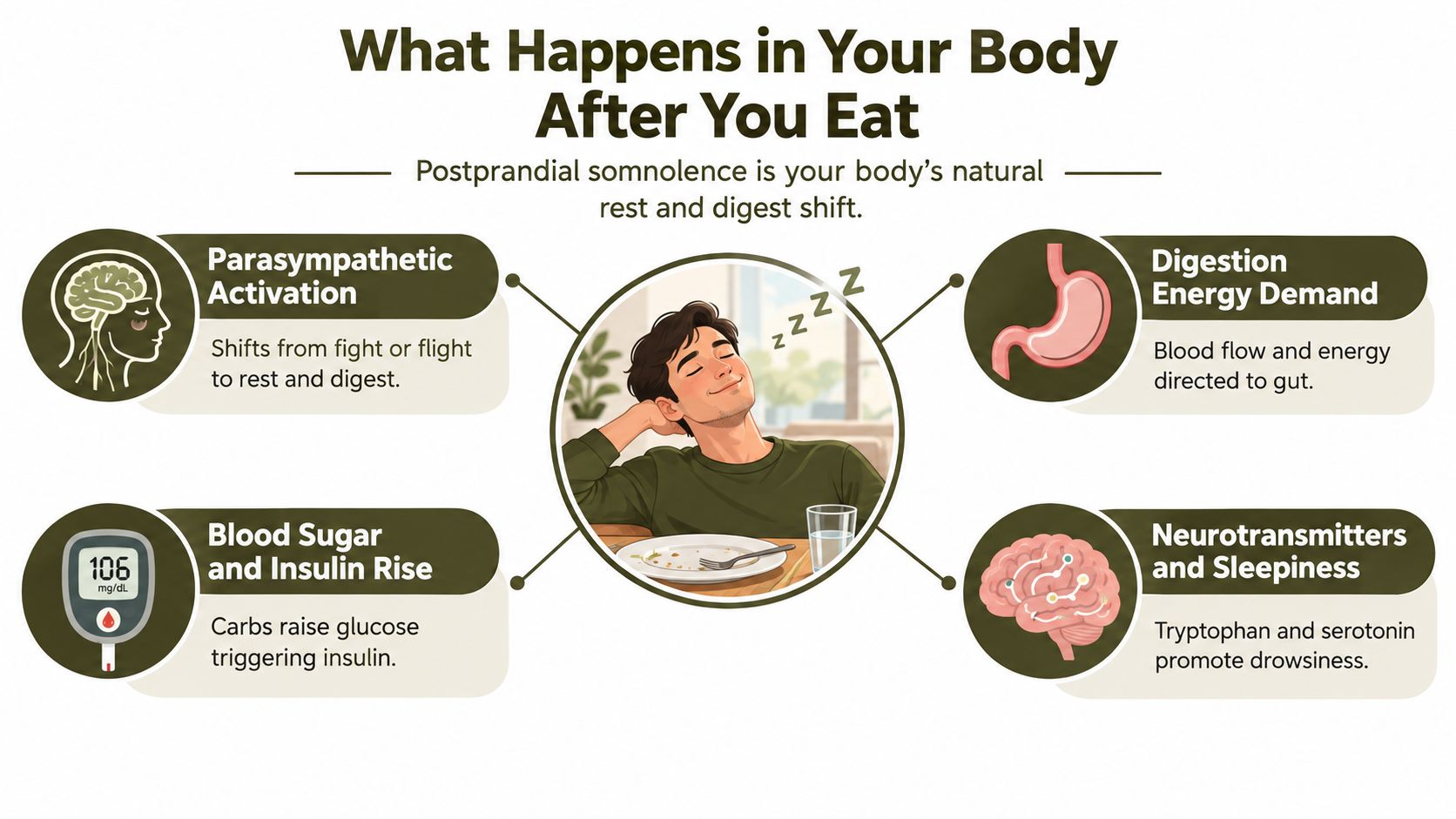
You finish lunch, return to your desk, and notice your focus softening before the afternoon is halfway over. That shift usually reflects several systems working together. Digestion changes nervous-system activity, glucose begins moving through the bloodstream, gut signals communicate fullness, and circadian timing can already be lowering alertness.
The rest and digest switch
After eating, parasympathetic activity rises. This branch of the nervous system supports digestion, nutrient processing, and recovery, while the high-alert response becomes less dominant. Alertness may dip as digestion takes priority, even when the meal is nutritious and your health is otherwise stable.
The change is easier to notice when the meal is large, rich, or quickly digested. Glucose and insulin then shift as nutrients enter circulation, while signals from the gut and brain promote satiety and calm. These effects can overlap, so post-meal sleepiness is often a combined response rather than the result of one ingredient.
Meal timing adds another layer. Alertness naturally varies across the day, and lunch may arrive near a circadian low. A meal can therefore act like an extra weight placed on an already tired system. The same food may feel manageable earlier and more sedating later because the body's baseline alertness has changed.
The effect is measurable, not merely a feeling. As noted earlier, controlled research found greater daytime sleepiness after eating, including shorter sleep latency and an effect that continued for hours. That objective pattern supports paying attention to meal timing and composition when you are tracking energy.
Why the same meal feels different at different times
Blood flow, hormone signaling, glucose handling, sleep quality, and nervous-system demand all vary through the day. A bowl of pasta at breakfast may feel very different from the same bowl after a demanding workday. Food is only one part of the load.
Adults over 40 may notice these contrasts more clearly as sleep debt, recovery capacity, and metabolic flexibility change with age. A predictable, brief dip that improves with rest, a smaller meal, or light movement usually fits normal physiology. A crash that is frequent, severe, or accompanied by shakiness, sweating, unusual thirst, confusion, or prolonged fatigue deserves closer attention.
Track the meal time, portion, carbohydrate content, sleep, activity, and symptoms. That record can show whether glucose dynamics, gut-brain signals, circadian timing, or another factor deserves biomarker-guided follow-up.
Common and Less Common Reasons You Feel Tired After Eating
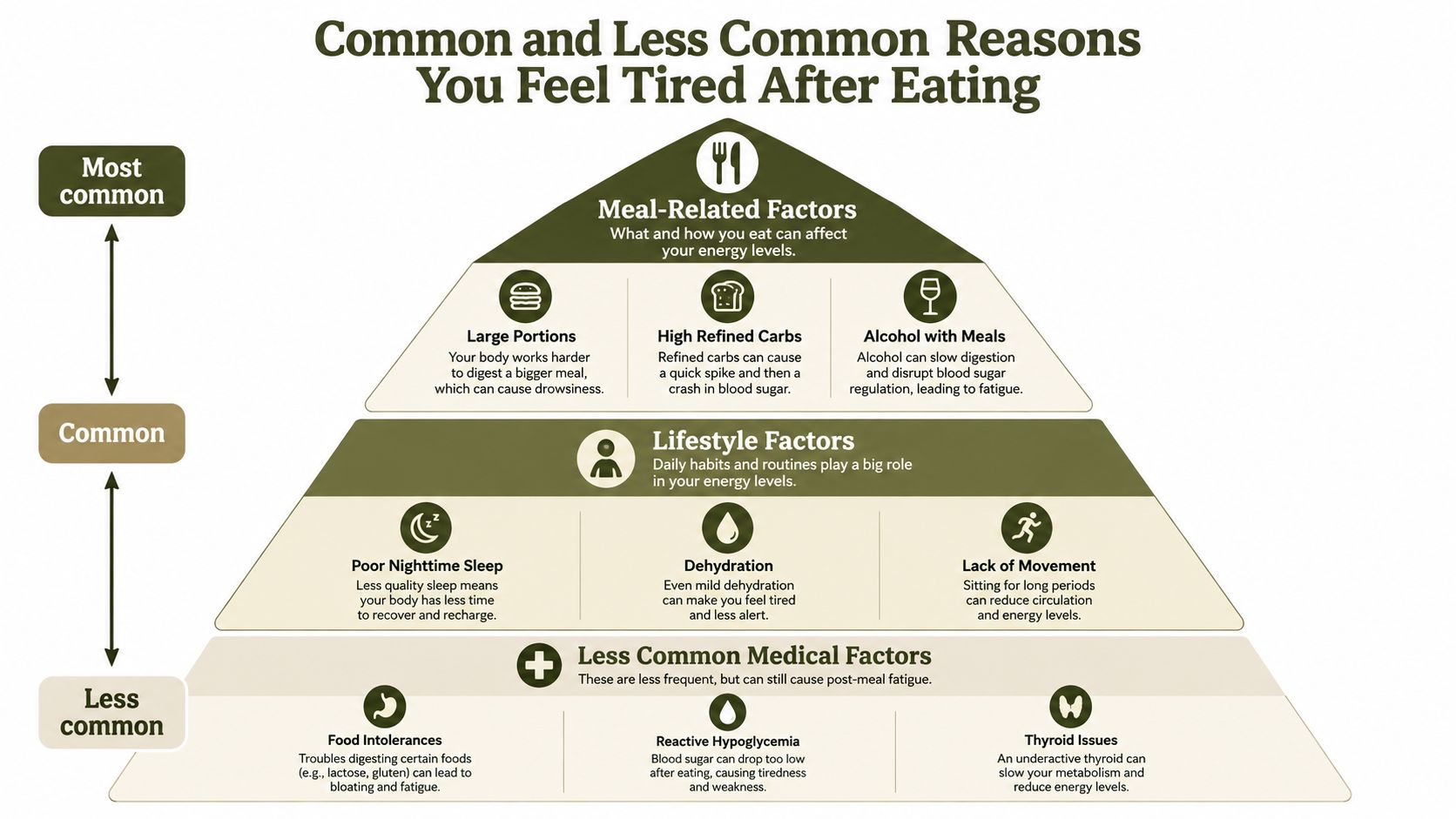
You finish lunch, return to your desk, and notice your attention fading before the afternoon has really begun. The meal may not be the only cause. Portion size, glucose handling, gut-brain signals, circulation, and circadian timing can overlap, creating a predictable energy dip.
The four overlapping mechanisms
Glucose dynamics often explain the strongest crashes. A large or high-glycemic meal can raise glucose quickly, prompt an insulin response, and then produce a sharper decline that feels like fatigue or brain fog. Bread, sweets, white rice, and other carb-heavy meals make this pattern easier to notice Ubie Health on blood sugar and meal-related sleepiness.
Gut-brain signaling adds another layer. Digestion activates hormones and nerve signals that communicate fullness and calm to the brain. Ubie Health describes post-meal sleepiness in connection with hormones including cholecystokinin, amylin, serotonin, melatonin, and insulin, particularly after a large or rich meal Ubie Health on fatigue after eating reasons.
Circulation can contribute as well. Blood flow shifts toward the digestive tract while the body processes food. That change is modest for many people, but it can add to a heavy-headed or sleepy sensation after eating.
Circadian timing determines how noticeable the meal feels. Early afternoon already brings a natural reduction in alertness for many adults, so lunch can amplify the dip. The same food may feel manageable late in the morning and much more sedating later.
What makes the pattern stronger
Portion size, eating speed, and meal composition can load several mechanisms at once. A large meal eaten quickly, especially one dominated by refined carbohydrates, is more likely to produce a noticeable slump than a moderate meal eaten slowly. Repeated symptoms after the same type of lunch provide a useful clue.
Less common causes matter when fatigue is persistent or accompanied by physical symptoms. Cleveland Clinic explains that postprandial hypotension may cause fatigue, weakness, dizziness, or falls, with greater concern for older adults and people with autonomic dysfunction Cleveland Clinic on food coma and postprandial hypotension. This pattern differs from ordinary drowsiness and may require medical assessment.
If the problem includes slow thinking or mental haze beyond the post-meal period, review Longwelle's brain fog guide for a broader way to describe and track the symptoms.
Useful shorthand: a crash after a large, fast, carb-heavy meal that improves with smaller portions suggests the meal is part of the pattern.
Expected Tiredness Versus Symptoms That Need Attention
A brief dip after a large lunch can be normal. You may feel ready for a quiet break, then regain energy after a short walk, some water, or a lighter meal later. The pattern is usually predictable and does not disrupt basic daily activities.
Concern rises when the response seems out of proportion to the meal. Feeling exhausted after nearly every meal, remaining tired for hours, or developing physical symptoms suggests that glucose dynamics, blood-pressure regulation, or another health issue may be involved. The key filter is duration, severity, and effect on safety.
Normal patterns
Expected drowsiness is mild, short-lived, and occasional. It often follows a larger or faster meal, eases with gentle movement, and does not prevent you from working, driving, or completing routine tasks. A rare slump after an unusually rich meal carries less concern than a crash after an ordinary lunch.
The meal is only part of the pattern. Circadian timing can make an afternoon dip more noticeable, while a rapid rise and fall in glucose may add to the feeling. Gut-brain signals can also shift your body toward rest as digestion begins. Tracking the meal, time, symptoms, and recovery helps reveal whether the pattern is consistent.
Patterns that should be checked
Seek medical advice for dizziness, palpitations, weakness, falls, or severe fatigue, especially when these symptoms recur. A practical check for post-meal blood-pressure changes is to measure your pressure before eating and again within 30 to 60 minutes afterward with a home cuff. A noticeable systolic drop supports postprandial hypotension as a possible explanation, rather than ordinary drowsiness.
Sleepiness paired with thirst, shakiness, or blurred vision also deserves attention. These symptoms can accompany unstable blood sugar, although symptoms alone cannot identify the cause. Persistent fatigue outside meal times may point to a broader issue, including low iron, thyroid problems, or another condition that needs assessment.
Act promptly if tiredness affects work quality, balance, or driving. A symptom that makes normal activities unsafe should not be treated as a routine lunch slump.
For a broader framework to describe and track ongoing fatigue, see this guide to why you may feel so tired.
Useful filter: mild sleepiness that passes is usually expected. Repeated crashes, measurable blood-pressure changes, or symptoms that impair safety call for closer review.
Tests and Biomarkers That Help Clarify Persistent Fatigue
When the pattern keeps repeating, numbers can help. Not because every tired afternoon needs a lab panel, but because persistent post-meal fatigue can reflect blood sugar handling, blood pressure changes, or another underlying issue that's invisible from symptoms alone. The most useful approach is to look at trends, not a single value.
Biomarkers and checks for post meal fatigue
| Marker or Check | What It Helps Clarify | When to Consider It |
|---|---|---|
| Fasting glucose | Baseline blood sugar handling | If crashes are frequent or you suspect blood sugar swings |
| HbA1c | Longer-term glucose patterns | If fatigue after meals is recurring over weeks or months |
| Post-meal glucose tracking | How meals affect glucose in real life | If specific lunches or snacks trigger repeat crashes |
| Blood pressure before and after meals | Whether tiredness lines up with a post-meal drop | If fatigue comes with dizziness, weakness, or lightheadedness |
| Iron and ferritin | Whether low iron stores may be adding to baseline fatigue | If you feel tired beyond meals, especially with low stamina |
| Vitamin B12 | Whether a deficiency could be contributing to low energy | If fatigue is persistent or you have dietary risk factors |
| Vitamin D | Whether low levels may be part of a broader fatigue picture | If energy feels chronically low rather than meal-linked |
| Thyroid markers | Whether thyroid function may be contributing | If fatigue is ongoing, not just after eating |
These checks work best when a clinician interprets them together. A normal fasting glucose doesn't rule out a rough post-meal pattern, and a single blood pressure reading won't catch every episode either. What matters is whether the numbers line up with the times you feel tired.
A simple home log can be surprisingly helpful. Track what you ate, the time, how sleepy you felt, and whether a short walk or smaller meal changed the pattern. If you already monitor labs or blood pressure with a clinician, that history gives context that a one-time office visit often misses.
For adults over 40, this approach is especially useful because fatigue can be multifactorial. The goal isn't to chase every possible cause at once. It's to identify the few that match your actual pattern and then test whether one change improves the data.
Practical Strategies to Reduce Tiredness After Meals
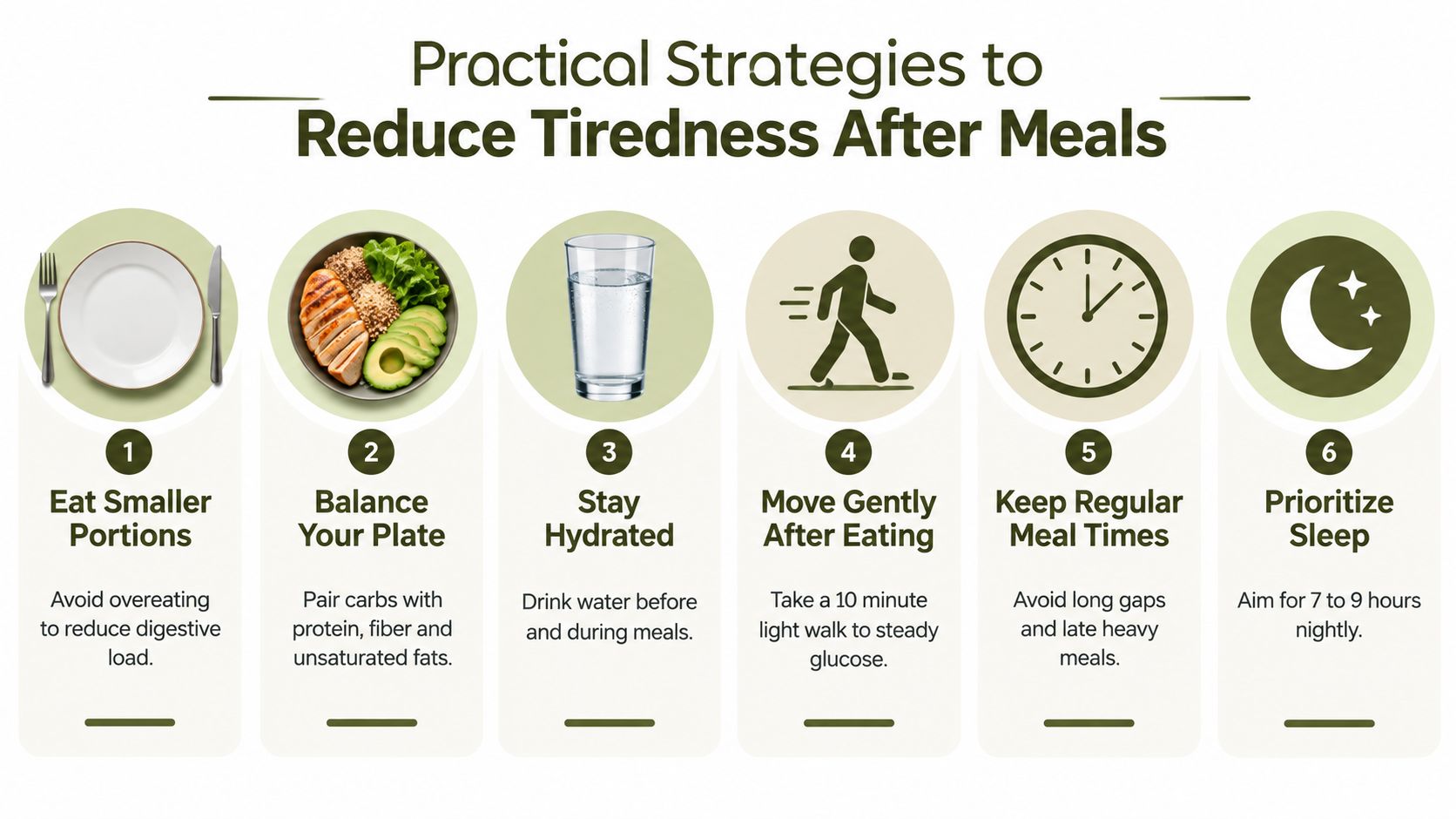
A heavy lunch can turn the afternoon into a slow climb. Start with three adjustments: make the meal smaller, eat at a calmer pace, and combine carbohydrates with protein, fiber, and unsaturated fat. This arrangement can slow the overall rise and fall in available energy, much like spreading traffic across several smaller roads instead of sending it down one crowded lane.
A lunch that lands lighter
If a sandwich leaves you foggy, adjust its proportions before removing it from your routine. Try open-faced bread, add chicken or eggs, and replace chips with fruit or vegetables. The meal remains familiar, while the amount and balance change.
The same approach works for pasta, rice, and grain bowls. Keep the starch, reduce the serving, and add a clear protein anchor with vegetables. Portion size can matter as much as whether a meal appears “healthy.” Even nutritious food may feel burdensome when the plate is oversized.
Habits that change the crash
A short walk after eating gives you a simple, low-risk experiment. It does not need to be athletic. Gentle movement can help you transition out of the post-meal slump and reduce the pull toward an inactive afternoon.
Hydration deserves a check, especially when thirst feels like fatigue. If lunch regularly leaves you worse, consider whether you drank too little during the morning. Consistent meal timing can help as well, since long gaps may make overeating more likely later.
Review these additional levers:
- Eat slower: fullness signals need time to catch up with the meal.
- Watch lunch timing: a very large, carbohydrate-heavy lunch can overlap with the natural afternoon dip.
- Protect sleep: poor sleep can make the next day's meals feel heavier.
- Review medications: some prescriptions may intensify sleepiness after eating, so ask a clinician to review the complete list.
Simple test for one week: keep breakfast the same, change only lunch portion size or composition, and record whether the afternoon crash becomes shorter, milder, or disappears.
The aim is a meal the body processes easily. You can usually keep the foods you enjoy while adjusting proportions, ingredients, and pace. These small changes also make it easier to identify whether glucose dynamics, meal size, or circadian timing is driving the pattern.
Steady Energy After Eating and When Longwelle Can Help
Post-meal tiredness is usually a predictable mix of portion size, food composition, timing, and circadian rhythm. Once you stop treating it like a random failure, the pattern becomes easier to read and easier to change. The most useful first moves are simple, trackable, and small enough to keep doing.
A good starting plan is straightforward. Track meals and energy for seven days, change one lunch variable, and add a 10-minute walk after eating. If the pattern doesn't improve, review sleep, medications, and your biomarker data with a clinician instead of guessing.
For adults who want a structured next step, Longwelle's AI health coach fits this kind of problem well because it connects daily habits with longer-term tracking. Longwelle also offers a brief assessment, science-informed guidance, biomarker monitoring, and optional nurse practitioner support, which can help you connect meal-related fatigue with the bigger picture of energy and recovery over time. That matters when the issue isn't just one lunch, but a repeating pattern that affects how you work and feel.
If you want a clearer read on your energy patterns, start with a simple assessment and a week of tracking, then compare what you feel with what you ate and how you slept. Visit Longwelle to explore a practical, biomarker-informed way to understand post-meal fatigue and make your next change with more confidence.