Learn
Why Am I So Tired After Drinking Alcohol? a Guide
Why am I so tired after drinking alcohol? Discover the science behind post-drinking exhaustion and evidence-based ways to restore energy and sleep quality.
You went to bed thinking a drink or two would help you unwind, then you woke up with heavy limbs, a foggy head, and the strange feeling that your body never really came back online. That kind of tiredness can feel unfair, especially when you slept long enough to think you should be fine. The reason why you are so tired after drinking alcohol is usually not one thing, it's a chain reaction across sleep, metabolism, hydration, blood sugar, inflammation, and recovery signals.
Alcohol can make you feel sleepy at first, then leave you more exhausted later because it changes how your body sleeps and recovers. A major review found that alcohol shortens sleep onset latency at all doses but also increases sleep disruption later in the night. It also delays the first REM sleep period at all doses, and higher doses reduce REM in the first part of sleep. In one controlled study, REM sleep onset was 18 minutes longer after alcohol than after placebo, while REM sleep duration fell by 11.3 minutes overall, with a 2.8% reduction in REM proportion, and those shifts matter because REM supports memory, mood regulation, and next-day alertness PubMed review.
That's why the morning-after crash can feel bigger than a normal sleep debt. It's not laziness, and it's not just “a hangover” in the casual sense. It's your body giving you a mixed signal, part sedated, part disrupted, part under-recovered.
If you want a simple test, map your own experience to the pattern. Did you fall asleep fast but wake up unrested, feel thirsty and shaky, or notice your heart still seemed a little “on” the next morning? Those clues point to different layers of the same crash, and they're more useful than guessing or blaming your willpower.
Table of Contents
- The Morning-After Crash and Why It Happens
- Six Biological Mechanisms Behind the Fatigue
- Why Midlife Makes the Tiredness Hit Harder
- Evidence-Based Strategies to Reduce the Tiredness
- Biomarkers and Labs That Reveal How Alcohol Affects You
- How a Longevity Program Personalizes the Recovery Plan
- Your Action Checklist and When to See a Clinician
The Morning-After Crash and Why It Happens
You know the feeling. Your eyes open too early, your limbs feel heavy, and your brain moves like a page that keeps reloading before it finishes. You may have slept for hours, yet your body still acts as if recovery never got the message.
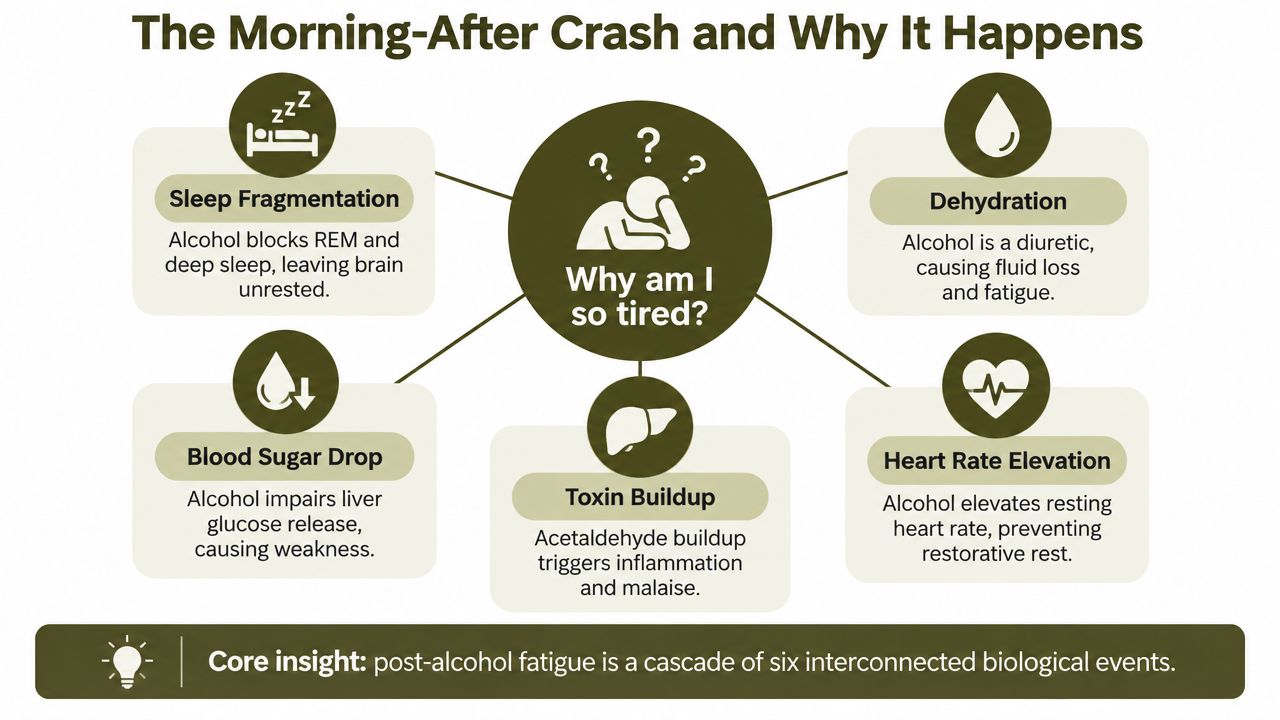
Alcohol creates a cascade, not a single symptom. It can make you fall asleep faster, then disturb the second half of the night, fragment REM sleep, and leave you with less recovery than you expected. Sleep problems are also common in people who drink or are stopping, so alcohol can push an already fragile system further off balance.
What the crash usually means
The pattern matters more than the label. If someone falls asleep quickly but wakes up groggy, thirsty, anxious, or strangely wired, more than one biological stressor is usually involved. That is why the same amount of alcohol can feel manageable one night and draining the next.
The practical rule is simple. Fast sleep onset after drinking does not mean restorative sleep. It usually means sedation first, recovery later, and sometimes recovery never fully catches up.
Alcohol-related fatigue is multifactorial. Sleep fragmentation is only one piece. Alcohol metabolism, fluid shifts, blood sugar instability, inflammatory signaling, and autonomic strain can all stack on top of each other. A better mental model is a control panel with several warning lights, not one tiredness switch.
A framework instead of a guess
That is why it helps to separate the crash into different mechanisms. Once you can name the pattern, you can ask better questions about timing, dose, food, hydration, and baseline recovery capacity. You can also stop treating every rough morning as a character flaw and start treating it as data.
Simple morning habits that support steadier energy make more sense once you know which mechanism you are trying to calm. For midlife adults, the next step is not guessing. It is tracking recovery clues, then using them to decide whether the problem is a one-off rough night or a repeated bottleneck.
Six Biological Mechanisms Behind the Fatigue
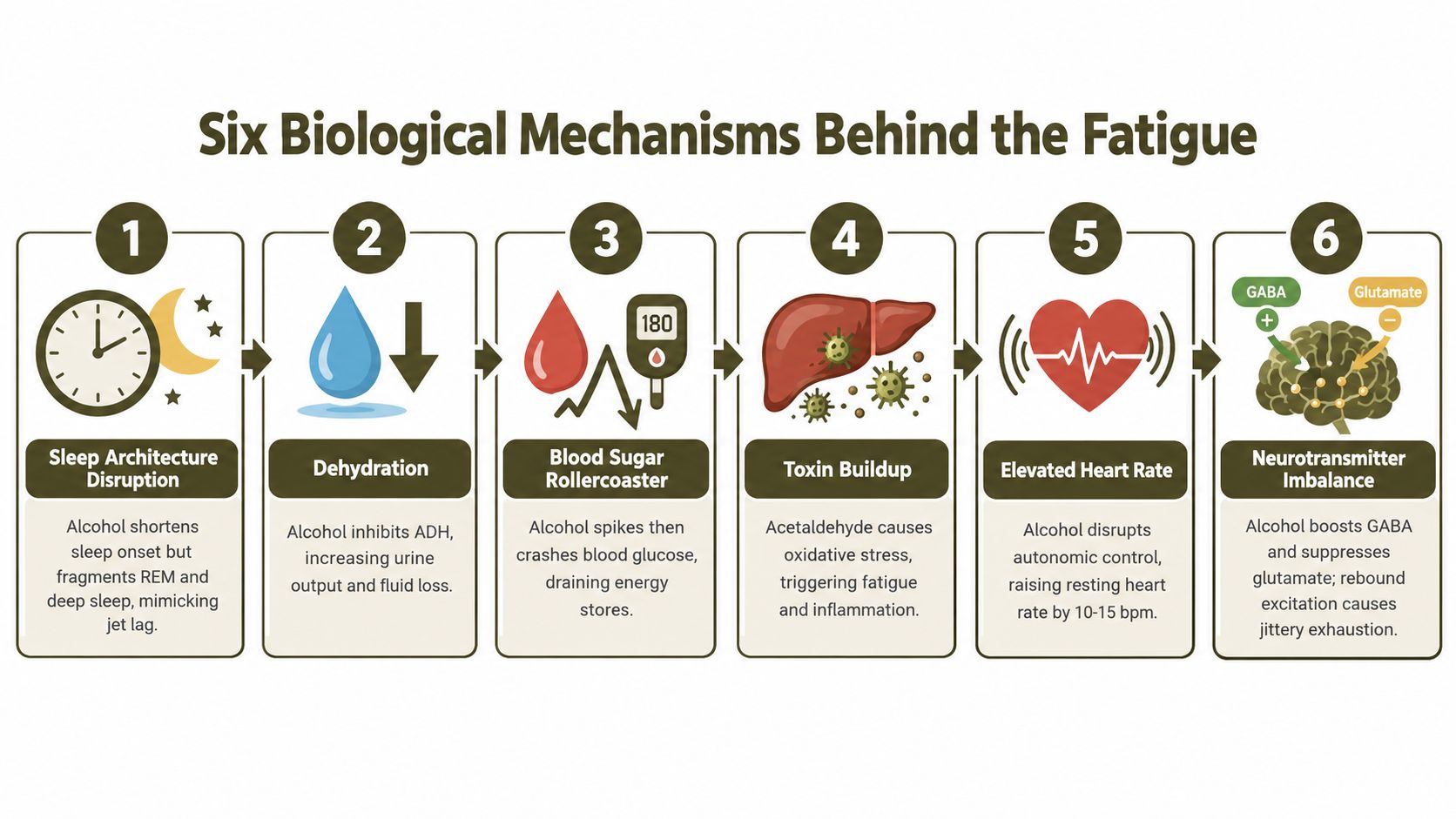
Alcohol-related fatigue comes from several systems interfering with one another. While the body processes alcohol, it also has to regulate sleep, fluid balance, blood sugar, inflammation, and circulation. The result is less like one tiredness switch and more like several warning lights appearing on the same dashboard.
1. Sleep architecture gets scrambled
Alcohol may make you fall asleep quickly, yet that sedation does not guarantee restorative sleep. It can delay and reduce REM sleep, then increase disruption later in the night. You may spend plenty of time unconscious while receiving less of the sleep that restores alertness, as described in this review of alcohol and sleep. A phone can enter sleep mode without completing its overnight backup. Alcohol can create a similar mismatch.
2. Ethanol metabolism adds toxic load
The liver must break down ethanol and its byproducts, including acetaldehyde and acetate. That work adds physiological strain while the body is already managing poorer sleep and other disruptions. The process resembles a factory keeping production running while workers clean up a spill. You are resting, but part of your system is still handling a demanding cleanup job.
3. Fluid balance shifts
Alcohol promotes fluid loss, so dehydration involves more than waking up thirsty. Losing fluid can contribute to sluggishness, headache, and an unsteady feeling the next morning. The body is like a sponge that has been squeezed out and has not yet absorbed enough water again. This review of alcohol-related dehydration and hangover effects explains why fluid shifts can add to the overall burden.
4. Blood sugar can dip overnight
Alcohol can interfere with the liver's management of glucose. Some people therefore wake feeling weak, shaky, or unusually flat. The brain depends on a steady fuel supply, so unstable glucose can also feel like brain fog after drinking. It is similar to running a home on a battery that repeatedly drops below its reserve line.
5. Inflammation creates a heavy, sick feeling
Alcohol and its byproducts can increase inflammatory signaling. That may help explain why the aftermath feels flu-like rather than sleepy. Fatigue becomes a whole-body feeling, with heaviness and malaise layered onto reduced alertness. The difference is between needing more sleep and feeling thoroughly unwell.
6. The autonomic system stays activated
Alcohol can first sedate the body, then leave a rebound period in which the nervous system remains more activated. A 2025 prospective study found that moderate alcohol intake transiently raised nocturnal resting heart rate without changing sleep architecture, suggesting that fatigue can reflect disturbed recovery signals, not only shorter sleep PMC 2025 study. Sleeping with one foot on the accelerator captures the idea.
These mechanisms can stack. A rough morning may reflect poor sleep, fluid loss, metabolic workload, unstable fuel, inflammation, and autonomic strain at the same time. Track the drink timing, food, hydration, sleep, morning energy, and resting heart rate, then look for the mechanism that repeatedly matches your worst recoveries. That turns fatigue from a vague complaint into a pattern you can measure.
Why Midlife Makes the Tiredness Hit Harder
A drink that used to fade can feel much louder after 40. That doesn't mean your body is failing, it means your recovery margin is smaller than it used to be. Midlife often turns alcohol into a sensitivity amplifier.
Why the same drink lands differently
Lower lean mass and total body water can make the same alcohol intake produce a higher peak blood alcohol effect than it did in younger years. That alone can make the next morning feel heavier, even before sleep quality enters the picture. On top of that, many adults in midlife are taking medications that can stack with alcohol, including benzodiazepines, sleep aids, antidepressants, antihistamines, and blood pressure drugs, and those combinations can worsen sedation or recovery.
Hormonal shifts matter too. Perimenopause and andropause can already disturb sleep continuity, temperature regulation, and overnight calm, so alcohol lands on a nervous system that's less resilient to disruption. That makes the tiredness feel less like a hangover and more like a systems issue.
Why recovery can drag on longer
The liver also has to do more work clearing alcohol and its byproducts, and slower recovery makes the tiredness feel sticky instead of short-lived. If your nights are already lighter, more fragmented, or more prone to waking, alcohol compounds the strain instead of offsetting it.
Midlife fatigue after drinking is often a signal that the inputs need to change, not that you need to “push through” harder.
The useful mindset shift is this, don't compare your current recovery to your twenties. Compare your current response to your own baseline, then adjust timing, dose, food, and sleep habits based on what your body shows you.
Evidence-Based Strategies to Reduce the Tiredness
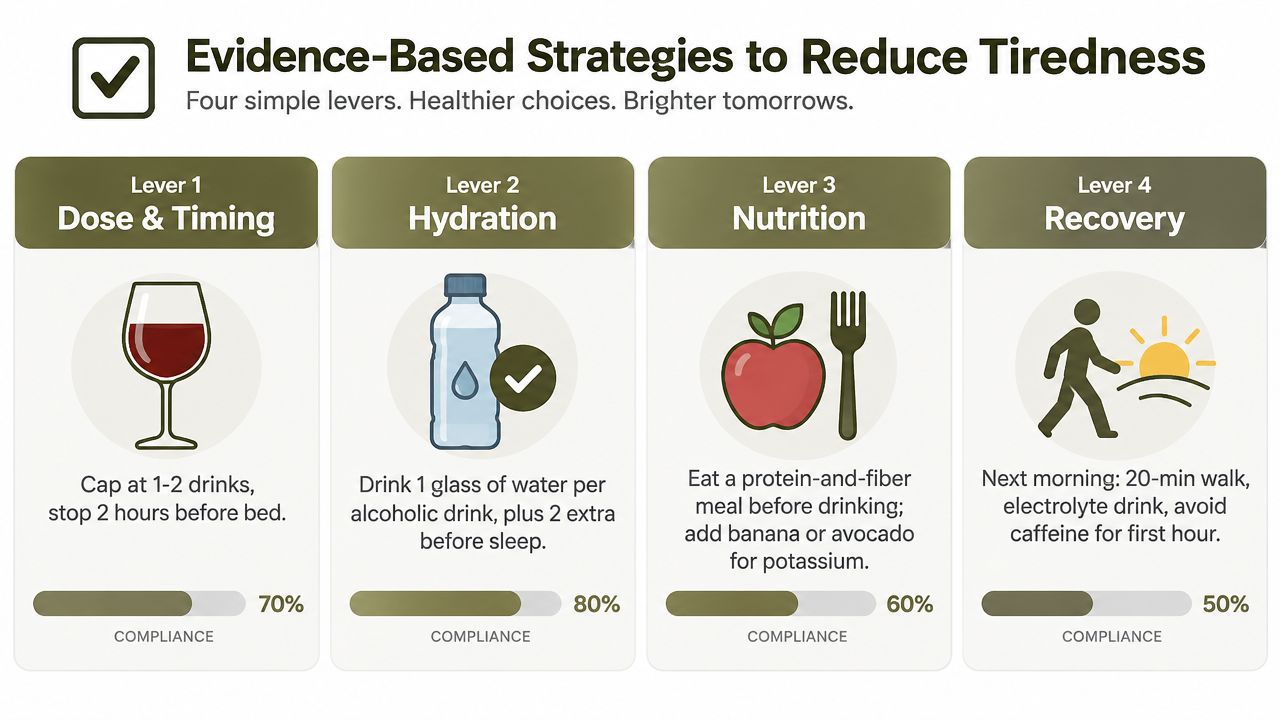
The goal isn't perfection, it's reducing how many biological stressors you activate at once. When you change a few inputs together, the morning-after crash usually becomes more predictable and less punishing. That makes it easier to decide whether drinking is worth it on a given night.
Start with dose and timing
The most powerful lever is still the simplest one, drink less and drink earlier. If you're going to have alcohol, stop well before bed so the sedating phase doesn't overlap with the recovery phase. That matters because the early sleepy effect can mask the later sleep disruption.
Make food do some of the work
Eat before you drink, ideally with protein, fiber, and some complex carbohydrates. Food slows absorption and helps stabilize blood sugar, which can reduce that drained, shaky feeling the next morning. A balanced meal is more useful than a late-night snack because it changes how the body handles the drink in the first place.
Use hydration like a recovery tool
Alternate alcohol with water, then replete fluids and electrolytes before sleep and again in the morning. This doesn't magically cancel alcohol, but it can reduce the dehydration and headache side of the crash. If you wake up dry-mouthed and flat, the hydration gap is often part of the answer.
Protect sleep on both ends
Keep the bedroom cool and dark, and don't add extra stimulation with late-night scrolling. A consistent wind-down gives your nervous system a better chance of staying in recovery mode instead of staying half-alert. If alcohol already fragmented your sleep architecture, you don't want your habits making the rest even lighter.
If you want to ask a clinician about supplements, a few people discuss magnesium glycinate, B-complex, and milk thistle in the context of recovery support, but that's a conversation to have with a professional, not a shortcut to rely on.
The most useful question isn't “How do I fix this after the fact?” It's “How many pieces of the crash can I prevent before I drink?”
Biomarkers and Labs That Reveal How Alcohol Affects You
Guessing gets old fast when your tiredness keeps repeating. Biomarkers give you a way to see which systems are stressed, and wearables help show whether your recovery signals are improving or not. That turns alcohol fatigue from a vague feeling into a trackable pattern.
| Marker or Signal | What It Reveals | Suggested Cadence |
|---|---|---|
| ALT and AST | Liver load and tissue stress | Quarterly for moderate drinkers, twice-yearly for frequent drinkers |
| GGT | Alcohol-related liver strain | Quarterly for moderate drinkers, twice-yearly for frequent drinkers |
| hs-CRP | Inflammation burden | Quarterly for moderate drinkers, twice-yearly for frequent drinkers |
| Fasting glucose and HbA1c | Blood sugar handling | Quarterly for moderate drinkers, twice-yearly for frequent drinkers |
| Cortisol and DHEA-S | Stress-recovery balance | As clinically appropriate, then repeat after plan changes |
| Ferritin | Possible hidden depletion | As clinically appropriate, especially if fatigue persists |
| Basic metabolic panel | Electrolytes and fluid balance | Quarterly for moderate drinkers, twice-yearly for frequent drinkers |
| HRV and resting heart rate | Autonomic recovery and overnight strain | Review weekly trends |
| Overnight SpO2 | Breathing quality during sleep | Review weekly trends |
The point of the table isn't to chase every lab in isolation. It's to connect a symptom to a system. If your resting heart rate climbs after drinking while sleep duration looks unchanged, that points in a different direction than a blood sugar issue or an inflammation spike.
How to use the data without overcomplicating it
Pick a cadence and stick to it. Labs are most useful when you compare baseline to follow-up after you've changed a habit, and wearables are most useful when you review weekly trends rather than obsessing over one bad night. If you want a structured way to do that, a service like Longwelle combines educational guidance, biomarker tracking, and optional nurse practitioner support for adults in midlife and beyond Longwelle AI health coach.
The feedback loop matters more than any single marker. When a habit improves sleep, steadies resting heart rate, and leaves you less drained the next morning, you've found evidence that the plan is working.
How a Longevity Program Personalizes the Recovery Plan
A good longevity program takes the pattern and makes it personal. Instead of handing you a generic list, it starts with your drinking pattern, sleep quality, energy complaints, and the medications or hormones that might be changing the picture. That matters because post-alcohol fatigue isn't identical for everyone.
The usual flow is straightforward. First comes an assessment, then baseline biomarkers matched to the mechanisms that can drive tiredness, then a clinician or nurse practitioner reviews the data and sets thresholds that make sense for you. After that, wearable trends and repeat labs at three to six months show whether your plan is improving recovery or just sounding good on paper.
Why this helps in midlife
Midlife is where the details start to matter more. Medication interactions, hormonal shifts, and cardiovascular strain all change how alcohol lands, so a one-size-fits-all answer often misses the reason you feel wiped out. A personalized program can separate “drink less” from “you need to review sleep, blood pressure medication timing, or overnight recovery signals.”
It also gives structure to the habit side. When the data show a clear link between alcohol nights and higher resting heart rate, worse sleep, or slower morning energy, the plan can tighten around those patterns instead of relying on willpower.
What a good fit looks like
You want a system that helps you measure change, not just hope for it. If the combination of sleep tracking, labs, and clinician input makes your recovery more visible, every habit in this article becomes easier to use. That's the practical advantage of a longitudinal approach over another wellness checklist.
Your Action Checklist and When to See a Clinician
If you want the shortest possible version, save this:
Your action checklist
- Eat before you drink. A protein-and-fiber meal helps slow absorption and supports steadier blood sugar.
- Pace the drinks. One water for each alcoholic drink can reduce the fluid-loss side of the crash.
- Stop early. Cutting alcohol at least 2 hours before bedtime gives your sleep a better chance to stay restorative.
- Replete electrolytes. A mineral drink before bed can help offset the dehydration burden.
- Walk the next morning. A short walk can help you feel less flattened and more awake.
- Keep screens out of the wind-down. Less light and stimulation gives your nervous system a better shot at settling.
When to get evaluated
- Fatigue lasts more than a couple of days after drinking, especially if it keeps happening.
- You notice palpitations, anxiety, or withdrawal-like symptoms after alcohol wears off.
- You're getting hangovers from low intake that used to feel manageable.
- Your mood changes sharply after drinking, or recovery never feels normal.
- Behavior changes don't help, even when you tighten food, timing, and hydration.
If any of those sound familiar, it's worth discussing the pattern with a clinician and asking for the biomarker panel tied to sleep, liver load, inflammation, glucose handling, and recovery signals. The goal isn't to label you, it's to find out which piece of the system is driving the crash.
If you want a more personalized way to track alcohol-related fatigue, Longwelle combines a brief assessment, biomarker monitoring, and optional nurse practitioner guidance for adults who want clearer feedback on sleep, energy, and recovery. Visit Longwelle to see how a structured longevity approach can help you measure what alcohol is doing to your body, then make better calls the next time you're deciding whether that drink is worth it.