Learn
Peptides for Weight Loss: What Actually Works in 2026
A clear, evidence-based guide to peptides for weight loss in 2026 — mechanisms, FDA-approved options, real-world results, safety, and how
What if the core question isn't which peptide burns fat, but whether you're looking at an approved medicine, a research chemical, or a long-term metabolic strategy? That's the gap that's easily missed when searching for peptides for weight loss, especially after a podcast, a social post, or one more frustrating restart.
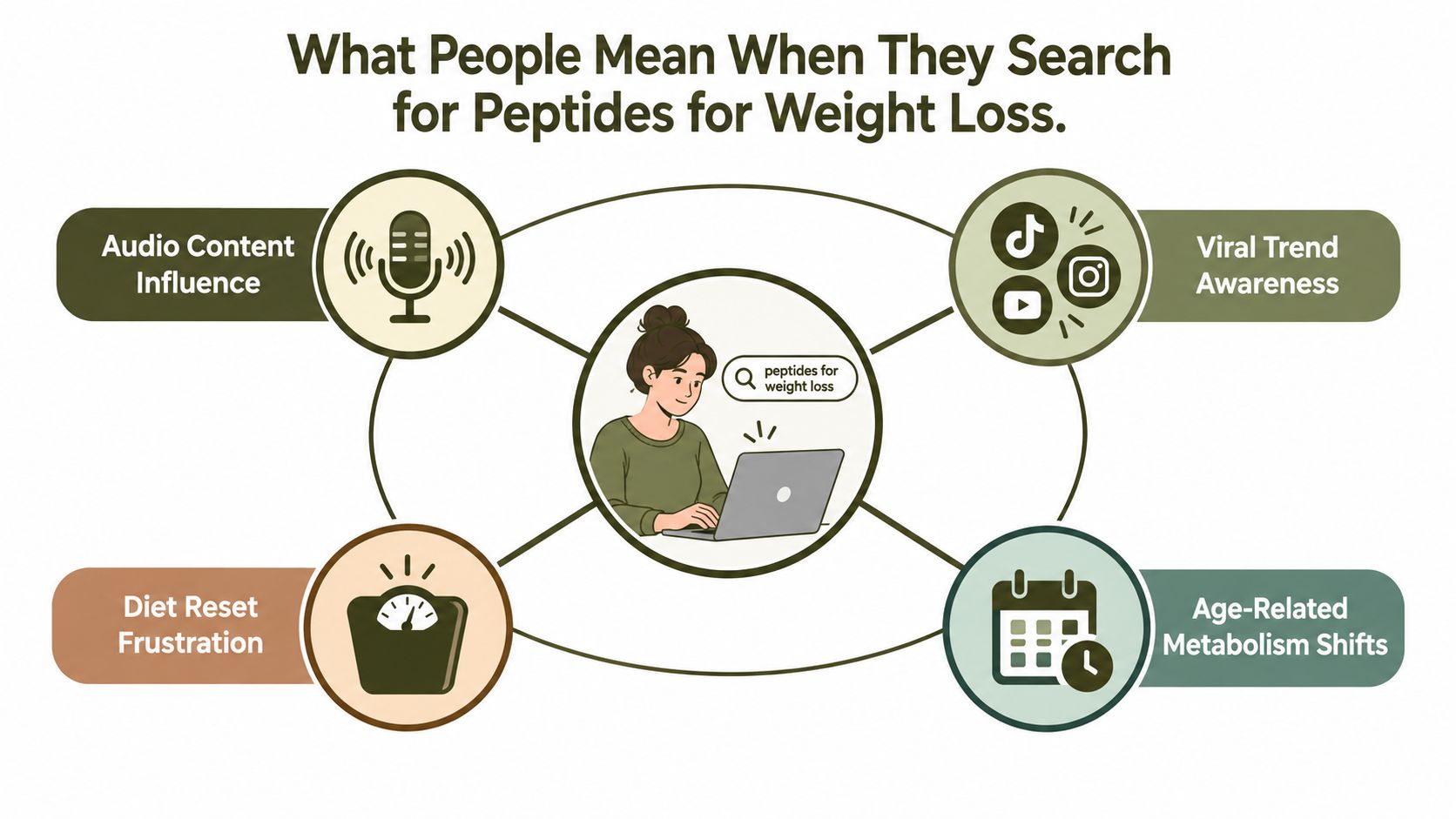
Table of Contents
- What People Mean When They Search for Peptides for Weight Loss
- How Peptides Like GLP-1 Agonists Actually Work in the Body
- FDA-Approved Peptides Versus Research Peptides and Online Shortcuts
- What the Clinical Evidence Shows and Why Results Vary
- Safety, Side Effects, and the Regulatory Landscape in 2026
- Biomarkers Worth Tracking Before and During Peptide Therapy
- How Peptides Fit Into a Longevity-Focused Lifestyle Plan
- Talking With a Clinician and Choosing Your Next Step
What People Mean When They Search for Peptides for Weight Loss
A lot of people typing this phrase are over 40 and tired of the same cycle. They've already tried tighter diets, extra walking, and “starting Monday” plans that don't survive a stressful week. The search term now covers a very wide range, from FDA-approved prescription GLP-1 therapies to gray-market products sold online as research-only compounds.
A peptide is a short chain of amino acids that tells the body to do something specific. In plain language, think of it as a signal, not a magic substance. Some peptides are legitimate medicines with clear labeling and monitored dosing, while others are sold with vague claims and little human evidence.
Three distinctions matter more than the buzz
First, approved drugs versus research compounds. Semaglutide, liraglutide, and tirzepatide sit in one category, while many products marketed online for “weight loss” do not have that status. Second, mechanism matters, because not every peptide works through appetite control or glucose regulation. Third, sourcing matters, since a regulated pharmacy product is not the same thing as an imported vial or an unverified “research use only” listing.
Practical rule: if a product name sounds familiar but the approval status is unclear, stop there and verify the indication before you think about the dose.
How Peptides Like GLP-1 Agonists Actually Work in the Body
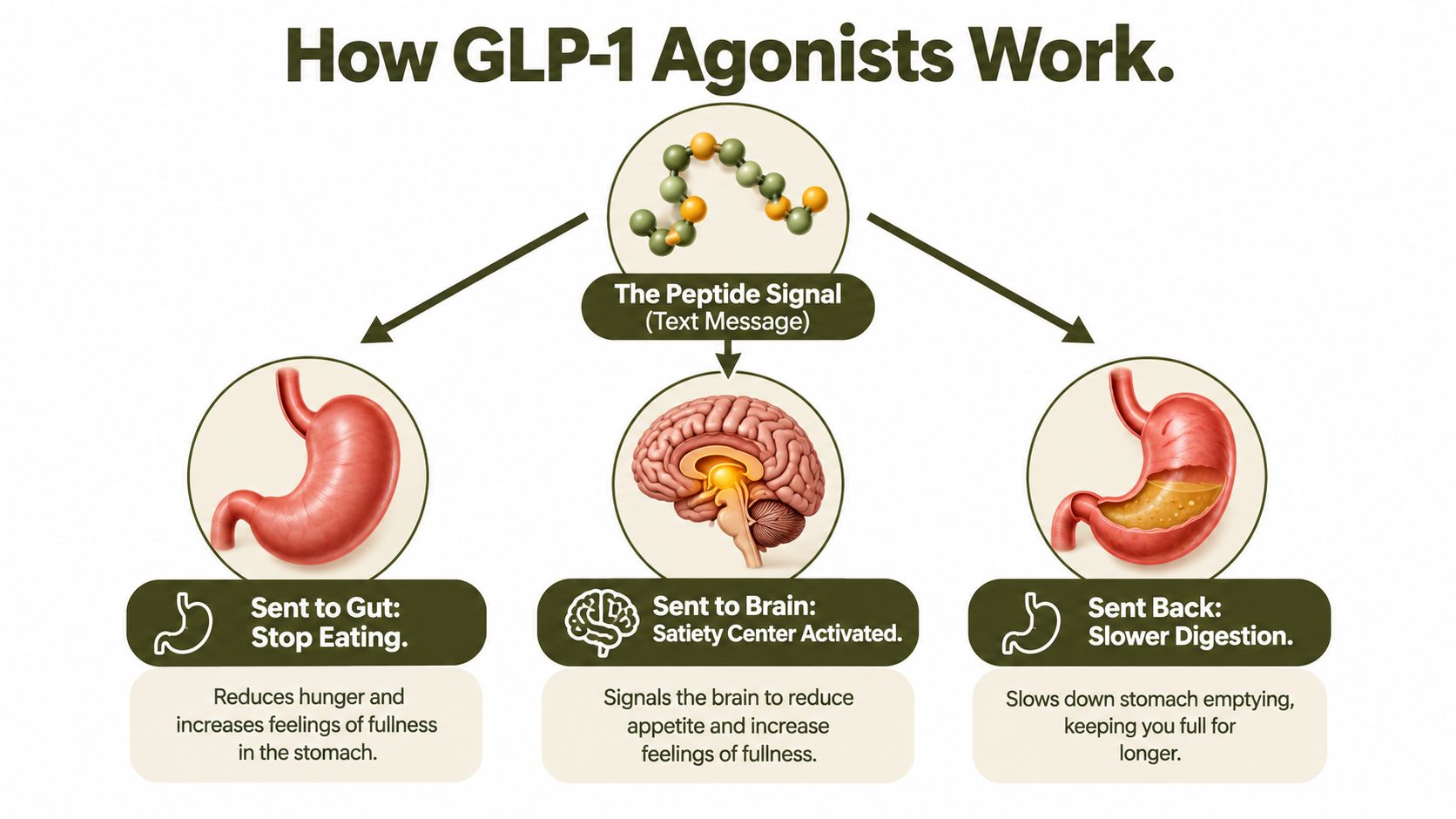
The cleanest way to understand these drugs is to think of the body as a network of text messages. A peptide is one of the messages, the gut and brain are two of the receivers, and the message tells them when to slow down eating, when to feel satisfied, and how to handle food after a meal. That's why GLP-1 drugs can change appetite without acting like classic stimulants.
The main appetite signals
GLP-1 receptor agonists work in three practical ways. They slow stomach emptying, so food stays in the stomach longer and people feel full for more time. They act on appetite centers in the brain, especially in the hypothalamus, to reduce hunger signaling. They also support insulin release in response to meals, which helps the body handle glucose more efficiently.
That combination explains why the scale isn't the only signal worth watching. These medicines are changing how much energy people take in, not just how they feel about food.
Why dual incretin drugs feel stronger to many patients
Some newer therapies add GIP activity to the GLP-1 pathway, which is why people often hear the term dual incretin agonism. In plain terms, the body is getting more than one appetite and metabolism signal at once. That broader receptor engagement helps explain why some dual-acting agents produce stronger weight-loss effects than GLP-1-only drugs in research data PubMed review of GLP-1 and dual incretin efficacy.
Different peptide classes also act on different receptors entirely. Growth-hormone-pathway peptides, melanocortin-related compounds, and other experimental fragments aren't just “another GLP-1.” They're separate tools with separate biology, which is why a label and a mechanism should never be treated as interchangeable.
FDA-Approved Peptides Versus Research Peptides and Online Shortcuts
The practical split is simple. Some peptides are FDA-approved medicines for obesity care, and some are marketed around that world without being approved for weight loss. Once you see the difference, the decision gets much easier to evaluate.
| Peptide | Approval status | Primary licensed indication | Evidence for weight loss | How it is sourced |
|---|---|---|---|---|
| Semaglutide | FDA-approved | Chronic weight management and diabetes-related use | Strong clinical evidence for meaningful loss | Prescription pharmacy |
| Liraglutide | FDA-approved | Chronic weight management and diabetes-related use | Established, but generally smaller effect than newer agents | Prescription pharmacy |
| Tirzepatide | FDA-approved | Diabetes care and chronic weight management | Strong clinical evidence, often higher efficacy than GLP-1-only options | Prescription pharmacy |
| Tesamorelin | FDA-approved, but not for general obesity | HIV-associated lipodystrophy | Not a general weight-loss drug | Prescription pharmacy |
| AOD-9604 | Not FDA-approved for weight loss | None for obesity | Limited, preliminary evidence | Research chemical market |
| BPC-157 | Not FDA-approved for weight loss | None for obesity | No strong obesity evidence | Research chemical market |
The approved GLP-1 pathway has moved quickly. A JAMA review notes that GLP-1 therapies were first approved by the U.S. FDA in 2005 for type 2 diabetes, liraglutide became the first GLP-1 approved specifically for obesity in 2014, and semaglutide 2.4 mg was approved on June 4, 2021 for obesity, marking the modern inflection point JAMA review on obesity-related GLP-1 approvals. That same source also notes later oral obesity approvals, which shows how fast this field is moving.
How to sort the real options from the hype
Use four questions. Is it approved for this use? Does the indication match your problem? How deep is the human evidence? And is a licensed clinician overseeing the prescription?
If a product is sold as a shortcut but the seller won't discuss indication, monitoring, or pharmacy verification, treat that as a warning sign, not a convenience.
What the Clinical Evidence Shows and Why Results Vary
The average result matters, but the spread matters more. A pooled analysis of 47 randomized controlled trials with 23,244 patients found GLP-1-based therapies reduced body weight by a mean of 4.57 kg, BMI by 2.07 kg/m², and waist circumference by 4.55 cm versus placebo PubMed pooled trial analysis. That is why “peptides for weight loss” can sound straightforward while still hiding a wide range of outcomes.
Why trial averages don't tell the whole story
Some patients lose far more than the average, while others lose much less. A 2026 analysis reported that a subset of GLP-1-treated patients lost more than 25% of body weight, while others lost less than 5% Pharmaceutical Journal analysis of response variation. That spread helps explain why patients often compare themselves with headline trial numbers and feel puzzled when their own results do not match.
The gap is not just biology. Dose titration tolerance, how much nausea a person can tolerate, baseline insulin resistance, nutrition quality, resistance training, and medication persistence all shape outcomes. Real-world review data also show that 6 to 12 month reductions can sit well below trial headlines, so the same drug can feel dramatic for one patient and modest for another.
What that means when you choose a therapy
Tirzepatide and semaglutide both have strong human evidence, but they do not behave identically. The useful question is not only, “How much weight do people lose on average?” It is, “What does the range look like, and what raises the chance of ending up on the better end of it?”
A clinician who frames treatment like a single bet is leaving out the part that matters in practice. A better conversation also includes adherence, side effects, and body-composition tracking, because weight loss on the scale is only one part of the picture.
Safety, Side Effects, and the Regulatory Landscape in 2026
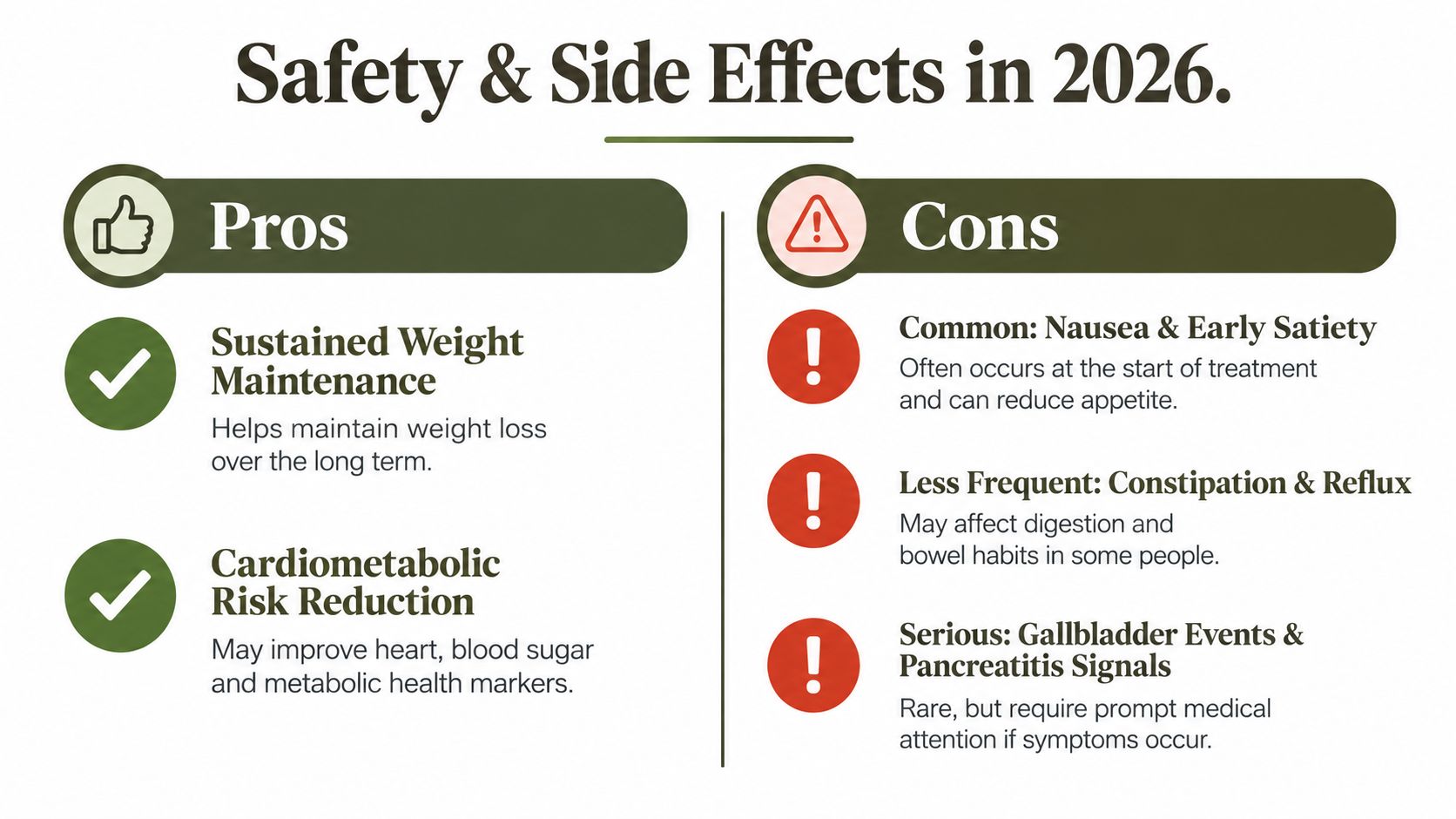
Many think of these drugs as appetite tools, but the body experiences them more broadly. Common side effects include nausea, early satiety, constipation, and reflux. Those effects can be tolerable for some people and disruptive for others, especially during dose escalation.
What clinicians screen for before prescribing
Certain situations raise the threshold for use. A careful clinician will review personal or family history of medullary thyroid carcinoma, MEN-2 syndrome, pregnancy status, severe gastrointestinal disease, and any history of eating disorders. They'll also think about perioperative timing, because delayed gastric emptying matters around anesthesia.
The regulatory picture also matters. The more established obesity medicines in this space remain the approved GLP-1 and dual incretin options, while the broader “research peptide” category still sits outside that evidence base. A review of obesity peptides notes that growth-hormone-pathway compounds haven't shown meaningful total body weight loss in controlled human studies, and tesamorelin is approved for HIV-associated lipodystrophy, not general obesity Clinical evidence review of obesity peptides.
Reading the label correctly
A vial labeled for “research use only” is not the same as a prescription obesity treatment. That difference affects quality control, dosing confidence, and legal status. It also affects the quality of the decision, because a real therapy should come with a real indication, real follow-up, and a real plan for side effects.
Biomarkers Worth Tracking Before and During Peptide Therapy
The scale is useful, but it's not enough. Before anyone starts a peptide, the smarter question is what problem the body is really trying to solve. A baseline panel helps separate insulin resistance, fatty liver patterns, thyroid issues, and plain caloric excess from one another.
Baseline data that changes the conversation
The starting point should include fasting glucose, HbA1c, fasting insulin with HOMA-IR, a lipid panel, liver enzymes, a thyroid panel, kidney function, vitamin D, plus weight, waist circumference, and some form of body-composition measure. Those data don't just describe health, they anchor the plan.
If fatigue is part of the picture, an overview of sleep and energy matters too, especially when the person is trying to understand why appetite and recovery feel off. A useful starting point is this guide on why people feel tired even when they think they're sleeping enough.
What to recheck during treatment
During therapy, track the trend, not just the absolute number. Weight and waist circumference can move in different directions, and that matters. A person can lose scale weight while also losing lean mass, which is why DEXA or bioimpedance can be valuable when the goal is healthier composition, not just less mass.
- Quarterly glucose markers: Recheck HbA1c and lipids on a regular cadence so you can see whether metabolic markers are improving along with appetite control.
- Body composition signals: Watch whether waist size is shrinking faster than lean mass, because rapid weight loss can strip muscle.
- Performance markers: Resting heart rate, training tolerance, and recovery all help show whether the body is adapting well.
The goal isn't “How low did the scale go?” It's “Did the body get more metabolically resilient while it got smaller?”
How Peptides Fit Into a Longevity-Focused Lifestyle Plan
Peptides work best when they sit inside a broader structure. That structure has four pillars, nutrition, sleep, training, and stress regulation, and the drug is only one part of the system. If those basics are unstable, the medication often ends up doing more work than it should.
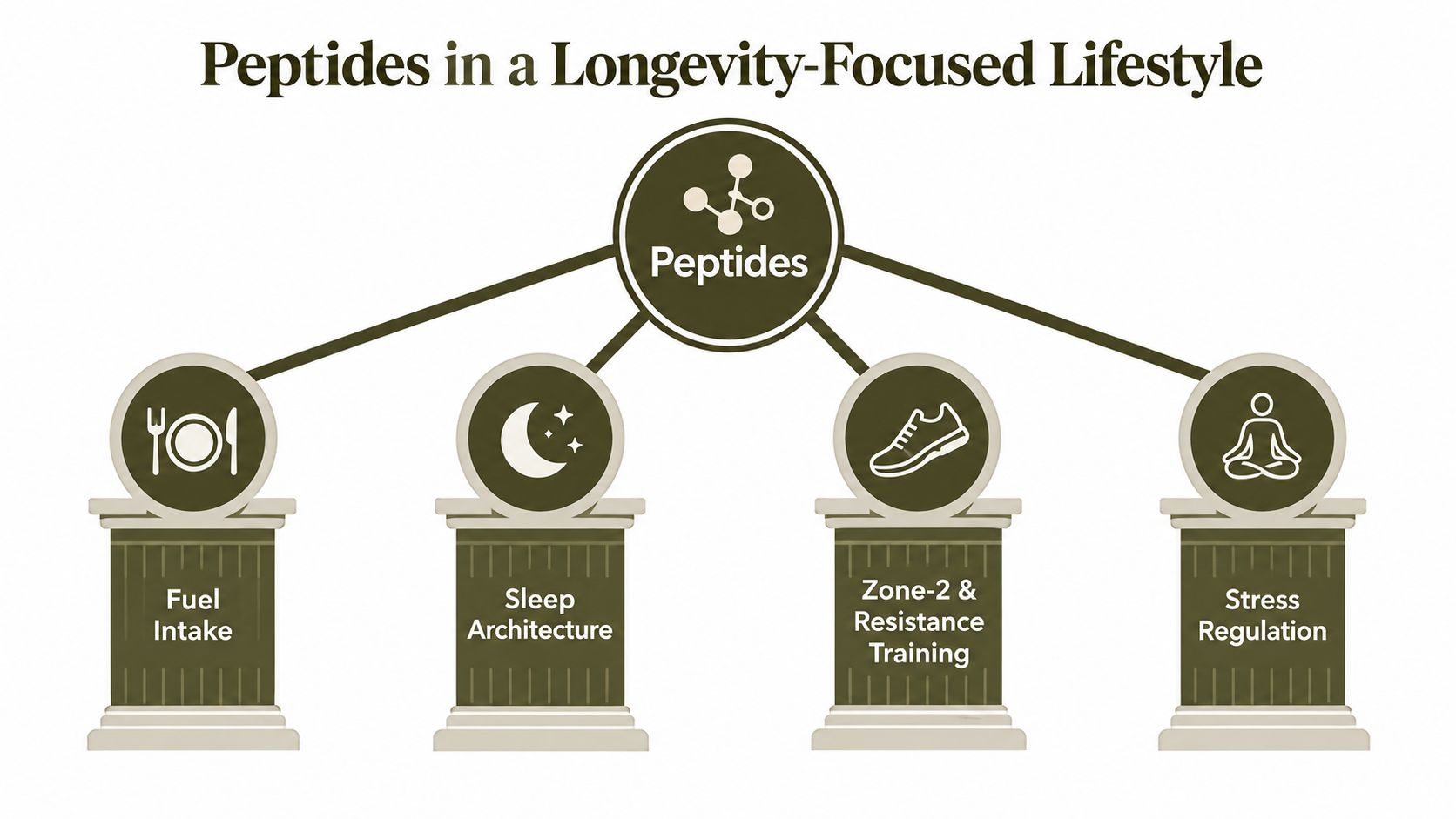
Where the drug helps and where it doesn't
GLP-1 therapy can quiet appetite noise and make a calorie deficit easier to sustain. That's a real advantage. But it can't replace protein intake, resistance training, or the habits that preserve muscle and glycemic resilience.
A longevity-focused plan usually starts by stabilizing sleep and getting protein intake and movement to a dependable baseline. Then the clinician decides whether a peptide adds value or whether lifestyle work alone should run first. If you want a broader framework for that kind of thinking, this longevity guide is a useful companion.
What the long game looks like
Adults in their 40s, 50s, and beyond usually care less about a temporary dip on the scale and more about cardiorespiratory fitness, visceral adiposity, and inflammation-linked risk. That's the right frame. A peptide can support the process, but it shouldn't become the whole plan.
Talking With a Clinician and Choosing Your Next Step
The best appointment starts with data, not a product name. Bring three things, a recent biomarker panel, an honest log of sleep, protein, and movement, and a complete list of medications and supplements. That gives a clinician enough context to talk about real metabolic risk instead of a vague desire to “lose weight.”
Questions worth asking in the visit
Ask which peptide, if any, fits your cardiometabolic picture. Ask how the dose will be escalated, what side effects should trigger a pause, and how progress will be measured beyond the scale. Ask what stopping looks like, because a good plan includes both start and finish criteria.
Red flags are easy to spot. Be cautious if someone sells peptides without labs, skips a medication review, or guarantees a certain number of pounds. Weight loss medicine is about risk management, not promises.
A practical 7-day first step
Book a baseline visit, order fasting glucose, HbA1c, lipid panel, and a DEXA if body composition is part of the question, then decide whether peptides belong in the plan or whether lifestyle work should lead first. For support with that kind of structured decision-making, you can also use an AI health coach to organize habits, questions, and next steps before the appointment.
If you want a calmer way to think about peptides, weight loss, and metabolic health after 40, start with the plan, not the hype. Longwelle helps adults build a biomarker-driven longevity routine around sleep, energy, body composition, and practical next steps, so you can decide whether peptides belong in your path with more clarity and less guesswork.