Learn
Afternoon Tiredness: Why It Happens and How to Fix It
Discover why afternoon tiredness hits so hard after 40 — and what to do about it. Biology, nutrition, labs, and daily routines explained for midlife adults.
You finish a solid morning, answer the important emails, maybe even eat a lunch that seemed reasonable at the time. Then sometime around 2 p.m., your focus thins out, your eyelids get heavy, and the same task that felt easy before suddenly takes twice the effort. That drop isn't a character flaw, and it isn't proof that you're getting lazy with age. It's a biologically predictable pattern, and once you can read it correctly, you can respond to it more intelligently.
Table of Contents
- Why You Hit a Wall Every Afternoon
- The Biology Behind the Afternoon Energy Crash
- What Makes the Afternoon Slump Worse
- How to Know When Afternoon Tiredness Needs Attention
- Evidence-Informed Ways to Reduce Afternoon Tiredness
- Sample Daily Routines for Midlife Energy
- Biomarkers, Clinical Input, and Tracking Progress Over Time
Why You Hit a Wall Every Afternoon
A lot of high-performing adults assume afternoon tiredness means they slept badly or ate the wrong thing. Sometimes those are part of the story, but the deeper pattern is more basic. Your body has a built-in window where alertness naturally softens, and for many people that window lands right after lunch.
The confusing part is that the slump can feel personal, like your body is suddenly underperforming. In reality, the brain is doing what it was designed to do, shifting toward a lower-alertness state during the early afternoon. Research summaries in PubMed describe this as the post-lunch dip, a well-established decline in alertness and cognitive performance that often appears around 2 to 4 p.m. and can begin about 1 hour after lunch starts. That same pattern can show up even if you skip lunch or don't know what time it is, which is a strong clue that this is about biology, not willpower.
Practical rule: If the crash arrives at roughly the same time most days, treat it like a rhythm, not a moral failure.
That matters because a rhythm can be worked with. A random problem gets you guessing. A predictable one lets you build a better day around it, which is exactly what many midlife professionals need when the afternoon starts draining attention, patience, and decision quality.
For a broader look at persistent fatigue patterns, you can also compare your experience with Longwelle's guide on feeling tired.
The Biology Behind the Afternoon Energy Crash
Two systems collide at the same time
Think of your daytime alertness as coming from two forces. One is your circadian rhythm, the body clock that creates a natural trough in wakefulness in the early afternoon. The other is homeostatic sleep pressure, the growing drive to sleep that builds from the moment you wake up.
By early afternoon, those two forces overlap. The body clock stops pushing as hard, while sleep pressure has been accumulating for hours. That collision creates the classic mid-afternoon slump, and sleep researchers describe it as a predictable interaction between the sleep-wake drive and circadian alertness, often peaking around 1 to 4 p.m. depending on sleep timing and prior sleep debt Sleep Foundation.
Why lunch gets blamed so often
Lunch doesn't create the dip on its own, but it can make the dip more obvious. A heavy meal can add digestive load right when your alertness is already softening. One 2012 driving study found that a heavy lunch significantly increased driving incidents and EEG power during monotonous driving, and participants who had curtailed sleep did even worse in the afternoon after eating.
That's why people often say, “It's the food,” when the truth is more layered. The meal is acting like an amplifier, not the original cause.
Why midlife makes it feel stronger
For adults in their 40s and beyond, the afternoon dip can feel more aggressive because sleep quality often becomes less forgiving. Sleep gets more fragmented, recovery feels thinner, and schedule inconsistency can make the body clock less stable. Even without a formal sleep disorder, that means the same early-afternoon trough can land on a more sleep-deprived system.
The question isn't whether the slump is real. The question is which force is pushing harder on your particular day.
A useful way to think about it is this, your circadian alertness is the dimmer switch, and your sleep pressure is the bucket slowly filling all morning. When both line up in the wrong direction, the light gets very low.
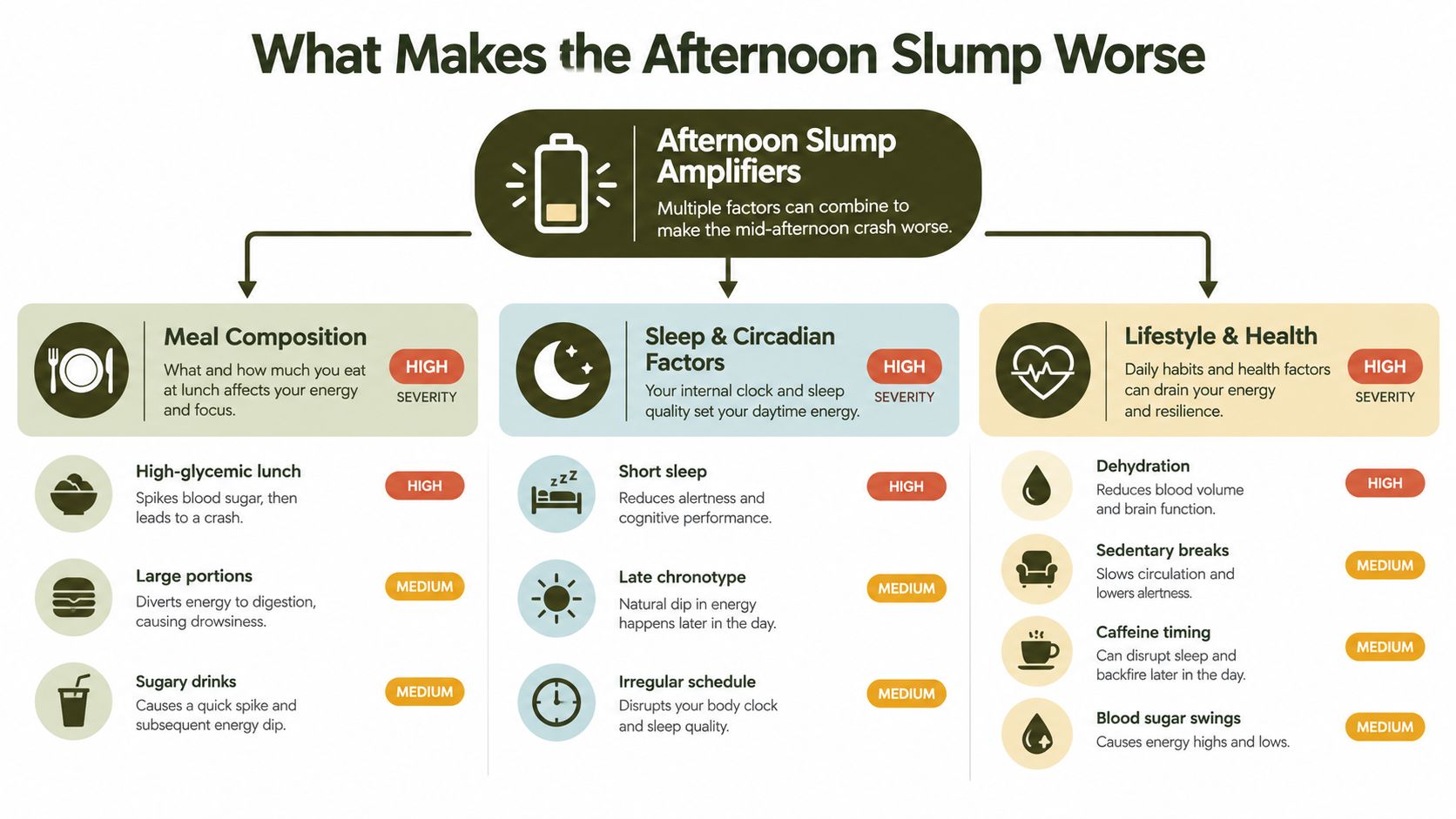
What Makes the Afternoon Slump Worse
Some people feel a gentle dip. Others feel like they've hit a wall. The difference is usually not one dramatic cause, it's layering.
Meal composition is one of the strongest amplifiers. A lunch built around refined carbohydrates can push glucose up and then down again, which makes the post-meal slump feel sharper. In the study summarized by Cambridge, memory scores dropped 35 minutes after lunch consumption, and an almond-enriched meal reduced the memory decline by 57.7% versus a higher-carbohydrate lunch Cambridge. That doesn't mean almonds are magic, it means meal composition changes how hard the dip lands.
Sleep debt is another amplifier. If you've been running on short nights, the afternoon window doesn't just feel sleepy, it can feel sticky and hard to recover from. The circadian trough is still there, but now it lands on top of a system that's already under-rested.
Medications can also matter. Some antihistamines, beta-blockers, antidepressants, and blood pressure medicines can add sedation, which is more noticeable in the same window your biology is already leaning toward rest. If the timing of your medication lines up with the slump, that's worth paying attention to.
Underlying conditions are the quieter layer. Iron deficiency, thyroid problems, and early metabolic dysfunction can all show up as afternoon fatigue before they show up anywhere else. In midlife women, especially around perimenopause, that can get mislabeled as “just busy life” for too long.
For a symptom overview that helps separate normal dip from something more persistent, see Longwelle's brain fog overview.
How to Know When Afternoon Tiredness Needs Attention
A daily afternoon dip is common. What matters is whether it's mild, predictable, and temporary, or whether it's getting louder and starting to spill into the rest of the day.
Signs that fit a normal biological dip
A typical pattern is easy to recognize once you know what to look for. It shows up around the same time, it fades with movement or a brief change of pace, and it doesn't usually come with other concerning symptoms.
- Timing: It appears most days in the early afternoon.
- Duration: It settles within a reasonable window rather than lingering into the evening.
- Response: A short walk, water, or a break helps.
- Scope: It's mostly sleepiness, not a whole-day collapse in energy.
Signs that deserve a closer look
If the tiredness is lasting into the evening, showing up with loud snoring or breathing pauses, or making it hard to function at work, that's no longer just a routine slump. The same is true if you're seeing unexplained weight change, mood shifts, or a level of brain fog that doesn't match your usual baseline.
You should also pay attention if afternoon drowsiness makes driving risky, especially if you've had near-misses or find yourself fighting sleep at the wheel. That turns the issue from inconvenient to unsafe.
A good self-check is simple. If the slump is new, worse, longer, or paired with other symptoms, it deserves more than another coffee and a hopeful shrug.
| Symptom pattern | What it often suggests |
|---|---|
| Comes and goes at a predictable time | Normal circadian dip |
| Persists past evening | Possible sleep debt or medical contributor |
| Brain fog affects work quality | Worth reviewing lifestyle and health factors |
| Near-misses while driving | Safety issue, needs attention |
Evidence-Informed Ways to Reduce Afternoon Tiredness
Build a stronger morning so the afternoon has less to fight
The best way to reduce the crash is to reduce the size of the collision. That starts before lunch. Regular sleep timing matters because it lowers sleep pressure from the start, and a consistent wake time helps anchor the body clock so the early-afternoon trough is less erratic.
Morning light helps too. Outdoor light soon after waking tells the circadian system where the day begins, which can make the later dip less punishing. You do not need a perfect wellness routine here, you need a repeatable one.
Use naps strategically, not reactively
A short nap can help if the issue is true sleepiness. Keep it short, ideally 10 to 20 minutes, and keep it early enough that it doesn't steal from night sleep. Longer naps can leave you groggy because you've drifted into deeper sleep and then yanked yourself out too soon.
If you need a nap every day to stay functional, that's information, not a lifestyle quirk.
Change lunch to change the crash
The lunch plate matters because the meal can either flatten the slump or intensify it. Aim for protein, fiber, and healthy fat, with fewer refined carbohydrates taking center stage. That kind of meal tends to produce a steadier post-meal curve, which is exactly what you want when the body is already drifting downward.
Move when the trough starts
A brief walk around 1:30 to 2 p.m. can interrupt the slide before it gets too deep. Movement raises alertness, gets blood moving, and gives your brain a new signal that the day is still active. You do not need a workout, just a clear break from sitting.
Keep the afternoon from becoming a caffeine trap
Caffeine can mask sleepiness, but it doesn't fix the mechanism underneath it. Used late or used repeatedly to rescue the same slump, it can make the next night worse, which then deepens tomorrow's dip. That's why timing matters as much as amount.
Sample Daily Routines for Midlife Energy

An office-based day works best when the strongest alertness gets used for the hardest thinking. A good version starts with light exposure soon after waking, then a steady morning of focused work, then lunch before the slump is fully underway. A protein-forward meal at noon, a brief walk around 1:30 p.m., and a planned transition to lighter tasks can keep the afternoon from turning into an energy rescue mission.
A remote or hybrid day gives you more room to shape the rhythm. That can include a short nap at 2 p.m. if you really need one, but only if it stays short and doesn't interfere with bedtime. The key is to stop treating the afternoon crash as a surprise. Build around it instead, and the day starts feeling more usable again.
For a simple routine framework that supports this kind of timing, see Longwelle's daily routine guidance.
Biomarkers, Clinical Input, and Tracking Progress Over Time
When afternoon tiredness keeps showing up despite better sleep, steadier meals, and movement breaks, it's time to look deeper. That doesn't mean something is seriously wrong. It means you need objective data instead of guesswork.
A clinician may review thyroid function because low thyroid activity can slow energy and cognition. They may also check iron stores and hemoglobin, since low iron can drain stamina long before it becomes obvious in daily life. Fasting glucose and insulin help show whether blood sugar regulation is making the afternoon harder, and vitamin D can be part of the picture in people with persistent low energy.
In some cases, a nurse practitioner will also consider cortisol rhythm to see whether the stress-response system is running on an odd schedule. For perimenopausal women, estradiol and progesterone can help explain changes in sleep, recovery, and daytime energy that didn't exist before. The point is not to chase every lab result, it's to match the data to the way you feel.
| Key Biomarker | What It Assesses | Why It Matters for Afternoon Energy |
|---|---|---|
| TSH, free T3, free T4 | Thyroid activity | Low thyroid function can slow alertness and stamina |
| Hemoglobin, ferritin, iron studies | Iron status and oxygen delivery | Low iron can feel like persistent fatigue |
| Fasting glucose, fasting insulin | Blood sugar regulation | Poor regulation can make post-meal tiredness worse |
| Vitamin D | Nutritional and metabolic support | Low levels may contribute to low energy |
| Cortisol rhythm | Stress and day-night patterning | A disrupted rhythm can affect daytime alertness |
| Estradiol, progesterone | Midlife hormone shifts | Can help explain sleep and energy changes in perimenopause |
A nurse practitioner looks at these numbers in context, not in isolation. Someone with normal labs but poor sleep, erratic meals, and relentless work stress may need a very different plan than someone with the same symptoms and clear iron deficiency. That's why tracking over time matters, it shows whether your changes are moving the needle.
If you want a structured entry point, Longwelle combines a short assessment with biomarker tracking and nurse practitioner input, which can help turn vague fatigue into a clearer plan.
If your afternoon tiredness keeps hijacking your focus, start by checking the pattern, then adjust the day around it instead of fighting it blindly. If you want help turning that into a practical, individualized plan, take a few minutes to visit Longwelle and use the tools there to see what your energy pattern may be trying to tell you.